







Definition and Meaning of Form 14157
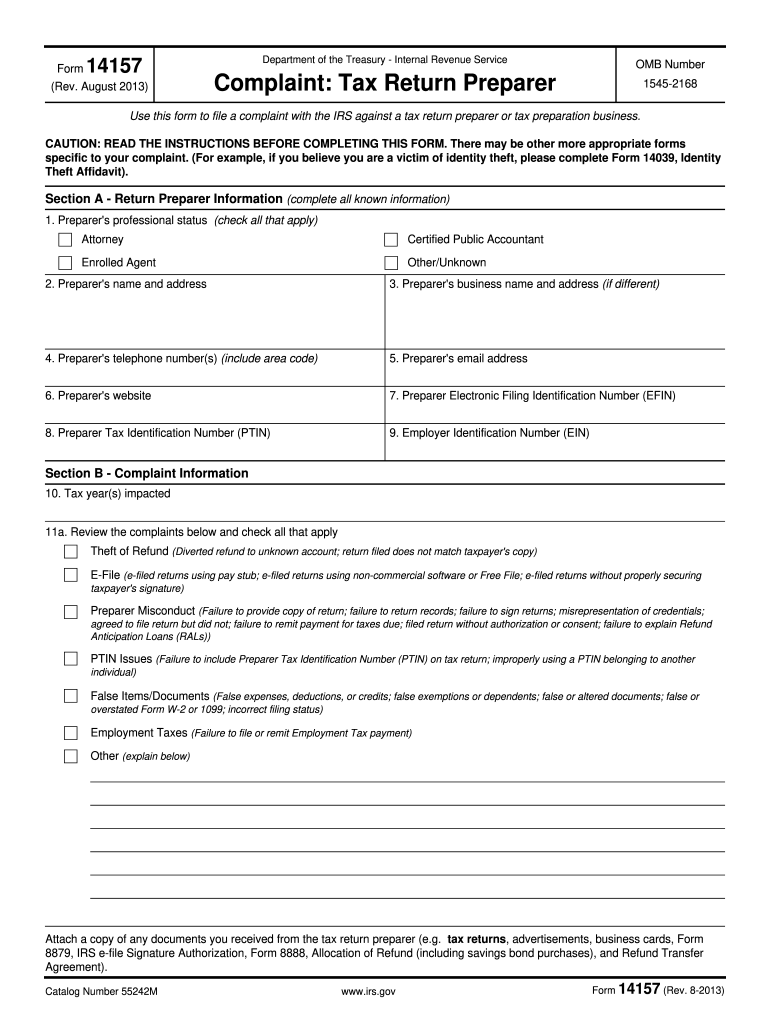
Form 14157 is used to file complaints with the Internal Revenue Service (IRS) against tax return preparers or tax preparation businesses. It seeks to address misconduct and ensure compliance with tax laws, providing a formal way for taxpayers to report unethical, deceptive, or fraudulent practices by preparers. The form details the preparer's information, the nature of the complaint, and the taxpayer's information, allowing the IRS to investigate potential violations effectively.
Steps to Complete Form 14157
Completing Form 14157 involves several steps to ensure that all required information is accurately provided:
- Personal Information: Start by providing your name, address, and contact information.
- Preparer Information: Fill in the details of the tax preparer or the business you're filing the complaint against, such as name, address, and business identification numbers.
- Detailed Complaint: Clearly describe the nature of the misconduct or unethical behavior. This section should include dates, locations, and specific actions taken by the preparer that are of concern.
- Supporting Documentation: Attach any documents that support your complaint, such as copies of tax returns, correspondence, or contracts.
- Declaration: Ensure you read and understand the declaration before signing, affirming that the information provided is true and accurate.
- Submission: Once completed, the form can be submitted via mail to the appropriate IRS address indicated on the form instructions.
How to Obtain Form 14157
Form 14157 can be obtained through several methods:
- IRS Website: The form is available for download on the official IRS website, ensuring you have access to the latest version.
- Local IRS Office: Visit a local IRS office for a physical copy if downloading is not feasible.
- Request by Mail: You can request the form to be mailed to you by contacting the IRS.
Why File Form 14157
Filing Form 14157 is crucial for multiple reasons:
- Ethical Compliance: It helps maintain the ethical standards of tax preparation by allowing taxpayers to report fraudulent practices.
- Protection of Rights: Filing a complaint safeguards your rights as a taxpayer against misconduct.
- Legal Accountability: It holds tax preparers accountable for their actions, prompting corrective measures by the IRS.
- Awareness and Prevention: It raises awareness among other taxpayers about unethical practices, preventing similar issues in the future.
Who Typically Uses Form 14157
Form 14157 is typically used by:
- Individual Taxpayers: Those who have encountered unethical practices by their tax preparer.
- Business Owners: Businesses that have been subjected to or noticed fraudulent tax services.
- Legal Representatives: Attorneys or legal representatives filing on behalf of clients affected by tax preparer misconduct.
Key Elements of Form 14157
Several critical sections are integral to Form 14157:
- Taxpayer Information: Provides the background of the individual filing the complaint.
- Preparer Identification: Ensures accurate reporting by identifying the preparer involved.
- Complaint Details: A detailed description of the misconduct.
- Supporting Evidence: Relevant documents that substantiate the claim.
Legal Use of Form 14157
Using Form 14157 comes with legal implications:
- Confidentiality: The IRS treats the information submitted with confidentiality to protect the complainant's identity.
- Accuracy Requirement: Ensures that the allegations are truthful, fostering integrity in the complaint process.
- Investigation Trigger: Filing may result in an IRS investigation into the preparer's practices, potentially leading to disciplinary action.
IRS Guidelines on Form 14157
The IRS provides several guidelines for using Form 14157:
- Factual Basis: Ensure complaints have a factual basis to facilitate IRS review.
- Timely Submission: Submit the form soon after discovering the misconduct to aid timely intervention.
- Comprehensive Details: Include as much detail as possible to ensure a comprehensive understanding of the complaint.
Following these guidelines ensures your complaint is considered valid and processed efficiently by the IRS.




