
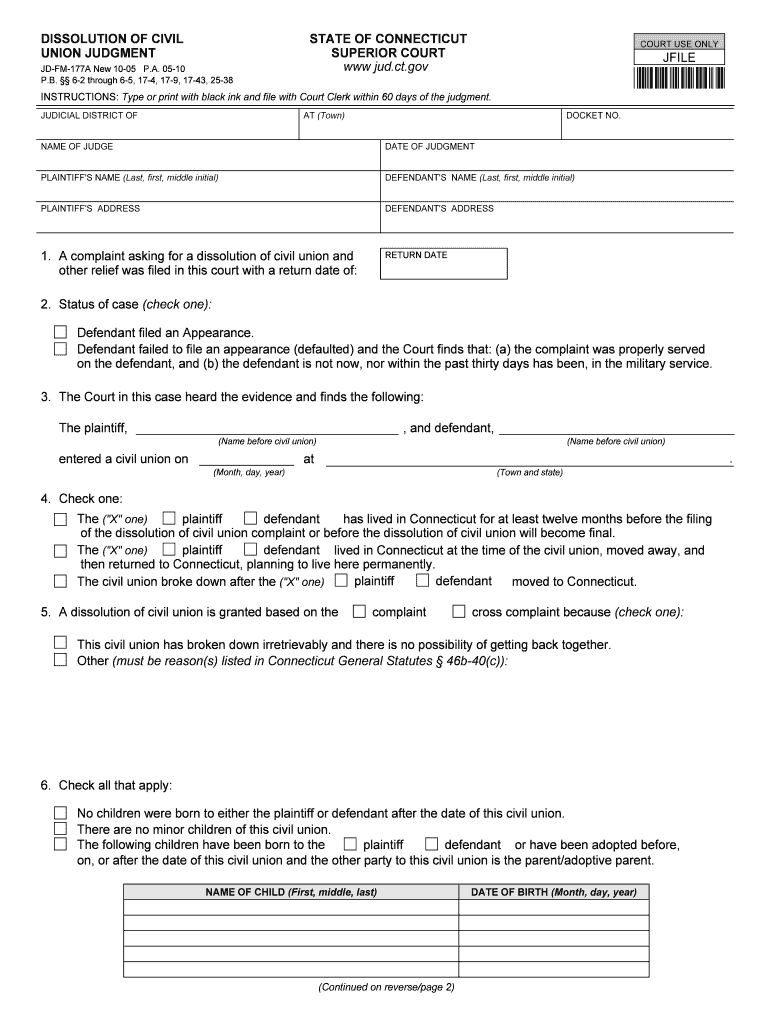







Definition and Meaning of the Dissolution of Civil Union Judgment
The dissolution of a civil union judgment in Connecticut is a formal legal decree that ends a civil union recognized by the state. A civil union is a legally recognized partnership between two individuals, akin to marriage, that provides similar legal rights and responsibilities. When parties seek to dissolve this union, the court will analyze various factors, including the length of the partnership, residency of the parties, and grounds for dissolution. The judgment officially pronounces both parties as single, terminating all legal ties and responsibilities associated with the civil union.
Key elements in the judgment may encompass the distribution of assets, custody arrangements for any children involved, and provisions for alimony or child support. Understanding this judgment's implications is crucial for those navigating the dissolution process, ensuring individuals are aware of their rights and obligations post-dissolution.
How to Use the Dissolution of Civil Union Judgment
Utilizing the dissolution of civil union judgment involves multiple steps within the Connecticut Judicial Branch framework. First, individuals must gather necessary documentation, which often includes identification, residency proof, and financial disclosures. Once documents are compiled, the parties must file a complaint for dissolution with the court, detailing the reasons for the dissolution and outlining associated requests, such as child custody or property division.
The court may require mediation or resolution hearings before finalization, which is an essential phase to ensure that all parties have had the opportunity to express their needs and negotiate arrangements. Upon reaching conclusions supported by both parties or a judicial decision, a final dissolution judgment will be issued, cementing the outcomes agreed upon in court.
- Gather Documentation: Compile personal identification and financial statements.
- File a Complaint: Submit necessary legal documents to initiate the dissolution process.
- Attend Hearings: Engage in mediation or court hearings to settle disputes and finalize arrangements.
- Receive Judgment: Obtain the official dissolution judgment to conclude the civil union.
Steps to Complete the Dissolution of Civil Union Judgment
Completing the dissolution of civil union judgment requires careful attention to procedural details. The following steps outline the typical process:
- Determine Eligibility: Confirm that both individuals meet the residency requirements established by Connecticut law.
- Collect Required Documents: Gather essential documentation, including the memorandum of resolution screening form JD FM 290, which may be necessary in cases involving minor children.
- File the Dissolution Complaint: Complete and submit the complaint form to the appropriate Connecticut court. This may involve paying a filing fee.
- Notify the Other Party: Serve the dissolution notice to the other partner as required by Connecticut law.
- Attend Court Hearings: Participate in any scheduled court hearings, mediations, or consultations as mandated by the court.
- Final Judgment Issuance: Upon the court's review and approval of the dissolution terms, receive the official judgment.
Following these steps ensures compliance with all legal requirements and helps mitigate potential disputes throughout the process.
Important Terms Related to Dissolution of Civil Union Judgment
Familiarity with specific terminology is essential when navigating civil union dissolutions. Understanding these terms can aid in comprehending the dissolution process effectively:
- Civil Union: A legally recognized partnership between two individuals offering similar rights as marriage.
- Dissolution Judgment: The court’s official decision terminating the civil union.
- Alimony: Financial support provided by one partner to another following dissolution.
- Custody: Legal determination regarding the care and control of any children involved in the dissolution.
- Memorandum of Resolution Screening Form JD FM 290: A specific form utilized in Connecticut courts to assess the terms and agreements regarding the dissolution, particularly concerning child custody and support.
Acquainting oneself with these key terms enhances communication and understanding of the legal proceedings involved in dissolution.
State-Specific Rules for the Dissolution of Civil Union Judgment
Connecticut has outlined specific statutory requirements that govern the dissolution of civil unions. These rules include:
- Residency: At least one partner must have resided in Connecticut for 12 months prior to filing.
- Grounds for Dissolution: Acceptable grounds include irretrievable breakdown of the civil union, which does not require proof of fault.
- Property Division: The court follows the principles of equitable distribution, meaning that property acquired during the union will be divided fairly, though not necessarily equally.
- Child Custody Considerations: If children are involved, the court considers their best interests when determining custody arrangements.
Being aware of these state-specific rules is vital for individuals seeking to navigate the dissolution process efficiently and effectively.
Examples of Using the Dissolution of Civil Union Judgment
Real-world scenarios illuminating the application of the dissolution of civil union judgment can provide insight into its practical implications:
- Scenario A: Two partners in a civil union decide to dissolve due to growing apart. They may file for dissolution jointly, agreeing on asset distribution and child custody arrangements. The court would then issue a dissolution judgment reflecting these agreements.
- Scenario B: A civil union partner seeks dissolution due to allegations of emotional abuse. The individual must provide documentation and evidence supporting claims to impact custody or alimony decisions during court hearings.
Such examples illustrate how individual circumstances may affect the dissolution process, highlighting the importance of thorough preparation and legal understanding.
Filing Deadlines and Important Dates
Navigating the dissolution of civil union judgment includes adherence to specific deadlines that ensure timely processing. Key dates to remember include:
- Filing Deadline: Parties must file the dissolution complaint within the designated term for new cases, typically 30 days from when the residency requirement is met.
- Court Hearing Dates: After filing, parties should be prepared for scheduled court hearings, which might vary based on the court's calendar.
- Response Period: The partner served with the dissolution complaint typically has 30 days to respond before default judgment can be granted.
- Final Judgment Date: The timeline for receiving the final judgment can vary, often depending on the complexity of the case and scheduling within the court system.
Being mindful of these deadlines helps individuals ensure compliance and fosters a smoother dissolution process.




