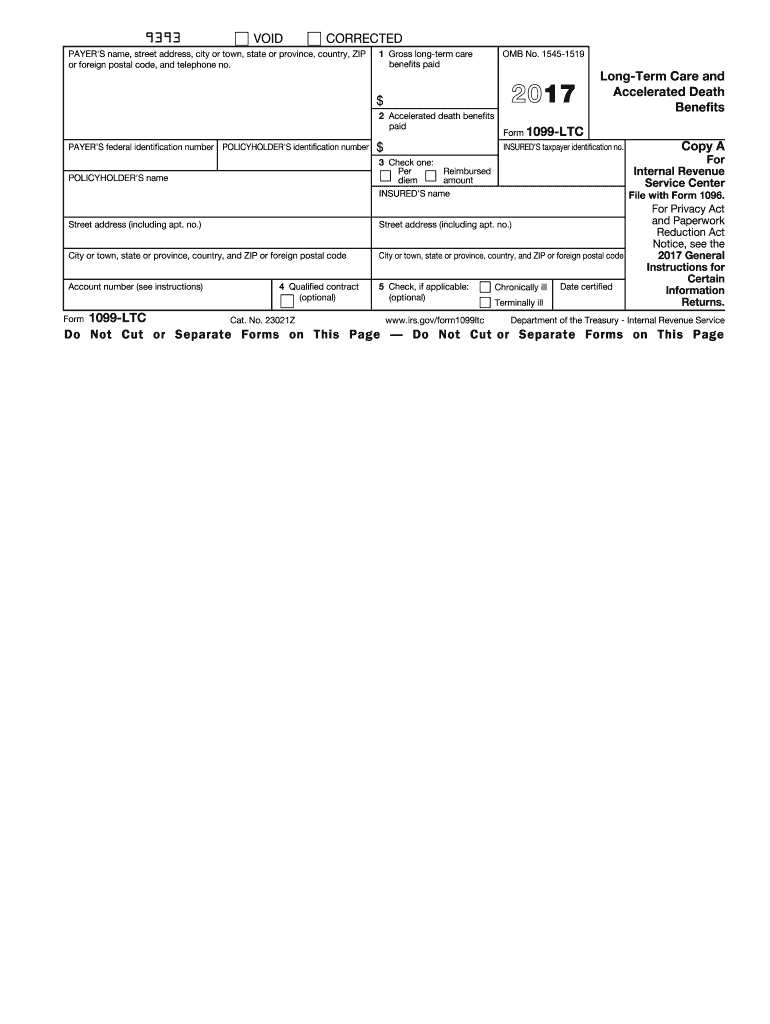







Definition and Purpose of Form 1099-LTC
Form 1099-LTC is a tax document used primarily for reporting the payments of long-term care (LTC) benefits and accelerated death benefits. Issued by insurers, employers, or financial institutions, this form ensures that recipients and the IRS are informed about disbursements related to LTC insurance policies. Key to its purpose is detailing the type of benefits received, whether periodic or in lump sum, and highlighting their tax implications. Understanding this form is crucial for policyholders and insured individuals, as it addresses how these payments might affect their taxable income and reporting responsibilities.
How to Use Form 1099-LTC
Utilizing Form 1099-LTC begins by accurately reviewing the information presented. Policyholders should verify that the amount and type of benefits listed reflect their records. Critical steps include:
- Validation of Personal Information: Ensure names, addresses, and taxpayer identification numbers are correct.
- Review of Payments: Check the amounts paid, types of benefits (e.g., reimbursements for expenses or per diem), and any accelerations in death benefits.
- Reporting to the IRS: Since these benefits might be taxable based on circumstances, including them in your tax return must align with federal guidelines.
- Consultation: Seek professional tax assistance if uncertainties arise, particularly surrounding tax implications and eligibility for certain deductions.
Obtaining Form 1099-LTC
Acquiring Form 1099-LTC can occur through various means, depending on the payer. Insurers or financial institutions generally dispatch these documents directly to policyholders by mail, often by the end of January following the tax year. Should the form not be received, recipients should:
- Contact the issuing company directly.
- Verify mailing addresses and personal information.
- Access the form electronically if supported by the issuing institution's online services.
In scenarios involving lost or incorrect forms, contact the issuer promptly to ensure a corrected form is acquired before tax filing deadlines.
Steps to Complete Form 1099-LTC
Completing Form 1099-LTC involves several crucial steps, typically performed by the issuer. Nonetheless, understanding these steps aids recipients in ensuring their information aligns:
- Details of the Insured: Accurate completion includes the insured’s and the policyholder’s data.
- Benefit Types and Amounts: Report whether benefits paid reflect long-term care services or accelerated death benefits.
- Policy Information: Ensure policy numbers and types align with those listed on the document.
- Other Specified Considerations: Check for details that may require further information or documentation, particularly if handling multiple policies.
Who Typically Uses Form 1099-LTC
Form 1099-LTC is generally issued to:
- Policyholders who receive payments from long-term care insurance policies.
- Insured Individuals using accelerated death benefits, often under specific contractual conditions, such as terminal illnesses.
- Corporate Entities responsible for administering LTC benefits and satisfying IRS reporting obligations.
Understanding user profiles helps clarify the form's utility in personal and business tax contexts, ensuring all parties fulfill their required roles.
Key Elements of Form 1099-LTC
Form 1099-LTC comprises numerous critical components essential for proper tax reporting, including:
- Payer Information: Details regarding the entity issuing the benefits.
- Policy and Benefit Data: Types of benefits, amounts paid, and the specific nature of payouts.
- IRS Codes and Regulations: Instructions detailing implications for taxable income, with direct references to IRS instructions pertinent to recipient circumstances.
IRS Guidelines for Form 1099-LTC
The IRS provides specific guidelines that govern the issuance and reporting of Form 1099-LTC. These include:
- Filing Requirements: Outlining who must file the form and under what conditions benefits become taxable.
- Information Reporting: Mandating the correct capture of applicable benefits and ensuring accurate tax record keeping.
- Taxpayer Responsibilities: Highlighting the necessity for transparency and clarity in reporting to prevent discrepancies during audits or assessments.
Filing Deadlines and Important Dates
For Form 1099-LTC, it is vital to adhere to timelines:
- Issuance to Recipients: The form should reach recipients by January 31 each year.
- Submission to IRS: Payers file copies with the IRS by February 28 if on paper, or March 31 if electronically.
- Tax Filing for Recipients: Information should factor into individual returns by the April filing deadline unless extensions are sought.
In closings, understanding these deadlines facilitates compliance and can mitigate the risk of penalties or corrective actions.