
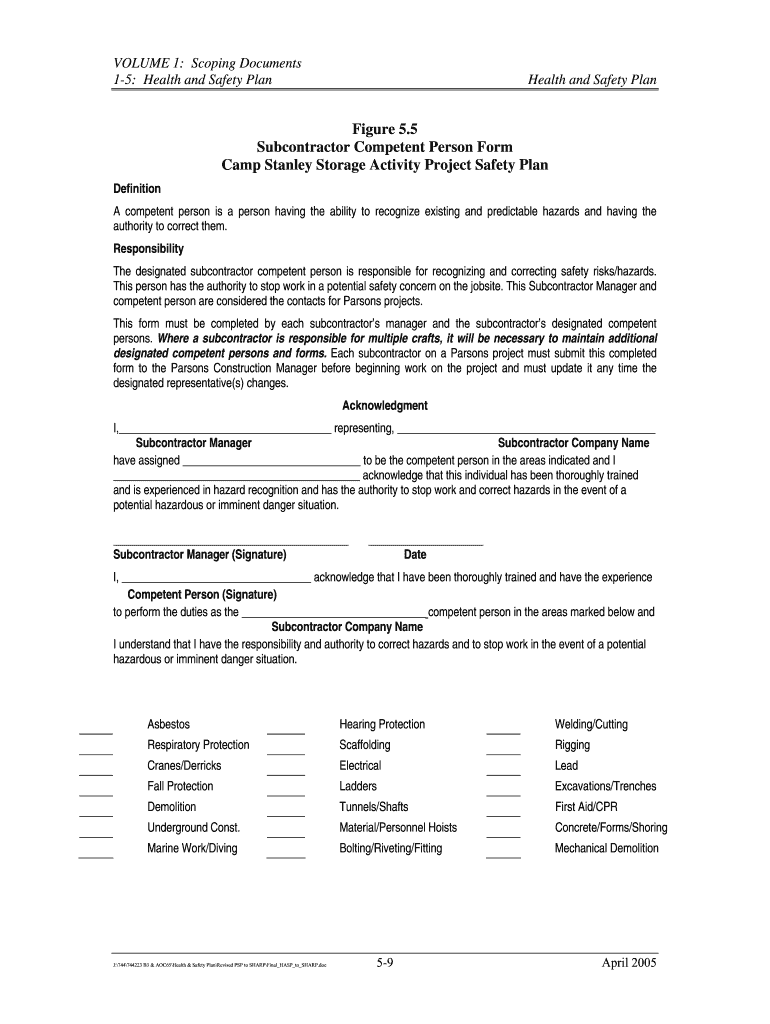







Definition & Meaning of the Competent Person Letter
A competent person letter is a formal document that designates an individual with the expertise and authority to identify and mitigate safety hazards within a work environment. This designation is crucial in industries that involve significant safety risks, such as construction or manufacturing. The individual referred to as the "competent person" is typically trained in hazard recognition and has the authority to take corrective measures, including halting unsafe operations to protect workers.
The term "competent person" is often recognized by regulatory bodies, including the Occupational Safety and Health Administration (OSHA), which specifies that this individual must possess the knowledge and experience to recognize hazards. This recognition ensures that businesses comply with workplace safety regulations, ultimately protecting workers and reducing liability risks.
Key Elements of the Competent Person Letter
A well-structured competent person letter contains several critical elements to ensure effectiveness and compliance. These key aspects include:
-
Identification of the Competent Person: The letter must clearly identify the individual being designated as the competent person. This includes their full name, job title, and any relevant certifications or training that validates their competence.
-
Scope of Authority: It should outline the specific responsibilities and powers granted to the competent person, including their authority to stop work if safety hazards are identified.
-
Training and Qualifications: Details regarding the individual’s training and qualifications should be included, demonstrating their capability to handle the responsibilities assigned to them.
-
Date of Designation: The letter should specify the effective date of the designation, ensuring clarity regarding when the individual assumes their responsibilities.
-
Signature of Authority: A valid signature from a company authority, such as a manager or director, is essential to validate the authority of the competent person.
These elements not only reinforce the role of the competent person but also provide clarity on their responsibilities and authority within the organization.
How to Use the Competent Person Letter
Using a competent person letter involves several steps to ensure that it is integrated appropriately into workplace safety protocols. Consider the following:
-
Distribution to Relevant Parties: Once the letter is completed, distribute it to all relevant personnel, including the competent person, management, and safety officers. This ensures everyone is aware of who holds the title and responsibilities.
-
Training and Awareness: Conduct training sessions that outline the expectations and responsibilities tied to the role of a competent person. Ensure that all workers know who to turn to in case of safety concerns.
-
Regular Reviews: Establish a system for regularly reviewing the designation, including updates after significant changes in personnel, duties, or safety procedures.
-
Documentation: Maintain records of the competent person letter within your safety compliance documentation. This serves as proof of compliance during inspections or audits.
By following these steps, organizations can leverage the competent person letter to enhance workplace safety and ensure compliance with regulations.
Important Terms Related to the Competent Person Letter
Understanding key terminology associated with the competent person letter is essential for clear communication and compliance in safety practices. Specific terms include:
-
Hazard Recognition: The process of identifying potential sources of harm in the workplace.
-
OSHA Standards: Regulations set by the Occupational Safety and Health Administration to ensure safe and healthful working conditions.
-
Authority to Stop Work: The legal power granted to the competent person to halt operations when unsafe conditions exist.
-
Safety Protocols: Established procedures designed to minimize risk and ensure safety in the workplace.
Familiarity with these terms supports effective communication and reinforces the understanding of the competent person’s role.
Examples of Using the Competent Person Letter
Practical usage of a competent person letter can be seen across various industries. Here are examples demonstrating its application:
-
Construction Industry: In construction sites, a competent person letter designating a site supervisor ensures that they are authorized to conduct hazard assessments and implement safety measures. For example, if scaffolding is found to be unstable, the designated competent person can stop work immediately and initiate repairs.
-
Manufacturing: In a manufacturing setting, the competent person may be responsible for overseeing the installation of machinery. Their letter ensures they have the authority to enforce safety protocols and halt production should any equipment pose a hazard to employees.
-
Laboratory Settings: In chemical laboratories, the competent person may oversee the safe handling of hazardous materials. The competent person letter enables them to implement safety protocols and conduct training for staff on proper handling techniques.
These real-world scenarios illustrate the practical importance of a competent person letter in safeguarding workplace health and safety.
Legal Use of the Competent Person Letter
The legal framework surrounding the competent person letter is primarily guided by OSHA regulations. Organizations must ensure that:
-
The assigned competent person meets the training and experience requirements set by OSHA, thus holding the legal authority to make safety decisions.
-
The competent person letter is properly documented and accessible, demonstrating compliance with federal and state safety regulations.
-
The role of the competent person is clearly defined and communicated across the organization to ensure accountability and liability protections.
Adhering to these legal requirements not only protects workers but also shields the organization from potential legal ramifications associated with workplace safety violations.




