







Definition & Meaning
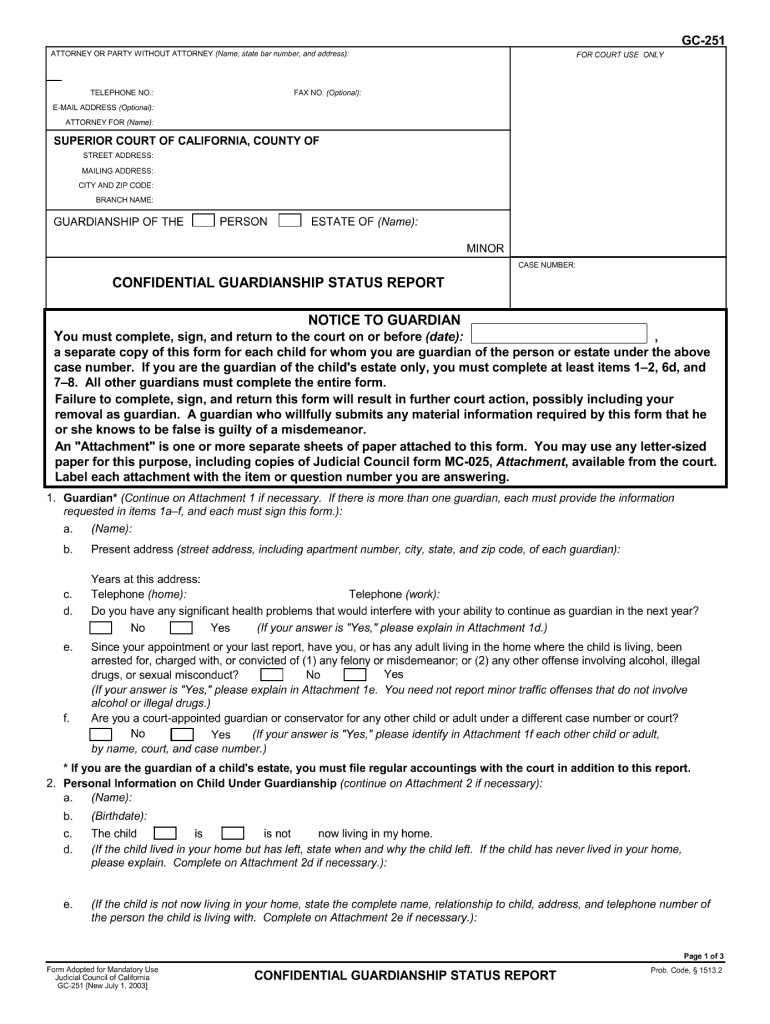
The GC-251 is a form used typically within the legal system of the United States, particularly in the context of guardianship cases in superior courts. It is essential for legal proceedings involving the appointment of a guardian for an individual who is deemed incapable of managing their personal and/or financial affairs. The form requires detailed information about the petitioner, the proposed guardian, and the person in need of guardianship, ensuring that the court has comprehensive data to make informed decisions.
How to Use the GC-251
To use the GC-251, you first need to obtain the form, which is usually available from your local superior court’s website or office. Once you have the form, carefully fill out all required sections with accurate and current information. This includes details such as your name, contact information, and the nature of the guardianship being sought. Make sure to review all instructions specific to your jurisdiction, as the requirements can vary slightly by state. When completed, submit the form according to your court's specific filing procedures, and pay any necessary filing fees.
How to Obtain the GC-251
The GC-251 can be obtained from multiple sources. Generally, the easiest way is to visit the official website of your local superior court or contact their office to request a copy. Many courts provide downloadable PDF versions of their forms online, making it convenient to acquire the document. Additionally, if you’re unable to access it digitally, you can visit the courthouse in person to request a paper copy from the clerk's office. It's important to ensure that you are using the correct and latest version of the form to avoid any submission issues.
Steps to Complete the GC-251
- Personal Information: Start by entering your personal details, including your name, address, and contact information.
- Purpose of Petition: Clearly state the purpose of the guardianship request. This might involve explaining the relationship to the person in need and the reasons for seeking guardianship.
- Details of the Person in Need: Fill in the details of the individual for whom guardianship is sought, including their name, age, and current living situation.
- Proposed Guardian Information: Provide information about the proposed guardian, including their qualifications and relationship to the person needing guardianship.
- Supporting Information: Include any additional documentation or arguments that support the need for guardianship.
- Signature and Date: Sign and date the form, ensuring that all the information provided is accurate and complete.
Who Typically Uses the GC-251
The GC-251 is primarily used by individuals or legal representatives seeking to establish guardianship over someone who is unable to manage their own affairs. This includes family members, close friends, and professional guardians. Lawyers often assist in completing this form to ensure it adheres to legal standards and that all necessary information is provided. Additionally, the form is used by courts to evaluate and approve guardianship petitions, ensuring that the appointed guardian is suitable and capable of performing their duties.

Legal Use of the GC-251
The legal use of the GC-251 is to officially request the establishment of a legal guardianship through the superior court system. It plays a crucial role in the legal process, as it provides the court with all necessary information to assess the suitability of the petitioner as a guardian, as well as the necessity for guardianship. The form must comply with state-specific legal requirements, ensuring that the rights of both the person in need of guardianship and the proposed guardian are protected.
Key Elements of the GC-251
The GC-251 includes several key elements that are critical for its validity and effectiveness:
- Identification and Contact Information: Details of all parties involved.
- Guardianship Type: Specification of the type of guardianship being requested (e.g., personal, financial, or both).
- Qualifications: Information demonstrating the proposed guardian's ability to fulfill responsibilities.
- Consent and Notification: Documentation of consent from the person in need or notification of family members, as applicable.
- Supporting Evidence: Any additional information or documents that bolster the case for establishing guardianship.
State-Specific Rules for the GC-251
Each state may impose additional requirements or modifications for the GC-251. Some states might require particular documents to accompany the form, or they might have different submission protocols. It’s imperative to consult specific state guidelines or seek legal advice to ensure compliance with all legal obligations. Exploring local resources or consulting with a local attorney can also help illuminate any state-specific nuances related to the GC-251 process.




