
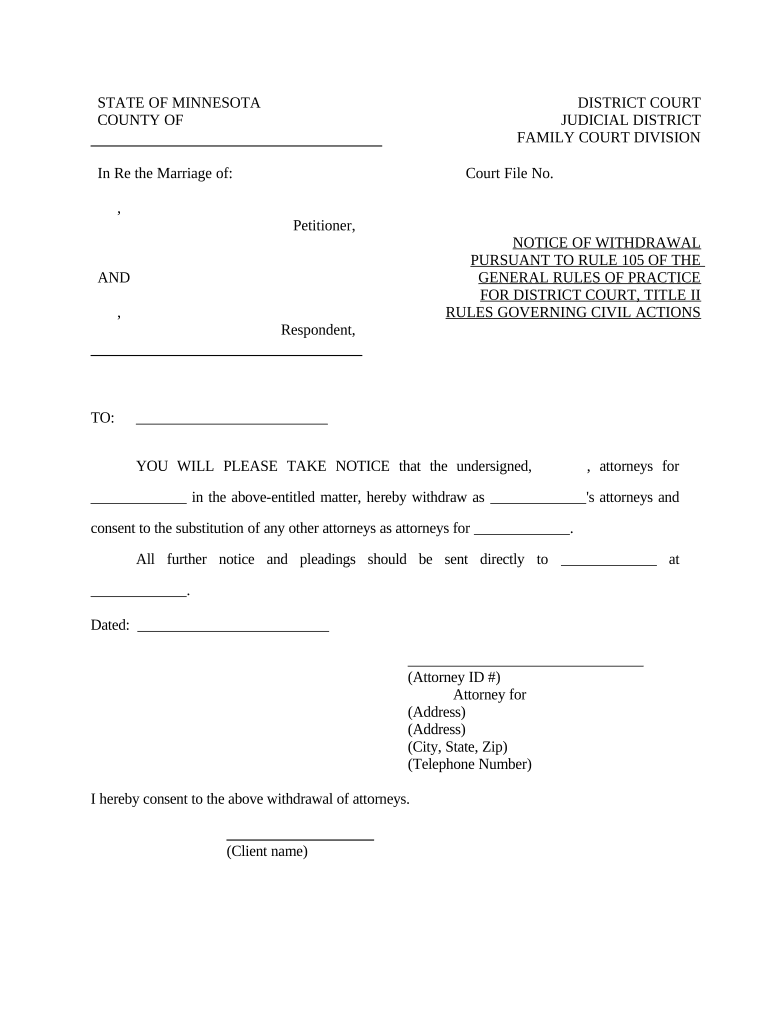







Definition and Meaning of Notice Withdrawal
A notice of withdrawal is a formal document used in legal proceedings that signifies the intention of an attorney or a party to terminate their representation or participation in a case, often before a court or other governing body. This form serves to inform the relevant parties, including the court, that the attorney is withdrawing from representing their client, thereby officially ceasing to advocate on their behalf. It is crucial for maintaining clarity and transparency within the legal process, ensuring all involved are aware of any changes in representation.
Key aspects include:
- Purpose: To officially notify the court and other parties of the attorney's withdrawal from a case.
- When Used: Typically filed in family law cases, criminal proceedings, civil litigation, or when an attorney can no longer represent their client effectively or chooses to withdraw.
- Legal Basis: Governed by specific legal standards and ethical considerations that attorneys must adhere to when withdrawing from a case, ensuring clients are not left without representation without proper notice.
Understanding the legal nuances surrounding a notice of withdrawal is essential for both lawyers and clients to navigate the complexities of the legal system appropriately.
Steps to Complete the Notice Withdrawal
Completing a notice of withdrawal involves several critical steps to ensure it is processed efficiently and meets all legal standards.
-
Draft the Notice: Begin by drafting the withdrawal notice, including:
- The case name and number.
- The identity of the withdrawing attorney and the client.
- A clear statement indicating the desire to withdraw.
- Consent of the client if necessary, as some jurisdictions require this.
-
Check State-Specific Rules: Review the relevant state laws and court rules that may dictate additional information or specific formats required for the notice.
-
Obtain Required Signatures: Ensure the notice is signed by both the withdrawing attorney and the client (if required), confirming the withdrawal is mutual and agreed upon.
-
File the Notice: Submit the completed notice to the court where the case is ongoing. This may involve:
- Filing online through the court’s electronic filing system or
- Submitting a paper copy to the court clerk.
-
Notify All Parties: Send copies of the filed notice to all other parties involved in the case to maintain transparency and ensure everyone is informed about the change in representation.
-
Retain Documentation: Keep copies of all documents filed and served. This will be crucial if any disputes arise regarding representation after the withdrawal.
Following these steps will help ensure that the notice of withdrawal is effectively executed and recognized by the court and all parties involved.
Important Terms Related to Notice Withdrawal
Understanding the terminology associated with a notice of withdrawal is essential for navigating legal documents effectively. Here are some key terms:
- Counsel: Refers to the attorney providing legal advice and representation to a client.
- Substitution of Counsel: A legal process whereby one attorney is replaced by another in representation of a client, often filed simultaneously with a notice of withdrawal.
- Withdrawal of Representation: The formal act of an attorney removing themselves from a case, often requiring a notice of withdrawal to be filed.
- Client Consent: The agreement from a client allowing their attorney to withdraw from representation; this is sometimes required by law.
- Court Filing: The act of submitting legal documents to the court, which may include a notice of withdrawal, ensuring they become part of the official case record.
Being familiar with these terms aids in understanding the implications and processes surrounding the notice of withdrawal, particularly for clients navigating the legal system.
Who Typically Uses the Notice Withdrawal
A notice of withdrawal is primarily used by attorneys and legal representatives, but several parties may utilize or be affected by this document, including:
- Attorneys: Lawyers may issue a notice of withdrawal when they can no longer represent a client, whether due to ethical conflicts, personal issues, or client-requested withdrawal.
- Clients: Clients may also file a notice to self-represent or request a new attorney if they are dissatisfied with their current representation.
- Courts: Judges may rely on these notices to understand the status of representation in cases, especially during hearings or trials.
- Other Legal Professionals: Paralegals and legal assistants may also assist with the preparation and submission of withdrawal notices as part of the legal team.
Understanding who uses the notice of withdrawal helps identify the various stakeholders involved in legal processes and the importance of formal documentation in maintaining clarity in legal representations.


Examples of Using the Notice Withdrawal in Legal Scenarios
Several scenarios may warrant the use of a notice of withdrawal, demonstrating its practical applications in a variety of legal contexts:
- Family Law: An attorney representing a party in a divorce case may issue a notice of withdrawal if the client decides to hire a different attorney or if the attorney faces a conflict of interest.
- Criminal Defense: A public defender may withdraw from representing a defendant if they discover they cannot provide adequate defense due to prior relationships or obligations, requiring a formal notice.
- Civil Litigation: In a lawsuit, a plaintiff's attorney may file a notice of withdrawal when the plaintiff decides to discontinue the case or self-represent for financial reasons.
- Probate Matters: An attorney managing a probate case may withdraw due to personal issues affecting their ability to provide effective representation, necessitating a notice to the court and interested parties.
By examining these examples, one can appreciate the importance of the notice of withdrawal in facilitating effective legal representation and maintaining the rights of clients within various legal proceedings.


