





Definition and Purpose of the Tax Sharing Agreement Template
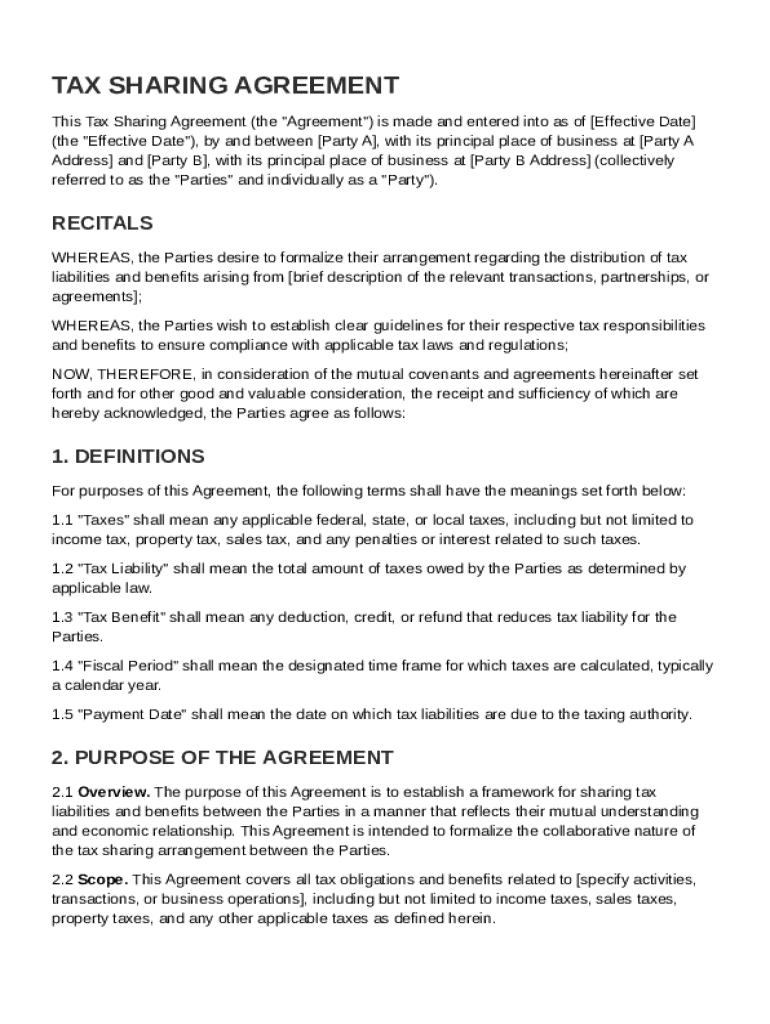
The Tax Sharing Agreement Template is a formal document used to delineate how tax liabilities and benefits are allocated between two or more parties. Typically used by corporations, partnerships, or related entities, this template ensures that all involved parties understand their responsibilities regarding tax payments and filings. By defining the methodology for calculating tax obligations, the agreement aids in preventing misunderstandings and provides a documented guideline for tax sharing arrangements.
Key Objectives
- Clarity and Transparency: The template serves to clarify the tax payment responsibilities of each party, ensuring transparency and reducing the potential for disputes.
- Legal Compliance: It ensures that tax arrangements comply with relevant tax laws and regulations, safeguarding all parties from legal issues.
- Conflict Resolution: By establishing agreed-upon terms and procedures, the agreement aids in dispute resolution should disagreements arise.
Steps to Complete the Tax Sharing Agreement Template
Creating a tax-sharing agreement involves several detailed steps to ensure all aspects are addressed comprehensively. Here’s a step-by-step guide:
- Identify the Parties Involved: Clearly name the parties involved in the agreement, such as parent companies, subsidiaries, or any affiliates.
- Define Tax Obligations: Outline each party's responsibility for specific tax liabilities, identifying how taxes are split between them.
- Specify Calculation Methodologies: Detail the methods used to calculate tax liabilities and benefits, including allocation formulas.
- Include Record-Keeping Requirements: Establish requirements for maintaining records in case of audits or internal reviews.
- Draft Indemnification Clauses: Define conditions under which indemnification applies should one party incur liabilities due to the other party’s actions.
- Discuss Dispute Resolution: Include processes for resolving any disputes that arise regarding the agreement’s terms.
- Set Terms for Termination: Clarify conditions under which the agreement can be terminated, including notice periods.
Key Elements of the Tax Sharing Agreement Template
An effective Tax Sharing Agreement Template should encompass several critical elements:
- Definitions: Clearly define terms used throughout the agreement, such as "tax benefits" and "tax liabilities."
- Responsibilities: Assign specific tax filing and payment duties to each party, ensuring mutual understanding.
- Calculation Methods: Detail the methodologies used for determining tax obligations and entitlements.
- Record-Keeping: Set out requirements for document maintenance and information exchange.
- Indemnification: Establish clauses to protect parties from losses due to the other's actions.
- Dispute Resolution: Outline steps for mediation or arbitration to resolve disagreements.
- Termination Conditions: Specify the conditions and processes for terminating the agreement.
Legal Use of the Tax Sharing Agreement Template
The Tax Sharing Agreement Template must be used in compliance with applicable tax laws:
- Compliance with Tax Codes: Ensure that the agreement adheres to the Internal Revenue Code and relevant state tax laws.
- Binding Legal Document: Recognize that the template, once executed by parties, acts as a legally binding contract enforceable by courts.
- Review by Legal Counsel: It’s advisable to have the agreement reviewed by legal experts to ensure it aligns with current legal standards and practices.
Who Typically Uses the Tax Sharing Agreement Template
This template is commonly used by:
- Parent Companies and Subsidiaries: To manage taxes within corporate families.
- Joint Ventures: For entities that collaborate on projects but retain separate tax obligations.
- Franchise Operations: To manage taxes between franchisors and franchisees who operate under shared revenues but maintain independent financial accounts.


Important Terms Related to the Tax Sharing Agreement Template
Understanding specific terms within the agreement is essential:
- Tax Benefits: Refers to reductions in tax liability owing to deductions, credits, or losses.
- Allocation: The method by which tax liabilities and benefits are distributed among parties.
- Indemnity: A contractual obligation to compensate for loss or damages.
Examples of Using the Tax Sharing Agreement Template
Practical applications of this agreement include:
- Corporate Mergers: Companies merging may use the template to allocate tax responsibilities determined post-merger.
- International Tax Coordination: Multinational corporations coordinate taxes across jurisdictions, using the template to allocate taxes efficiently between the US entity and foreign counterparts.
- Financial Transparency in Partnerships: Partnerships utilize this agreement to ensure that tax obligations align with their financial agreements.
IRS Guidelines and Filing Deadlines
The IRS provides specific guidelines relevant to tax sharing:
- Filing Requirements: Parties must ensure timely tax filing in adherence to IRS tax deadlines such as those for quarterly payments.
- Record Retention: Follow IRS guidelines on maintaining records for a minimum period, usually three to seven years, to support tax filings.
- Audit Preparedness: Retain documents and agreements that substantiate tax positions in case of IRS audits.
Penalties for Non-Compliance
Failure to comply with the agreed tax-sharing terms can result in:
- Financial Penalties: Incorrect or delayed tax filings can lead to interest charges and fines.
- Legal Consequences: Non-compliance may result in legal actions taken by affected parties or government entities.
- Reputational Damage: Continued non-compliance could tarnish the reputations of the companies involved.
Understanding and effectively using a Tax Sharing Agreement Template is critical for ensuring compliance, maintaining clear communication between parties, and reducing potential legal risks. It is a pivotal tool for any entity involved in shared tax obligations or benefits.