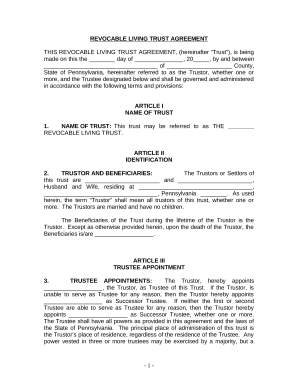
Enhance your work productivity with Trusts & Estates

Record managing consumes to half of your office hours. With DocHub, you can reclaim your time and improve your team's productivity. Access Trusts & Estates collection and explore all document templates related to your day-to-day workflows.

Easily use Trusts & Estates:

  1. Open Trusts & Estates and utilize Preview to find the appropriate form.
  2. Click on Get Form to start working on it.
  3. Wait for your form to open in our online editor and start editing it.
  4. Add new fillable fields, icons, and images, adjust pages order, etc.
  5. Fill out your document or prepare it for other contributors.
  6. Download or share the form by link, email attachment, or invite.

Improve your day-to-day document managing with our Trusts & Estates. Get your free DocHub account right now to explore all templates.


Video Guide on Trusts & Estates management

video background

Commonly Asked Questions about Trusts & Estates

Understanding the differences between a will and a trust is essential in New York State to make informed decisions about your estate plan. While will offer simplicity and testamentary freedom, trusts provide benefits such as probate avoidance, privacy, and flexibility.
Probate avoidance is the only goal. While this is an admirable goal, a trust may not be the only way to avoid probate. You have straightforward wishes. Youre motivated by tax savings or Medicaid eligibility. Youre not great at follow-through.
United States trust law is the body of law that regulates the legal instrument for holding wealth known as a trust. Most of the law regulating the creation and administration of trusts in the United States is now statutory at the state level.
A living trust, unlike a will, can keep your assets out of probate proceedings. A trustor names a trustee to manage the assets of the trust indefinitely. Wills name an executor to manage the assets of the probate estate only until probate closes.
Under New York trust laws, a lifetime trust is created by a person who is still alive rather than upon a persons death through a will. Any person 18 or older may dispose of property through a lifetime trust. Every estate held in property may be disposed by a lifetime trust.
In New York, you can make a living trust to avoid probate for virtually any asset you ownreal estate, bank accounts, vehicles, and so on. You need to create a trust document (its similar to a will), naming someone to take over as trustee after your death (called a successor trustee).
Since the assets in a trust do not have to go through probate, it can be a much quicker and easier way to transfer wealth to your heirs. Also, some trusts (known as irrevocable trusts) can help reduce your tax burden because they take taxable assets out of your name and transfer them into the trust.
An estate is everything that you own at the moment of your death and is passed in a one-time distribution to your legal heirs. A trust is a legal entity that can exist for generations and distributes assets ing to a series of rules and instructions.