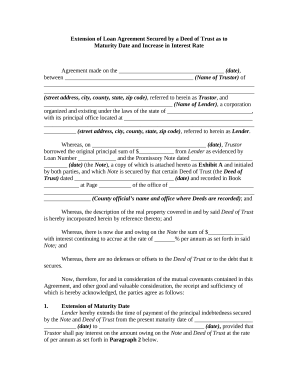
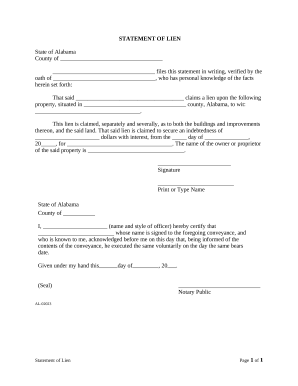
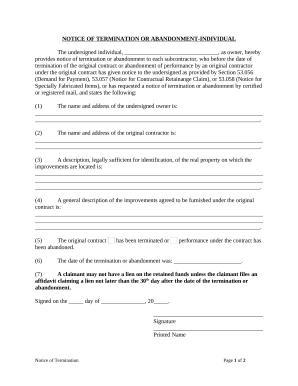
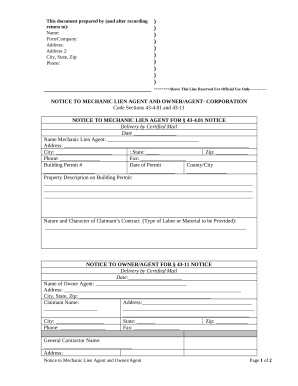
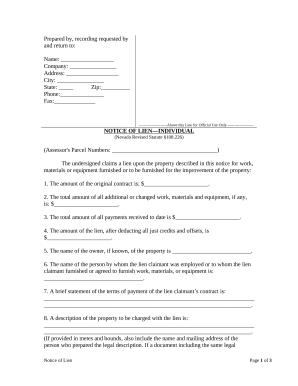
Manage Property Liens effortlessly online

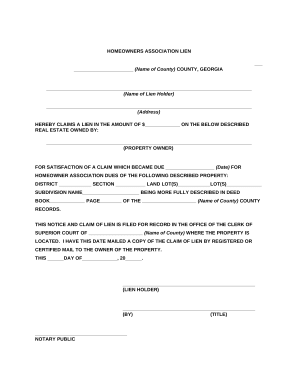
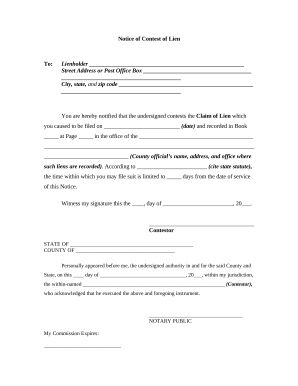
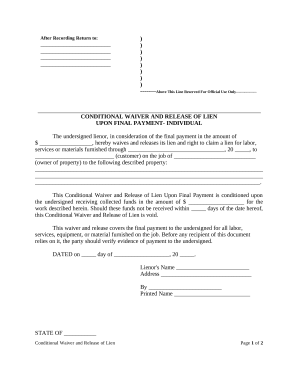
Document managing can overpower you when you can’t locate all the forms you need. Fortunately, with DocHub's substantial form collection, you can get everything you need and easily handle it without the need of changing among software. Get our Property Liens and begin utilizing them.

Using our Property Liens using these basic steps:

  1. Check Property Liens and select the form you need.
  2. Preview the template and click Get Form.
  3. Wait for it to open in our online editor.
  4. Edit your form: include new information and pictures, and fillable fields or blackout some parts if required.
  5. Prepare your form, preserve alterations, and prepare it for delivering.
  6. When all set, download your form or share it with other contributors.

Try out DocHub and browse our Property Liens category with ease. Get a free profile right now!

Commonly Asked Questions about Property Liens

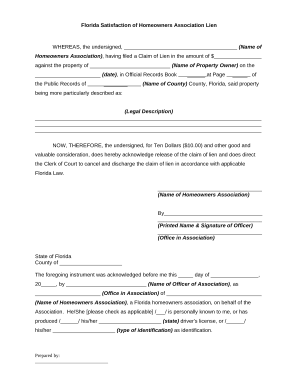
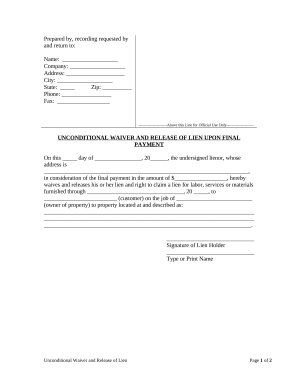
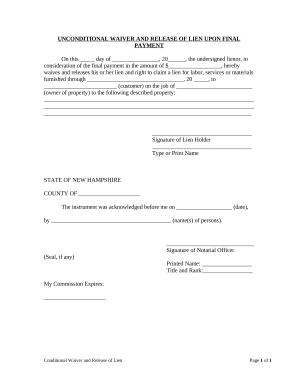
Pay Off the Lien Once you determine that the lien is valid, the simplest method for removing it is to pay it off. Even if you need to borrow the funds from family or friends, satisfying your debt will allow the property to become unencumbered, sold, and closed.
How long does a judgment lien last in New York? A judgment lien in New York will remain attached to the debtors property (even if the property changes hands) for ten years.
In New York, a judgment lien will only remain attached to the property for 10 years. If the judgment is not paid by the end of the 10-year period, your client can seek a renewal judgment on the lien that would extend it for one additional 10-year period.
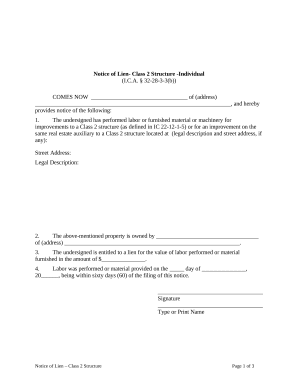
Last updated July 24, 2024. If contractors and suppliers dont get paid on a construction project in New York, they can file a mechanics lien to secure payment. A mechanics lien is a legal tool that provides the unpaid party with a security interest in the property.
Monetary judgments, mechanics liens, brokers liens and notices of pendency can be searched in our White Plains office or at Westchester Records Online. As required by New York State Law, judgments and liens are permanent records accessible by the public.
Six common types of liens are: Mortgage Lien. The most common type of lien is a mortgage. Tax Lien. Tax liens are special liens that are taken against a piece of property when the owner fails to pay their real estate taxes. Mechanics Lien. IRS Tax Lien. Judgment Lien. Child Support Lien.
Information on liens on a property in New York may be available through: County Tax Assessors Office. Government agencies websites (such as the IRS)