



Increase your output with Legal Collection Letters
Document management takes up to half of your office hours. With DocHub, it is easy to reclaim your time and effort and increase your team's productivity. Access Legal Collection Letters online library and investigate all templates related to your day-to-day workflows.
Easily use Legal Collection Letters:
- Open Legal Collection Letters and employ Preview to get the appropriate form.
- Click on Get Form to start working on it.
- Wait for your form to upload in our online editor and start editing it.
- Add new fillable fields, symbols, and images, modify pages order, and many more.
- Fill out your form or prepare it for other contributors.
- Download or deliver the form by link, email attachment, or invite.
Boost your day-to-day file management with the Legal Collection Letters. Get your free DocHub profile right now to discover all templates.
Video Guide on Legal Collection Letters management

Commonly Asked Questions about Legal Collection Letters
Will debt go away if I ignore it?
Ignoring a debt doesnt make it go away. Interest and fees will continue to accumulate, increasing the total amount you owe. Missed payments and delinquencies will also be reported to credit bureaus, negatively impacting your credit score.
What happens if I keep ignoring debt collectors?
When it comes to debt collection calls, it is never clever to ignore them. In fact, it may make things a lot worse for you. The debt collector may file a collections lawsuit in court, which could lead to the garnishing of wages, seizure of personal property, or money taken from your bank accounts.
What happens if you ignore debt letters?
Some of these letters have strict deadlines and your creditor can take further action if you do not reply. Ignoring them is not a good idea. Make sure your creditors have your current address. You might not know about court action if you do not get important letters.
What happens if I ignore debt collection letters?
Ignoring or avoiding the debt collector may cause the debt collector to use other methods to try to collect the debt, including a lawsuit against you. If you are unable to come to an agreement with a debt collector, you may want to contact an attorney who can provide you with legal advice about your situation.
What happens if I dont respond to a debt collector?
If you get a summons notifying you that a debt collector is suing you, dont ignore it. If you do, the collector may be able to get a default judgment against you (that is, the court enters judgment in the collectors favor because you didnt respond to defend yourself) and garnish your wages and bank account.
What to do What to do when you get a collection letter?
Debt collectors are not allowed to: Speak to other people about your debt without your permission, or threaten to do so. Add interest or charges to the debt that are excessive compared to the costs they have incurred. Threaten or abuse you. My Rights and Debt Collectors - My Credit Controllers mycreditcontrollers.co.uk Articles debt-c mycreditcontrollers.co.uk Articles debt-c
How do I write a letter for legal debt collection?
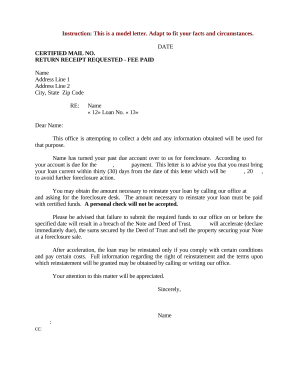
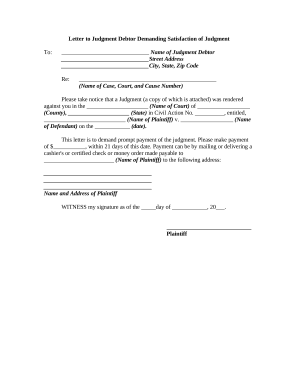
What to Include in a Lawyer Debt Collection Letter Date of the letter. Lawyers name, firm, and address. Clients name and address. A subject line that states its purpose. The precise amount the client owed your firm and the date when the payment was due. Instructions on how to pay the debt and the new deadline.
How do I respond to a collection letter from a lawyer?
Four Steps to Take if You Received a Debt Collection Letter From a Lawyer Carefully Review the Letter to Determine the Claim. Consider Sending a Debt Validation Request. Gather and Organize All Relevant Financial Documents and Records. Be Proactive: Debt Does Not Go Away on its Own.
Are debt collectors supposed to send you a letter?
Legally, a debt collector has to send you a debt verification letter within five days of their first contact with you. And if not, you should ask for one. Why? Because it helps you determine if the debt is actually yours and if theres anything fishy going on behind the scenes.


