







Definition & Meaning
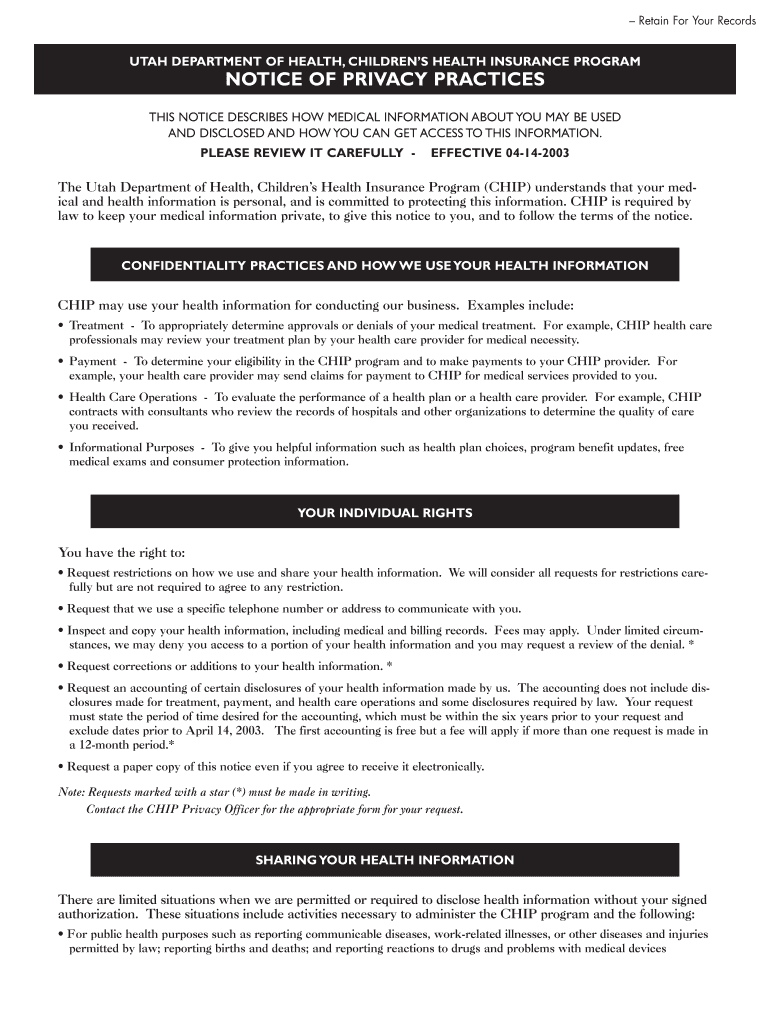
The Utah Department of Health's Children's Health Insurance Program (CHIP) is a crucial healthcare initiative designed to provide affordable health coverage to children in families with incomes too high to qualify for Medicaid but too low to afford private coverage. CHIP is part of a broader federal initiative aimed at reducing the number of uninsured children in the United States, ensuring that they have access to necessary medical services such as routine check-ups, immunizations, and dental care.
-
Target Audience: CHIP primarily serves children under the age of 19. Families who fall within specified income brackets, typically up to 200% of the federal poverty level, can apply for the program.
-
Coverage: The program includes coverage for preventive care, doctor visits, prescriptions, immunizations, mental health services, dental and vision care, and emergency services.
-
Objective: CHIP aims to bridge the gap for families who earn too much to qualify for Medicaid but cannot afford private insurance, emphasizing the importance of healthcare for children in developing secure and healthy futures.
Eligibility Criteria
To qualify for the Utah CHIP, applicants must meet specific criteria related to age, residency, and income. Understanding these requirements ensures that families are aware of their eligibility status before applying.
-
Age Requirement: Children must be under the age of 19.
-
Residency: Applicants must be residents of Utah and U.S. citizens or meet specific lawful residency guidelines.
-
Income Levels: The household income must fall within the program’s specified limits, which vary based on family size and are adjusted annually according to federal guidelines.
-
Additional Criteria: Applicants should not have other health coverage and must not qualify for Medicaid. There may also be a waiting period if the child has had other health insurance coverage recently.


How to Use the Program
Utilizing the CHIP program involves a straightforward process of applying, receiving coverage confirmation, and accessing healthcare services.
-
Application Process: Interested parties can apply online through the Utah Department of Health’s official website or via a paper application. The online process typically ensures quicker processing times.
-
Receiving Coverage Confirmation: Once the application is processed, eligible families will receive notification of their child’s enrollment, detailing the coverage specifics and effective dates.
-
Accessing Services: Families can begin using the coverage to access a wide range of medical services. It’s recommended to choose healthcare providers within the CHIP network to avoid extra costs.
Steps to Complete the UTAH DEPARTMENT OF HEALTH, CHILDREN'S HEALTH INSURANCE PROGRAM
Applying for CHIP involves several key steps to ensure a successful application and subsequent coverage.
-
Gather Required Documents: Collect proof of income, residency, and the child’s age and citizenship status. This might include pay stubs, birth certificates, and utility bills.
-
Complete the Application: Fill out the CHIP application form with accurate and up-to-date information about household income, family size, and personal details.
-
Submit the Application: Submit the completed application online for faster processing or through mail. Ensure that all sections are completed and required documents are included to avoid delays.
-
Follow Up: After submission, monitor the application status through the Utah Department of Health's website or contact support for updates.
Important Terms Related to CHIP
Familiarity with key terms ensures clarity and helps applicants understand the CHIP program's nuances.
-
Coverage Limits: Refers to the maximum benefits the program provides, ensuring children receive necessary healthcare without excessive out-of-pocket costs.
-
Premiums and Co-pays: While CHIP is low-cost, there may be nominal fees associated with certain services. Understanding these helps plan for healthcare expenses.
-
Network Provider: A healthcare provider or facility that has an agreement with CHIP to provide services at reduced costs. Utilizing network providers minimizes extra expenses.
Application Process & Approval Time
The process to apply for CHIP is designed to be accessible and efficient.
-
Application Channels: Parents can apply online, by mail, or at designated physical locations to suit various preferences and accessibilities.
-
Processing Time: Typically, the review process can take several weeks, depending on the completeness of the application and documentation provided. It's crucial to apply well before medical services are needed.
-
Approval Notification: Successful applicants will receive an approval letter, detailing the coverage start date and any conditions of the program.
Required Documents
A successful CHIP application requires specific documents, which verify eligibility.
-
Income Verification: Recent pay stubs or a completed employment verification form.
-
Proof of Residency: Utility bills or rental agreements confirming Utah residency.
-
Identification: Birth certificates or passports to prove the child’s age and citizenship.
-
Additional Documentation: Include any relevant documentation that supports special circumstances or additional household income.
Key Elements of CHIP
Understanding what the CHIP program covers is essential for maximizing its benefits.
-
Preventive Services: Includes immunizations, routine check-ups, and screenings to catch health issues early.
-
Emergency Care: Access to care in emergencies ensures children are protected in critical situations.
-
Dental and Vision Coverage: Essential for comprehensive health, covering regular check-ups and treatments.
-
Mental Health Services: Support for emotional and psychological well-being through counseling and therapy.
Examples of Using the UTAH DEPARTMENT OF HEALTH, CHIP
Practical examples illustrate how families benefit from CHIP.
-
Routine Health Checks: A family used CHIP for yearly check-ups, vaccinations, and eye exams, ensuring their children's health is closely monitored.
-
Emergency Situations: CHIP covered emergency services when a child broke an arm, significantly reducing the financial burden on the family.
-
Chronic Condition Management: A child with asthma received regular medications and specialist care through CHIP, facilitating better health outcomes.
Understanding these dynamics helps families fully utilize CHIP’s offerings, ensuring holistic healthcare coverage for their children.




