Manage Forfeiture Rights Disclosure Forms quickly online

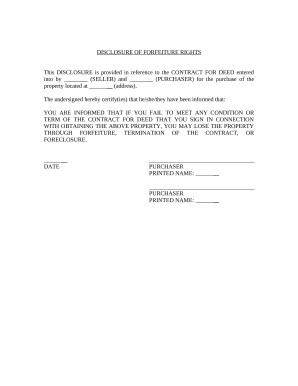
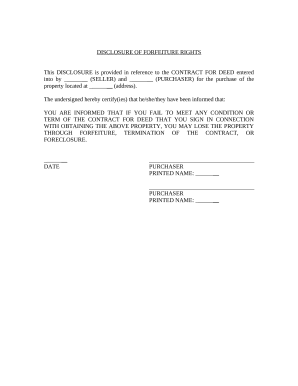
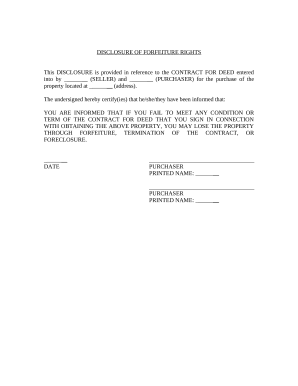
Document management can stress you when you can’t locate all of the forms you need. Fortunately, with DocHub's vast form library, you can find all you need and promptly manage it without switching among applications. Get our Forfeiture Rights Disclosure Forms and start utilizing them.

The best way to manage our Forfeiture Rights Disclosure Forms using these simple steps:

  1. Examine Forfeiture Rights Disclosure Forms and choose the form you need.
  2. Preview the template and then click Get Form.
  3. Wait for it to upload in our online editor.
  4. Alter your template: add new information and pictures, and fillable fields or blackout some parts if required.
  5. Fill out your template, conserve adjustments, and prepare it for delivering.
  6. When ready, download your form or share it with other contributors.

Try out DocHub and browse our Forfeiture Rights Disclosure Forms category easily. Get a free account right now!


Video Guide on Forfeiture Rights Disclosure Forms management

video background

Commonly Asked Questions about Forfeiture Rights Disclosure Forms

Forfeiture is the government taking of property, because it was used or obtained in violation of the law. Assets subject to seizure include cars, cash, real estate, or anything of value used to commit a drug crime or bought with drug proceeds.
Under Federal law, there are three (3) types of forfeiture: criminal forfeiture, civil judicial forfeiture, and administrative forfeiture.
Criminal forfeiture is an action brought as a part of the criminal prosecution of a defendant. It is an in personam (against the person) action and requires that the government indict (charge) the property used or derived from the crime along with the defendant.
As part of a New York State criminal case and except in certain circumstances, the only way the prosecutor can demand forfeiture is by attaching a forfeiture stipulation as a condition of a plea offer and, even in those circumstances, the District Attorney receives forfeiture only in exchange for agreeing not to file a
New Yorks highest court has held that an employee who resigns and violates a non-compete clause can be held to have forfeited any right to post-employment compensation even if the non-compete clause is found to be unreasonable.
Forfeiture is the loss of any property without compensation as a result of defaulting on contractual obligations, or as a penalty for illegal conduct.
Forfeiture is broadly defined as the loss of property for failing to obey the law, and that property is generally lost to the state. A person may have a vested interest in property to be forfeit in two ways: In personum jurisdiction and in rem jurisdiction.