Boost your production with Employer-Employee Agreements

Record management takes up to half of your office hours. With DocHub, you can easily reclaim your time and improve your team's efficiency. Get Employer-Employee Agreements category and investigate all form templates relevant to your daily workflows.

The best way to use Employer-Employee Agreements:

  1. Open Employer-Employee Agreements and use Preview to find the relevant form.
  2. Click on Get Form to start working on it.
  3. Wait for your form to upload in our online editor and begin modifying it.
  4. Add new fillable fields, icons, and pictures, adjust pages, and many more.
  5. Fill out your file or set it for other contributors.
  6. Download or share the form by link, email attachment, or invite.

Accelerate your daily document management with the Employer-Employee Agreements. Get your free DocHub profile right now to discover all forms.


Commonly Asked Questions about Employer-Employee Agreements

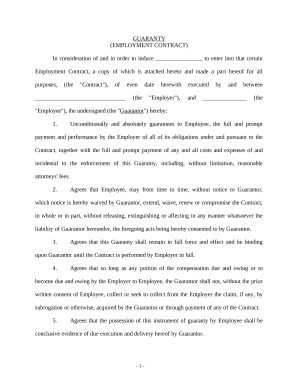
An Employment Contact outlines an employers and employees rights, responsibilities, and obligations. Once the employer offers the employee the job and both parties sign the Employment Contract, they become legally bound to its terms. In Canada, an Employment Contract is also commonly known as a: Employment agreement.
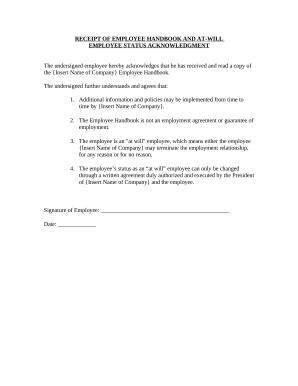
Employment or employee contracts are typically formal, legally binding written documents that specify the terms and conditions of an employment relationship. They often include clauses regarding confidentiality, non-compete and non-solicitation agreements, and termination clauses.
These contracts specify the basic terms and conditions of employment, such as position, job responsibilities, salary, compensation, incentive pay, and stock options. These also define what conduct will justify termination for cause and provide for severance pay in case of termination without cause.
A written employment contract is a document that you and your employee sign setting forth the terms of your relationship. You dont have to enter into a written contract with every employee you hire. In fact, written employment contracts are generally the exception, rather than the rule.
Implied contracts of employment are legally binding agreements that are not written or orally expressed. Instead, they are deemed to exist due to an employers actions and behavior. Implied contracts of employment are easy to create but difficult to enforce because they are hard to prove.
A compensation agreement is a legal document that outlines the terms and conditions between two parties concerning the exchange of services or goods for money. This includes salary, benefits, bonuses, stock options, and other forms of compensation.
An Employment Contract outlines an employers and employees rights, responsibilities, and obligations during a period of employment. Once the employer offers the employee the job and the two parties sign the contract, they become bound to its terms.
The most common contract is a permanent contract, which means the term of work is indefinite. Employees on permanent contracts can be full-time or part-time and typically receive benefits.