
Create your Employer-Employee Agreement from scratch

Start Building Now
Title decoration

Here's how it works

01. Start with a blank Employer-Employee Agreement
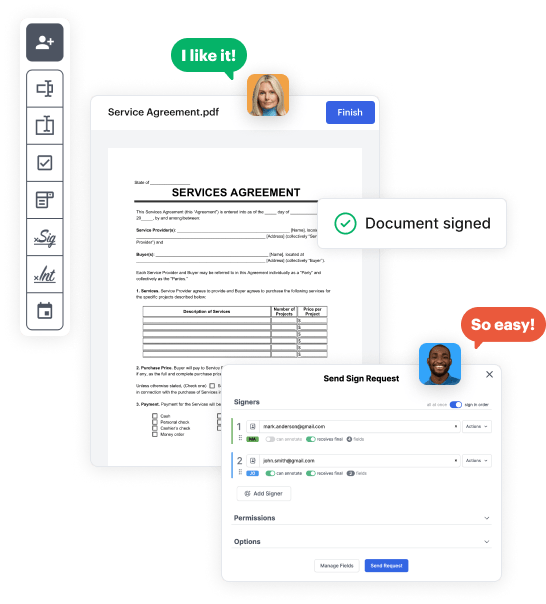
Open the blank document in the editor, set the document view, and add extra pages if applicable.
02. Add and configure fillable fields
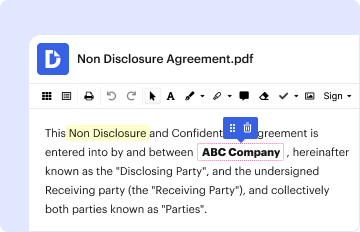
Use the top toolbar to insert fields like text and signature boxes, radio buttons, checkboxes, and more. Assign users to fields.
03. Distribute your form
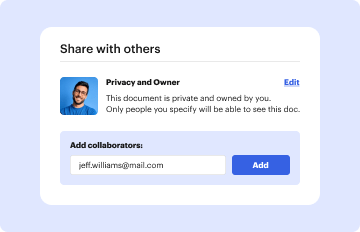
Share your Employer-Employee Agreement in seconds via email or a link. You can also download it, export it, or print it out.

Design your Employer-Employee Agreement in a matter of minutes

Form edit decoration

Step 1: Access DocHub to build your Employer-Employee Agreement.

Begin signining into your DocHub account. Explore the advanced DocHub functionality free for 30 days.

Step 2: Go to the dashboard.

Once signed in, head to the DocHub dashboard. This is where you'll build your forms and handle your document workflow.

Step 3: Create the Employer-Employee Agreement.

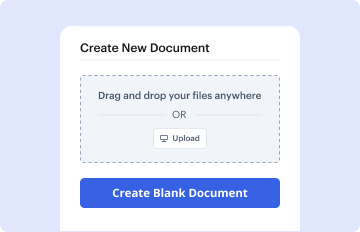
Hit New Document and choose Create Blank Document to be taken to the form builder.

Step 4: Set up the form layout.

Use the DocHub features to add and arrange form fields like text areas, signature boxes, images, and others to your document.

Step 5: Insert text and titles.

Add needed text, such as questions or instructions, using the text tool to lead the users in your document.

Step 6: Customize field properties.

Alter the properties of each field, such as making them compulsory or formatting them according to the data you expect to collect. Designate recipients if applicable.

Step 7: Review and save.

After you’ve managed to design the Employer-Employee Agreement, make a final review of your document. Then, save the form within DocHub, send it to your chosen location, or share it via a link or email.


be ready to get more

Build your Employer-Employee Agreement in minutes

Start creating now

Got questions?

We have answers to the most popular questions from our customers. If you can't find an answer to your question, please contact us.
Contact us
Assignment. Employment agreements will also often contain an assignment provision to prohibit you from assigning your contract to someone else. This clause is included for your employers protection. Less often, a contract will contain language limiting your employers ability to assign your contract to another entity.
When creating an Employment Contract, you can include the following terms: The type and rate of compensation. The frequency of payment. Vacation time. Specified work hours. Specified work location. Employee responsibilities. Length of a probationary period. Confidentiality, non-solicitation, or non-competition clauses.
At its core, the employer-employee relationship is a symbiotic bond between an organization and its workforce. Its not just about job titles and paychecks; it encompasses the dynamics, interactions, and mutual responsibilities between those who provide the work (employees) and those who provide the jobs (employers).
You dont have to enter into a written contract with every employee you hire. In fact, written employment contracts are generally the exception, rather than the rule. In some situations, however, it makes good sense to ask an employee to sign a contract.
Not all employees need a contract, but those handling sensitive information or having specialized knowledge may require one. Employment contracts also hold businesses to certain terms for the employees stint with the company.
be ready to get more

Build your Employer-Employee Agreement in minutes

Start creating now

Related Q&A to Employer-Employee Agreement

Services Provided as Key Activity of the Business For example, if a law firm hires an attorney, it is likely that it will present the attorneys work as its own and would have the right to control or direct that work. This would indicate an employer-employee relationship.
Employment or employee contracts are typically formal, legally binding written documents that specify the terms and conditions of an employment relationship. They often include clauses regarding confidentiality, non-compete and non-solicitation agreements, and termination clauses.
You dont always need an employment contract. There is no legal requirement for a written employment agreement for every employee.

Additional resources on building your forms


