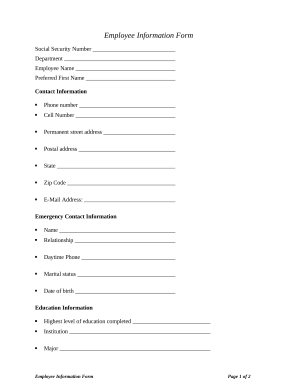
Handle Employee record-keeping easily online

Document management can overwhelm you when you can’t find all the documents you require. Luckily, with DocHub's substantial form library, you can get everything you need and swiftly handle it without the need of switching among apps. Get our Employee record-keeping and start working with them.

How to use our Employee record-keeping using these easy steps:

  1. Examine Employee record-keeping and choose the form you require.
  2. Review the template and then click Get Form.
  3. Wait for it to open in the online editor.
  4. Adjust your template: add new information and images, and fillable fields or blackout some parts if necessary.
  5. Prepare your template, save adjustments, and prepare it for delivering.
  6. When all set, download your form or share it with other contributors.

Try out DocHub and browse our Employee record-keeping category without trouble. Get a free account today!


Video Guide on Employee record-keeping management

video background

Commonly Asked Questions about Employee record-keeping

4 Rules for Record Keeping ESTABLISH AN EMPLOYMENT RECORD POLICY. DEVELOP A RECORD RETENTION SCHEDULE. TERMINATION RECORD REQUIREMENTS. SAFELY DISPOSE OF EMPLOYMENT RECORDS. FOR THE RECORD.
Records To Be Kept By Employers Employees full name and social security number. Address, including zip code. Birth date, if younger than 19. Sex and occupation. Time and day of week when employees workweek begins. Hours worked each day. Total hours worked each workweek. Recordkeeping Requirements under the Fair Labor Standards Act (FLSA) dol.gov agencies whd fact-sheets 21- dol.gov agencies whd fact-sheets 21-
Documents should be kept in a secure facility, document management system (DMS), or in cloud storage with restricted access to respect employee data privacy. Many employers now use electronic recordkeeping to save space, eliminate unnecessary environmental waste, and to save time when searching for a specific document.
What details should an organization have accessible about their employees that impact the organization are: Demographic information. Employment details. Job details. Training data. Performance data. Employees opinion. Payroll.
The main documents to file include general information (name, address, phone number); hiring forms (application, resume, job description); official employee agreements (union contracts, non-compete agreements); compensation or salary data; performance evaluations; and post-employment information (termination letter,
Government Code section 12946 requires that employers maintain and preserve any and all applications, personnel, membership, or employment referral records and files for a minimum period of four years after the records and files are initially created or received, or for employers to fail to retain personnel files of
The following is a listing of the basic records that an employer must maintain: Employees full name and social security number. Address, including zip code. Birth date, if younger than 19.
The foundation of effective employee record management lies in establishing clear policies and guidelines. Organizations should develop a comprehensive record-keeping policy that outlines the types of records to be maintained, retention periods, access restrictions, and procedures for record updates and disposal.
Often, employers will use a 7-year rule for purging terminated employee files as this typically covers state and federal statutes of limitations; although shorter retention periods may suffice for some records such as I-9 forms and longer periods may apply to other records such as OSHA exposure records.
Stick with the facts and write down just what you said and what the employee said. Ensure the employee is clear on what the expectations are and how he or she did or did not meet them. Performance expectations must be consistent with the employees position description. Document and Follow-up. Tips for Documenting and Monitoring Performance clemson.edu humanres Tips-for-Docum clemson.edu humanres Tips-for-Docum