

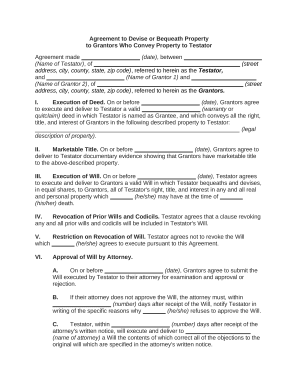
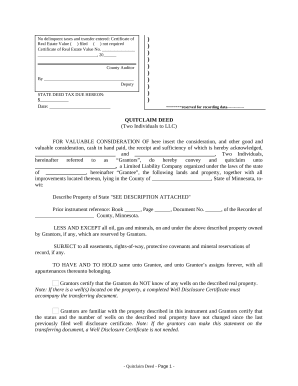
Transform your file administration with Deed Transfer Legal Forms

Your workflows always benefit when you can locate all of the forms and documents you will need on hand. DocHub offers a wide array of templates to relieve your day-to-day pains. Get hold of Deed Transfer Legal Forms category and quickly browse for your document.

Start working with Deed Transfer Legal Forms in several clicks:

  1. Open Deed Transfer Legal Forms and find the form you need.
  2. Click Get Form to open it in the editor.
  3. Start editing your form: add more fillable fields, highlight sentences, or blackout sensitive info.
  4. The application saves your modifications automatically, and once you are ready, you are able to download or share your form with other contributors.

Enjoy smooth form management with DocHub. Check out our Deed Transfer Legal Forms category and find your form today!


Commonly Asked Questions about Deed Transfer Legal Forms

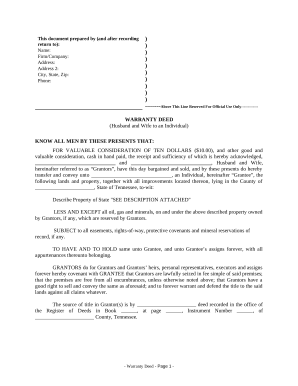
The most common way to transfer property is through a general warranty deed (sometimes called a grant deed). A general warranty deed guarantees good title from the beginning of time.
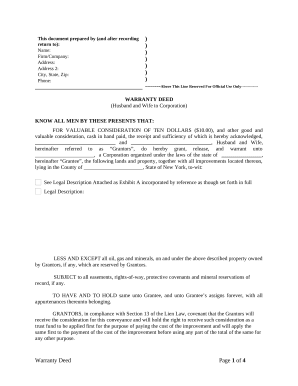
General warranty deeds: A general warranty deed provides the most protection to the buyer but gives the grantor the highest degree of liability. The grantor of a general warranty deed fully warrants good, clear title to the property. This type of deed is used in most real estate deed transfers.
A general warranty deed is often considered the most common way to transfer real property. It is used when you are aware and confident that the title to your property is good and marketable. It is most commonly used for residential real estate transactions.
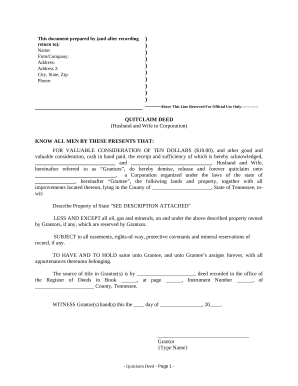
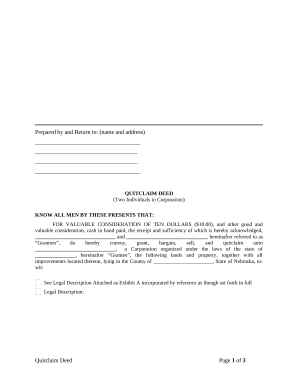
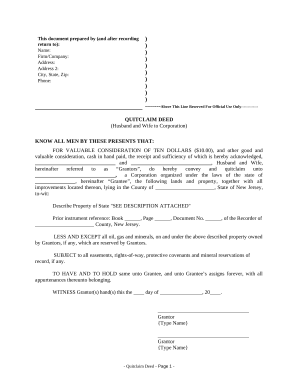
General warranty deeds give the grantee the most legal protection, while special warranty deeds give the grantee more limited protection. A quitclaim deed gives the grantee the least protection under the law.
Traditional sale transactions work best using general warranty deeds, and most typical real estate transactions involve a general warranty deed because it confirms the seller has the legal right to sell.
The deed must be signed in ink by the Grantors in the presence of a notary public, with the Grantors names printed below the signatures. Contrary to popular belief, the Grantors signatures do not need to be witnessed (other than by a notary). The deed does not need to be signed by the Grantees (buyers).
A New Mexico deed is used to legally convey real estate between parties in New Mexico. In order to transfer property, with a deed, you will need the names of the seller, or grantor, the names of the buyer, or grantee, the legal description of the property and an acknowledgment by a notary public.