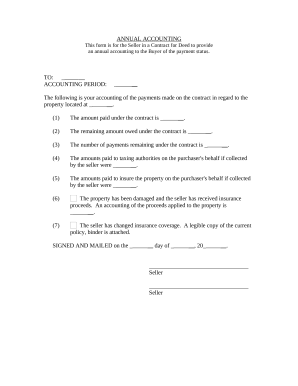
Improve your document administration with Annual Accounting Statements

Your workflows always benefit when you can easily get all of the forms and documents you need at your fingertips. DocHub supplies a a large collection forms to alleviate your everyday pains. Get a hold of Annual Accounting Statements category and quickly browse for your document.

Begin working with Annual Accounting Statements in a few clicks:

  1. Browse Annual Accounting Statements and locate the document you require.
  2. Click on Get Form to open it in our editor.
  3. Begin changing your document: add more fillable fields, highlight paragraphs, or blackout sensitive details.
  4. The app saves your changes automatically, and once you are ready, you are able to download or share your file with other contributors.

Enjoy easy record managing with DocHub. Explore our Annual Accounting Statements online library and get your form today!


Video Guide on Annual Accounting Statements management

video background

Commonly Asked Questions about Annual Accounting Statements

How to write a financial statement Write an introduction. Detail expenses. Outline financial projections. Include individual financial statements. Determine the break-even point. Include a sensitivity analysis. Feature a ratio analysis. Include funding requests where necessary.
The report should include the audited financial statements: balance sheet, income statement, and statement of cash flows. The last part will typically be notes to the financial statements, explaining certain facts and figures.
The three main types of financial statements are the balance sheet, the income statement, and the cash flow statement. These three statements together show the assets and liabilities of a business, revenues, and costs, as well as its cash flows from operating, investing, and financing activities.
Statement of financial position (balance sheet); Statement of income and expense (profit and loss account); Statement of cash flows (cash flow statement); Statement of changes in equity; and.
The major elements of the financial statements (i.e., assets, liabilities, fund balance/net assets, revenues, expenditures, and expenses) are discussed below, including the proper accounting treatments and disclosure requirements.
The 10 elements are: (1) assets, (2) liabilities, (3) equity, (4) investments by owners, (5) distributions to owners, (6) revenues, (7) expenses, (8) gains, (9) losses, and (10) comprehensive income. The 10 elements of financial statements defined in SFAC 6 describe financial position and periodic performance.
Most public companies hire auditing companies to write their annual reports. An annual report begins with a letter to the shareholders, then a brief description of the business and industry. The report should include the audited financial statements: balance sheet, income statement, and statement of cash flows.
An annual financial statement contains a list of the companys assets and liabilities. That section is called the balance sheet. Assets can be anything ranging from cash and cash equivalents to property and intellectual properties, such as patents.