
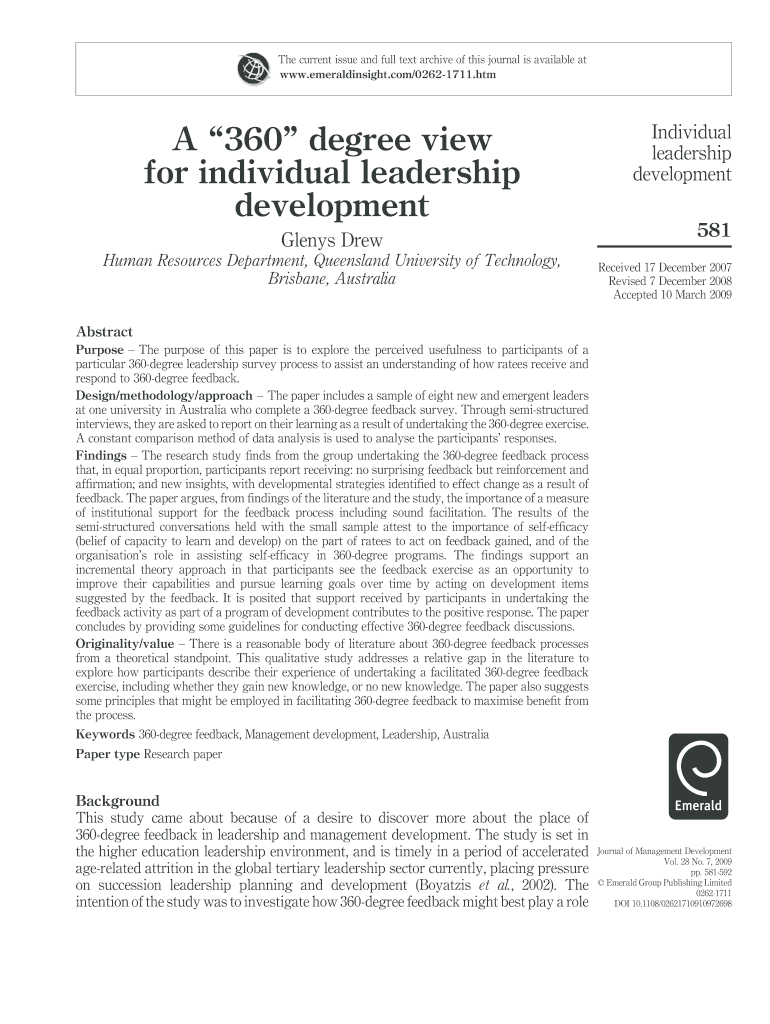







Definition and Meaning of a 360-Degree View
A 360-degree view is a comprehensive evaluation process typically utilized in organizational contexts to assess individual performance and development. This method involves gathering feedback from a wide range of sources, including peers, subordinates, supervisors, and self-assessments. The goal is to provide a holistic perspective on individual competencies, behaviors, and performance. It is often used to enhance leadership skills, improve self-awareness, and guide personal and professional growth within a corporate setting.
- Feedback sources include colleagues at different organizational levels to ensure a rounded perception.
- Often used in personal development plans and appraisal systems.
Key Elements of the 360-Degree Feedback Process
Effective implementation of a 360-degree view involves several critical components. These are necessary to generate accurate and actionable insights:
- Feedback Collection: Compilation of input from diverse sources creates a balanced perspective on an individual's performance.
- Data Analysis: Systematic analysis of collected data to identify trends and areas for improvement.
- Development Planning: Creation of personalized development strategies based on feedback to address identified gaps.
Ensuring the confidentiality and anonymity of respondents is crucial to gather honest and constructive feedback.
How to Use the 360-Degree View
Utilizing a 360-degree view involves integrating the feedback process into regular performance evaluations. The approach requires careful planning and execution:
- Identify Objectives: Define the goals for using the 360-degree view, such as enhancing leadership skills or fostering team communication.
- Select Participants: Choose relevant individuals who can provide meaningful insights.
- Distribute Surveys: Implement surveys or questionnaires tailored to extract specific feedback.
- Review Feedback: Analyze the collected data to formulate a comprehensive understanding of performance.
Organizations often use specialized software tools to facilitate data collection and analysis, ensuring a seamless process.
Steps to Complete a 360-Degree View
The execution of a 360-degree view follows a structured procedure to ensure thoroughness and effectiveness:
- Preparation: Clearly communicate the purpose of the feedback process to all participants.
- Data Gathering: Use standardized forms or digital platforms for uniform feedback collection.
- Analysis: Employ analytical tools to interpret feedback data critically.
- Feedback Delivery: Conduct feedback sessions with the individual to relay findings and discuss development plans.
- Follow-up: Monitor ongoing progress and adjust development plans as necessary.
Each step is designed to maximize the utility of the feedback and turn insights into actionable development plans.
Why Use a 360-Degree View
The 360-degree feedback process offers numerous benefits to individuals and organizations seeking enhanced development outcomes:
- Improved Self-awareness: Provides individuals with an understanding of how their behavior is perceived by others.
- Comprehensive Insights: Delivers a complete picture by considering multiple perspectives.
- Objective Evaluation: Reduces bias in performance evaluations through diverse input.
- Growth Initiatives: Facilitates targeted personal and professional growth aligned with organizational goals.
Organizations implement this feedback mechanism to foster a culture of transparency and continuous improvement.
Examples of Using a 360-Degree View
Organizations often utilize 360-degree feedback in various scenarios to enhance leadership development, team dynamics, and individual competencies:
- Leadership Development: An emerging leader receives feedback from peers to enhance management skills.
- Team Building: Teams use feedback to improve collaboration and communication.
- Performance Appraisal: Organizations incorporate feedback into their annual appraisal processes to provide thorough evaluations.
These examples highlight the adaptability and effectiveness of the 360-degree feedback methodology across different contexts.
Who Typically Uses the 360-Degree View
The 360-degree view is commonly employed by various groups within an organization ranging from HR professionals to managers:
- Human Resources: To design development programs and talent management strategies.
- Team Leaders: To assess team performance and encourage team cohesion.
- Executive Coaches: To provide leaders with insights for executive development.
- Combines Peer Feedback: Ensures a wide range of input leading to deeper appreciative understanding.
These users typically require a complete evaluation of performance and necessitate objective feedback for decisions regarding training and development initiatives.


Who Issues the 360-Degree Feedback Form
The responsibility for issuing the 360-degree feedback form usually resides with the human resources department or the individual leading the development initiative. Regular processes include:
- HR Departments: Often design and distribute feedback forms as part of organizational development programs.
- External Consultants: Sometimes engaged to conduct and manage the feedback process externally for unbiased insights.
The issuance of the feedback form by these entities ensures a professional and structured approach to gathering and evaluating performance data.




