
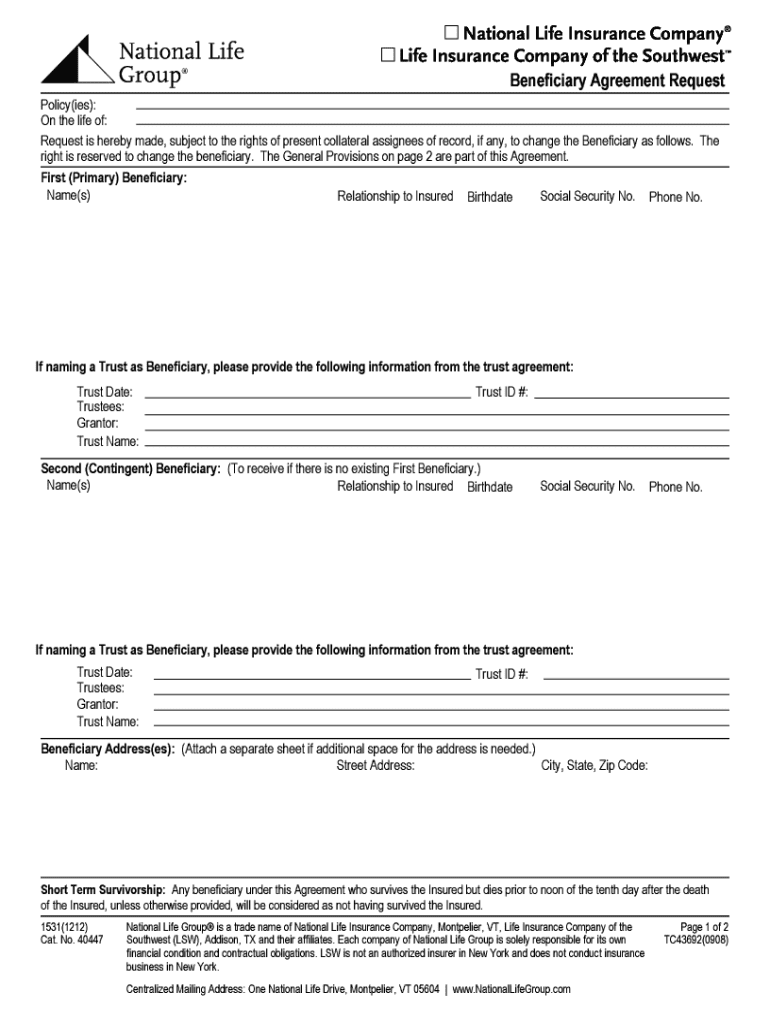







Definition and Meaning of the Change of Beneficiary Form
The Change of Beneficiary form for National Life Group is a legal document that allows policyholders to update the designated beneficiaries on their life insurance or annuity policies. The procedure is essential for ensuring that the intended individuals receive the policy benefits upon the policyholder's death. Typically, these beneficiaries are family members, but they may also include trusts, organizations, or other entities.
Understanding the significance of this form is critical. Beneficiaries can be classified as primary or contingent. A primary beneficiary is the first in line to receive the death benefit, whereas a contingent beneficiary receives the benefits if the primary beneficiary cannot fulfill that role due to circumstances such as death or legal incapacity.
Importance of the Change of Beneficiary Form
- Legal Assurance: Updating beneficiaries ensures that the benefits are distributed according to the policyholder's current wishes.
- Protection from Divorce or Re-marriage: It is essential for those undergoing significant life changes, as failing to update beneficiaries may inadvertently benefit an ex-spouse instead of a current partner or family member.
- Clarity in Distribution: It avoids confusion and disputes among family members regarding who is entitled to the policy's benefits.
Steps to Complete the Change of Beneficiary Form
Completing the Change of Beneficiary form correctly requires careful attention to detail to ensure that all necessary information is provided. Here are the key steps to follow when filling out the form:
- Obtain the Form: Acquire the official Change of Beneficiary form from National Life Group, either online or by contacting customer service.
- Fill in Policy Information: Provide relevant details about the existing policy, including the policy number and the name of the insured. This information establishes your ownership and rights over the policy.
- Detail Beneficiary Changes:
- Primary Beneficiary: Clearly designate who will be the primary beneficiary, including their full name, date of birth, and relationship to you.
- Contingent Beneficiary: Specify who will be next in line should the primary beneficiary not be able to receive the benefits.
- Signature and Date: Sign the form in the designated area and include the date of signing. This step is crucial, as your signature confirms your request for the change and validates the information provided.
- Submitting the Form: Follow the instructions provided for submission—whether online, by mail, or in person. Ensure you retain copies for your records.
Key Points for Successful Submission
- Check for Required Documentation: In some cases, you may need to provide additional identification or documentation.
- Communicate with Beneficiaries: It’s often advisable to inform those you have named as beneficiaries to avoid confusion later.
- Keep Records: Retain a copy of the completed form and any correspondence with National Life Group regarding the request.
Legal Use of the Change of Beneficiary Form
The legal use of the Change of Beneficiary form is paramount in ensuring the proper execution of your wishes regarding the distribution of your policy’s death benefits. This form is legally binding and adheres to the regulations set forth by state and federal laws, including the ESIGN Act.
Considerations for Legal Validity
- Understanding State Laws: Certain states may have specific requirements regarding beneficiaries, particularly concerning divorce, minors, or trusts.
- Revocation of Prior Designations: By submitting the Change of Beneficiary form, all previous beneficiary designations are revoked automatically, ensuring that the new instructions take precedence.
- Documentation of Changes: It is crucial to have the most current version of the form on file with National Life Group to avoid any disputes about the beneficiary designations.
Examples of Using the Change of Beneficiary Form
Real-life situations that illustrate the necessity of completing the Change of Beneficiary form help clarify its importance.
- Divorce Scenario: A policyholder who initially named their spouse as the primary beneficiary may need to change this designation following a divorce to ensure that the death benefit goes to children or other family members.
- Family Addition: If a policyholder has a new child, they might wish to add this child as a new beneficiary, necessitating the completion of this form.
- Moving to a New State: Changing residency to a different state with different beneficiary laws may warrant a review and potential change to the beneficiary designations.
The Importance of Updating Regularly
Regular reviews of beneficiaries ensure that the policyholder's intentions align with life changes such as marriage, divorce, births, and deaths. It is advisable to perform this review at least annually or following significant life events.
Important Terms Related to the Change of Beneficiary Form
Understanding specific terminology associated with the Change of Beneficiary form is essential for grasping the overall process and requirements.
- Primary Beneficiary: The first individual designated to receive the proceeds from a life insurance policy.
- Contingent Beneficiary: The backup beneficiary who will receive benefits if the primary beneficiary is unable to do so.
- Decedent: The deceased individual whose policy is being updated.
- Endorsement: A written amendment to the original policy, sometimes used interchangeably with the Change of Beneficiary form.
- Trustee: An individual or entity appointed to manage assets held in a trust for the benefit of beneficiaries.
Clarifying Terms for Smooth Processing
Clarifying these terms on the form ensures that all parties involved have a clear understanding of the designated responsibilities and entitlements related to the benefits of the policy. Such clarity is crucial in preventing disputes and ensuring appropriate legal compliance.




