




01. Edit your fictitious name certificate online
Type text, add images, blackout confidential details, add comments, highlights and more.

Type text, add images, blackout confidential details, add comments, highlights and more.

Draw your signature, type it, upload its image, or use your mobile device as a signature pad.

Send fictitious name via email, link, or fax. You can also download it, export it or print it out.
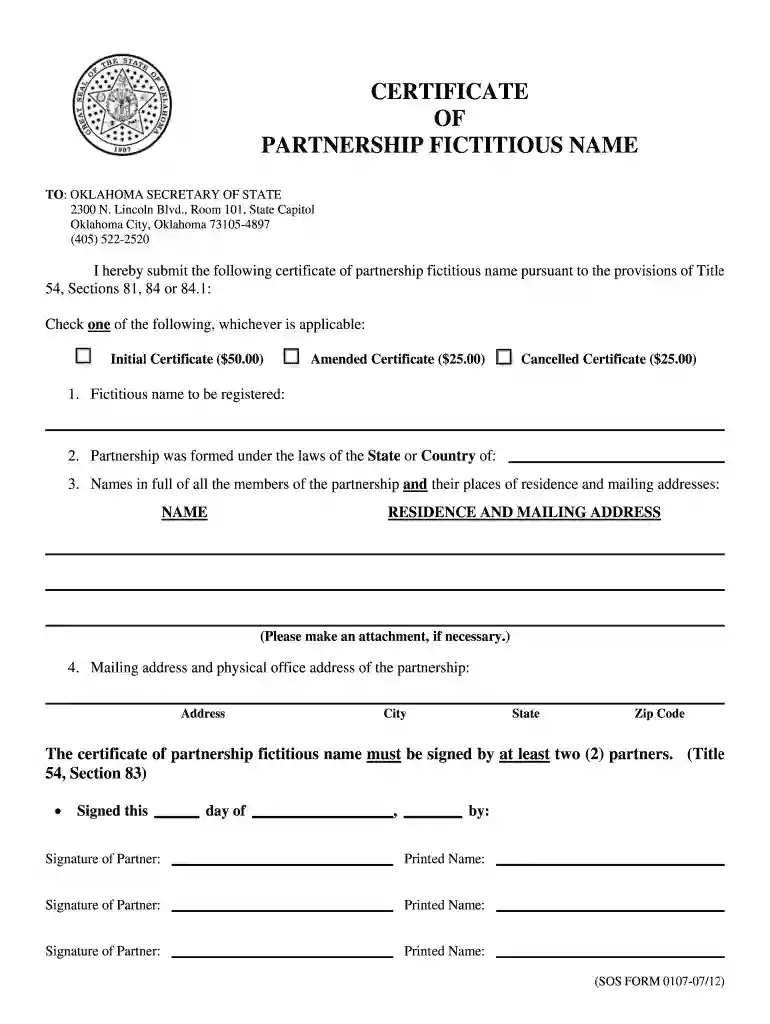
A fictitious name certificate, often referred to as a DBA (doing business as) certificate, is a legal document that allows individuals or businesses to operate under a name different from their registered legal name. This document is essential for establishing a business identity that reflects the brand or services provided, which may be crucial for branding, marketing, and public recognition.
In simple terms, a fictitious name serves as a trade name for a business and must be registered with the state to ensure that there is no duplication of names among other businesses. The registration helps protect consumers and the owners themselves by providing legitimacy and accountability in the business transaction landscape.
The importance of a fictitious name certificate is further amplified for businesses that wish to market themselves in a way that does not reflect their corporate structure or the owners' names. For instance, a partnership operating under the name "Sunny Flowers" must obtain a fictitious name certificate to legally represent the business.
Obtaining a fictitious name certificate varies by state, but the process generally follows these steps:
When filling out a fictitious name certificate, certain elements must be included to ensure compliance with state regulations. Key components generally include:
Ensuring that all required elements are completed accurately minimizes the risk of application delays or rejection.
State regulations govern various aspects of fictitious name certificates, and these rules can differ significantly. Important considerations include:
It is vital for businesses to consult their respective Secretary of State's office or website to stay updated on the specific processes and requirements in their state.
Fictitious name certificates are employed across various scenarios. Some real-world examples include:
By using fictitious names, businesses can tailor their public image and marketing strategies to resonate with their target audience without altering their legal structure.
We've got more versions of the fictitious name certificate form. Select the right fictitious name certificate version from the list and start editing it straight away!
| Versions | Form popularity | Fillable & printable |
|---|---|---|
| 2012 | 4.8 Satisfied (245 Votes) |
At DocHub, your data security is our priority. We follow HIPAA, SOC2, GDPR, and other standards, so you can work on your documents with confidence.


