




01. Edit your new vendor form online
Type text, add images, blackout confidential details, add comments, highlights and more.

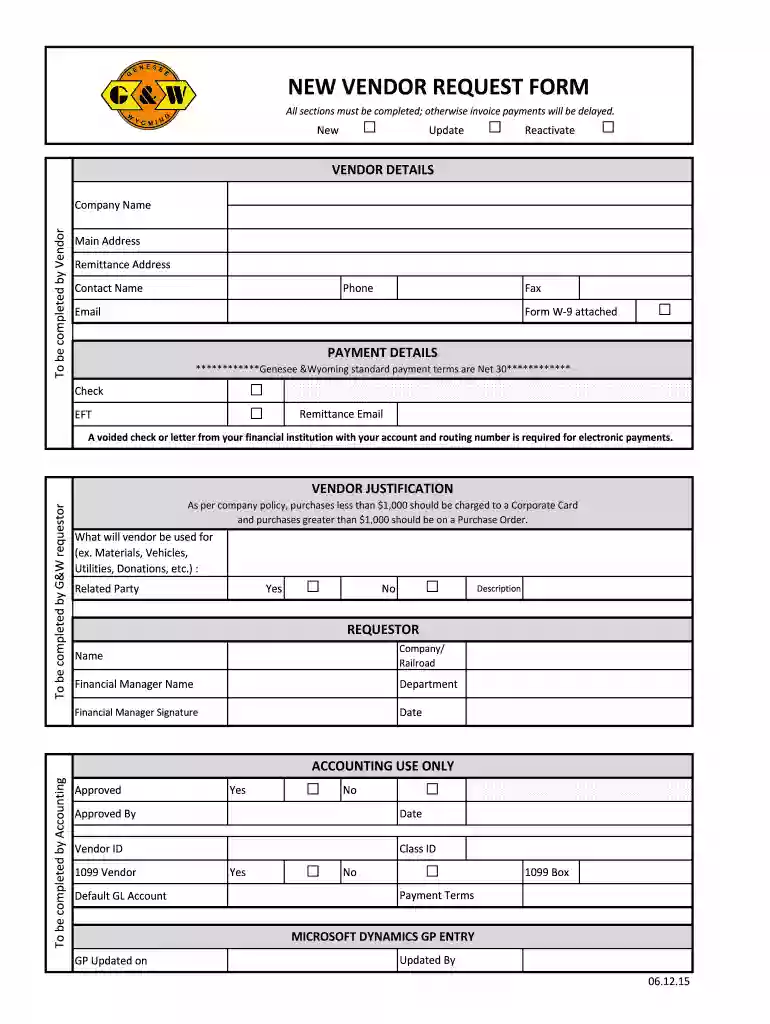
Type text, add images, blackout confidential details, add comments, highlights and more.

Draw your signature, type it, upload its image, or use your mobile device as a signature pad.

Send new vendor setup form via email, link, or fax. You can also download it, export it or print it out.
The new vendor form is a crucial document that businesses, such as Genesee & Wyoming Inc., require from vendors wishing to establish a working relationship. This form ensures that companies gather pertinent information to process invoices and enable timely payments. Failure to accurately complete this form can lead to delays and complications in the payment process.
When filling out the new vendor setup form, specific information is mandatory to facilitate the registration process. The essential details include:
Collecting this information not only expedites the setup process but also helps ensure compliance with tax regulations and payment protocols.
In most cases, submitting a new vendor request form also necessitates providing supplementary documents to validate the vendor's information. Common additional documents include:
Supplying all required documentation with the new vendor form helps mitigate risks associated with fraud and legal compliance.
Filling out the new vendor application form involves several clear steps to ensure that all necessary information is accurately reported. Below is a simplified process:
Following these steps contributes to a smoother vendor registration process and minimizes the risk of errors or omissions.
Vendors may encounter several challenges during the completion of this form, such as misunderstanding the required documentation or making errors in input. Common issues include:
Addressing these challenges proactively can help vendors navigate the setup process more effectively.
There are several key considerations that vendors should keep in mind when submitting a new vendor request form. Understanding these can lead to a more efficient onboarding experience:
By being informed about these considerations, vendors can take steps to prepare more effectively for the onboarding process.
The new vendor form is a fundamental document in establishing a business relationship. By understanding the requirements, issues, and considerations involved in filling it out, vendors can facilitate effective and timely interactions with companies. Ensuring complete and accurate submission of the new vendor application form is essential for smooth operations and compliance reasons.
We've got more versions of the new vendor form form. Select the right new vendor form version from the list and start editing it straight away!
At DocHub, your data security is our priority. We follow HIPAA, SOC2, GDPR, and other standards, so you can work on your documents with confidence.
Submit this request with an IRS W-9 Form. Vendor must type in (or complete legibly), print, sign and securely upload both documents to: more
This form must be used by the primary contact to (1) replace or update the primary contact on the vendor record or (2) make changes to non-primary contactsRead more
VA Form 10091 is used to gather essential payment data from vendors (Commercial, Individuals, Veterans, etc.) to establish or update vendor records in order toRead more


