






Definition & Meaning
Schedule C (Form 1040) is used by sole proprietors to report income or losses from their business activities. The instructions for filling out Schedule C provide guidelines on how to document business income and expenses for tax filing purposes. The form is essential for businesses that are not separate legal entities, such as sole proprietorships or single-member LLCs. Schedule C aims to calculate net profit or loss, which then directly affects an individual's taxable income.
Key Elements of the Instructions
The instructions for Schedule C (Form 1040) outline critical components necessary for correctly completing the form. Key elements include:
- Business Information: Enter details such as business name (if different from your own), business address, and Employer Identification Number (EIN).
- Income: Documentation of all income received from business operations, including sales, services, and miscellaneous earnings.
- Expenses: Outlining deductible business expenses in categories such as advertising, legal services, supplies, and utilities.
- Cost of Goods Sold (COGS): Instructions cover how to calculate COGS if your business deals in physical products.
- Vehicle and Travel: Guidance on documenting business-related vehicle and travel expenses.
- Home Office: Determining and reporting expenses related to a home office if applicable.
How to Use the Instructions for Schedule C
To effectively utilize the Schedule C instructions, follow these steps:
- Gather Documentation: Collect all business financial records, including income statements and receipts for expenses.
- Interpret Income and Expense Categories: Review each category in the instructions to correctly classify your business activities.
- Input Information Accurately: Ensure you input data correctly in the designated sections of Schedule C.
- Calculate Totals and Subtotals: Follow the guidelines for calculating total income and total expenses.
- Review and Verify: Double-check information against records to prevent errors or omissions.
Steps to Complete the Instructions for Schedule C
Completing Schedule C involves several detailed steps. Follow these guidelines to ensure accuracy:
- Business Income Reporting: Total all income types from business operations. Include gross receipts, returns, and refunds.
- Expense Deduction: Deduct applicable business expenses using specified categories from the instructions.
- Calculate COGS: If necessary, subtract the cost of goods sold from total sales to determine gross profit.
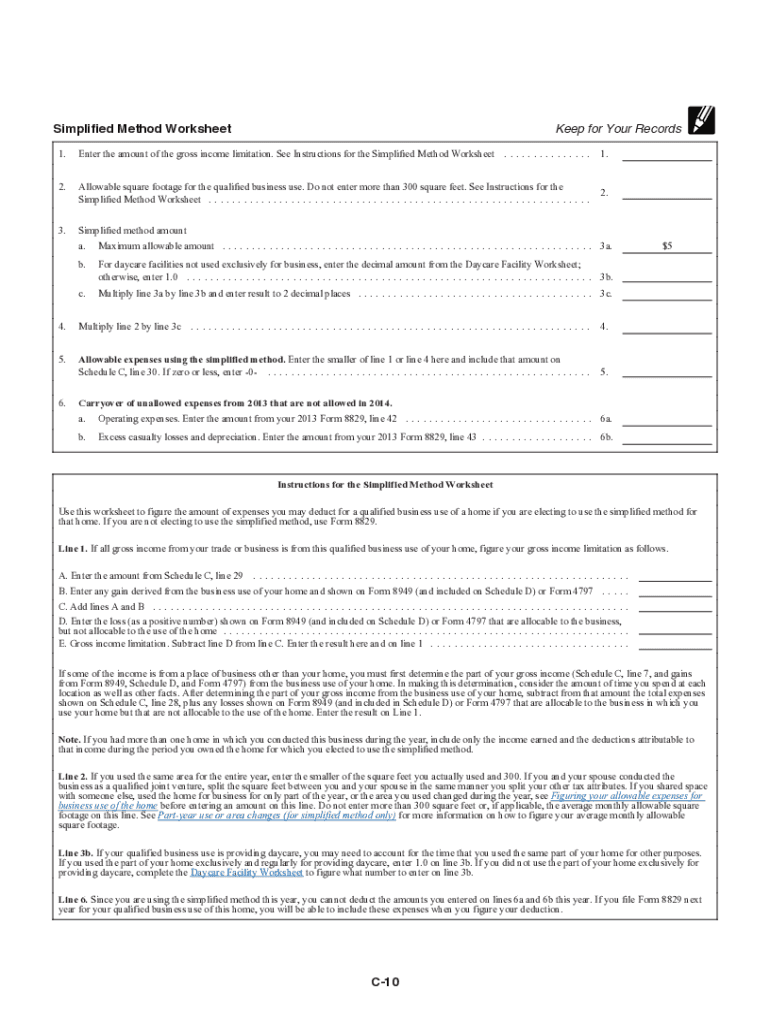
- Home Office Deduction: Use the provided worksheet in the instructions to calculate eligible deductions.
- Self-Employment Tax: Understand how completing Schedule C affects self-employment tax liability.
Who Typically Uses the Instructions
The instructions for Schedule C are primarily used by:
- Sole Proprietors: Those operating under their own name without forming a separate legal entity.
- Single-Member LLCs: Business owners who have not elected to be taxed as a corporation.
- Independent Contractors: Individuals working independently and receiving 1099 forms.
- Freelancers: Artists, writers, or other creatives who manage their own projects and income.
- Small Business Owners: Entrepreneurs with simple operational structures and minimal reporting requirements.


Legal Use of the Instructions
The legal use of Schedule C instructions ensures compliance with IRS regulations. Key points include:
- Accurate Reporting: Ensuring all reported income and expenses are truthful and verifiable.
- Proper Deductions: Following IRS guidelines to accurately claim permissible deductions.
- Record Retention: Keeping detailed records and receipts for all claimed expenses for at least three years.
- Compliance with Tax Law: Understanding the implications of tax law changes and their impact on Schedule C completion.
Required Documents
To complete Schedule C, several documents are necessary:
- 1099 Forms: Reports of income received and filed by clients.
- Receipts: Proof of business expenses.
- Bank Statements: Documentation of transactions.
- Expense Logs: Detailed recording of all business expenses.
- Mileage Records: If vehicle costs are claimed, logs of business miles driven.
Software Compatibility
Schedule C can be completed using various accounting software, including:
- TurboTax: Simplifies the process with guided steps for Schedule C entries.
- QuickBooks: Assists with tracking income and expenses seamlessly for Schedule C.
- H&R Block Software: Provides tools for reporting self-employment income.
These tools ensure accuracy and efficiency in filing the Schedule C and maintaining compliance with IRS requirements.