




01. Edit your mortgage application template online
Type text, add images, blackout confidential details, add comments, highlights and more.

Type text, add images, blackout confidential details, add comments, highlights and more.

Draw your signature, type it, upload its image, or use your mobile device as a signature pad.

Send mortgage application example via email, link, or fax. You can also download it, export it or print it out.
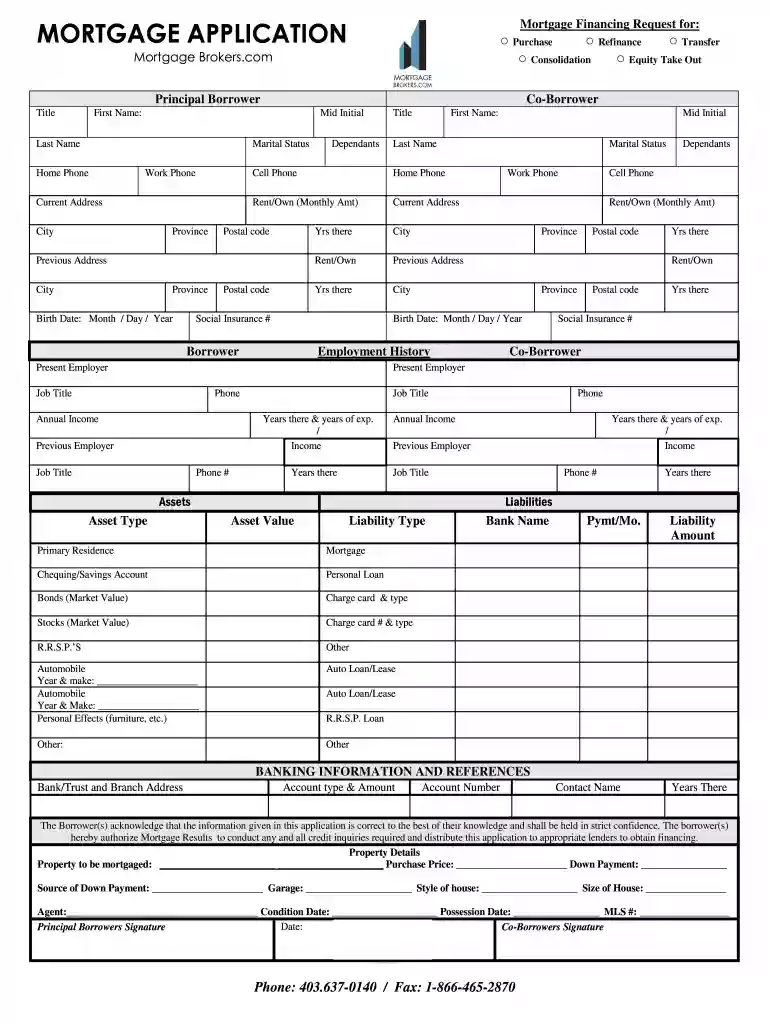
The mortgage loan application is a structured form used to gather critical financial and personal information necessary for obtaining a mortgage. It serves as an official request for a loan secured by real property and outlines various options for mortgage financing, including purchase, refinance, transfer, consolidation, and equity take-out. The application is essential for lenders to assess the borrower's creditworthiness and ability to repay the loan.
In general, the mortgage loan application includes detailed sections on:
This comprehensive collection of data allows lenders to analyze the applicant’s financial situation and determine whether to approve the loan for the requested amount.
Completing a mortgage loan application involves several clear steps that ensure all necessary information is correctly provided. Here’s a structured approach to filling out the form:
Gather Necessary Documents: Before starting the application, collect all relevant documents. This typically includes:
Fill Out Personal Information: Enter your details and those of any co-borrowers. Accuracy is crucial, as discrepancies can delay processing.
Add Employment History: List all relevant employment information, ensuring it covers at least the past two years. Include names, addresses, job titles, and length of employment.
Detail Financial Information: Provide a complete view of your finances, including:
Specify Property Information: Complete the section related to the property you intend to finance. Be prepared to share details about its value, condition, and purpose.
Review and Submit: Double-check all entries for accuracy and completeness before submission. An incomplete application can lead to delays. Submit the application via the chosen method—online, by mail, or in-person—to your lender.
By carefully following these steps, applicants can facilitate a smoother approval process for their mortgage loan.
Understanding the key elements of the mortgage loan application is essential for prospective borrowers. These components provide insights into what lenders are looking for when evaluating a loan request:
Borrower Information: This section captures personal details, including full names, contact information, and social security numbers of all borrowers involved.
Income Verification: Lenders ask for comprehensive information regarding the borrower's income to assess financial stability. This includes:
Debt Information: Applicants must disclose all outstanding debts. This helps lenders calculate the debt-to-income (DTI) ratio, a critical measure of financial health.
Asset Disclosure: The application requires disclosure of assets to assure lenders of the borrower's financial backing. Common assets include:
Property Details: Prospective borrowers must provide specifics about the property they wish to purchase or refinance, including its purchase price, property type, and whether it will be owner-occupied or rented out.
Acknowledgment Section: This area emphasizes the importance of the information's accuracy. Borrowers typically sign to affirm that the data provided is true and to authorize a credit check.
Mastering these elements is vital for applicants to enhance their chances of securing mortgage approval and also ensures transparency with the lender.
Understanding key terms associated with mortgage loan applications aids in navigability and improves communication with lenders. Here are some of the essential terms one should know:
Principal: The amount borrowed or the remaining balance on a loan, excluding interest.
Interest Rate: The cost of borrowing expressed as a percentage of the principal, which significantly affects the total repayment amount.
Debt-to-Income Ratio (DTI): A financial measure used by lenders, calculated by dividing total monthly debt payments by gross monthly income. A lower DTI indicates better financial health.
Loan-to-Value Ratio (LTV): This ratio compares the amount of the mortgage loan to the appraised value of the property, influencing loan approval and terms.
Pre-approval vs. Pre-qualification: Pre-approval involves a thorough credit check and verification of financial documents, resulting in a conditional loan offer, while pre-qualification is a less formal estimate based on the borrower's self-reported financial data.
Escrow: A third party holds funds or documents on behalf of the borrower and lender until specified conditions are met, often used in property transactions to protect both parties.
Familiarity with these terms allows borrowers to better understand the mortgage process and communicate effectively with lenders.
Various documents are necessary for a mortgage loan application, ensuring that lenders have a comprehensive understanding of the borrower's financial status. Here’s a breakdown of the essential documentation required:
Identification: Valid government-issued photo ID, such as a driver's license or passport, to verify identity.
Proof of Income: Recent pay stubs, tax returns (typically for the past two years), W-2 forms, or 1099 statements for self-employed individuals.
Financial Statements: Recent bank statements covering checking and savings accounts, investment account details, and any other asset documentation.
Credit History: Lenders will require authorization to run a credit report, assessing creditworthiness and existing liabilities.
Asset Documentation: Verify tangible and liquid assets through statements for retirement accounts, investment portfolios, and properties owned.
Property Information: In cases where a specific property is involved, provide a sales contract, property listing, or information on appraisals relevant to the transaction.
Gathering these documents beforehand can streamline the application process and minimize delays in loan approval. Each piece of documentation plays a critical role in depicting the borrower's financial health and ability to manage the loan.
We've got more versions of the mortgage application template form. Select the right mortgage application template version from the list and start editing it straight away!
At DocHub, your data security is our priority. We follow HIPAA, SOC2, GDPR, and other standards, so you can work on your documents with confidence.
Sep 13, 2024 To apply for a mortgage loan, you will have to provide a lender with personal financial information and information about the house you want to finance.Read more
Consumer Loan. Lease. Hire Purchase (ABN holder only). Chattel Mortgage (ABN holder only). Address. Cash Price (Incl GST). $. GST Amount (as per invoice). $.Read more
A mortgage broker, for example, can take a residential mortgage loan application even though it is passed on to a lender for a decision on whether the borrowerRead more


