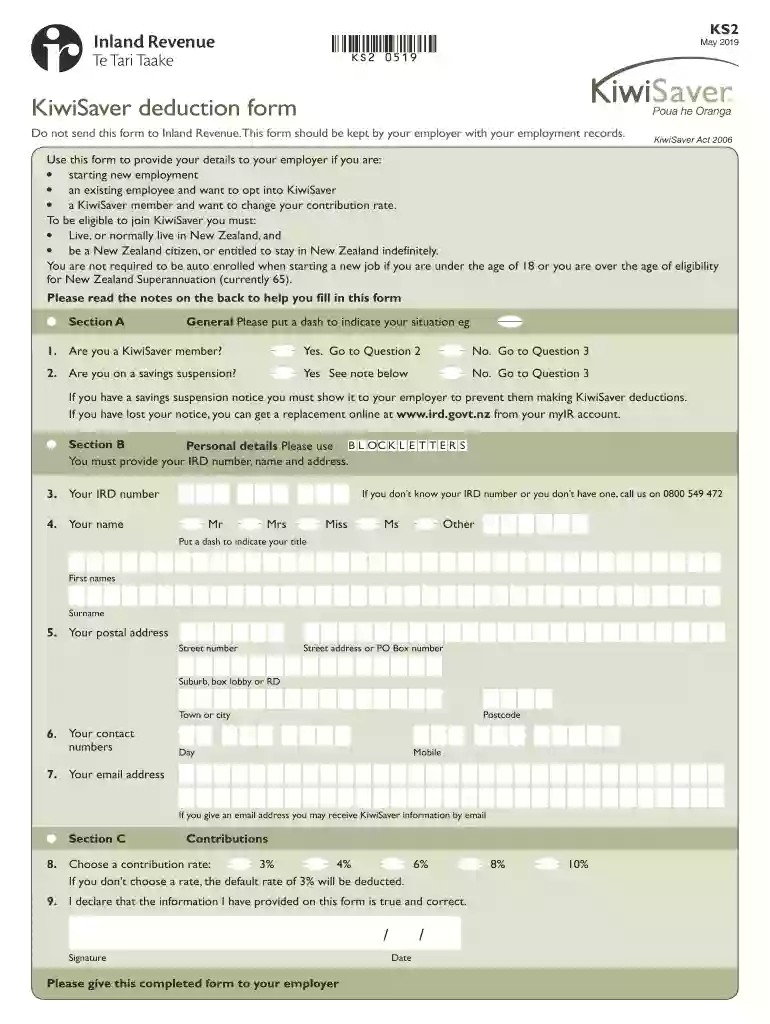
Ks2 form 2026

Get Form
kiwisaver form Preview on Page 1

Here's how it works

01. Edit your kiwisaver form online
Type text, add images, blackout confidential details, add comments, highlights and more.

02. Sign it in a few clicks
Draw your signature, type it, upload its image, or use your mobile device as a signature pad.

03. Share your form with others
Send kiwisaver deduction form via email, link, or fax. You can also download it, export it or print it out.

Definition & Purpose of the KS2 Form

The KS2 form is a crucial document used primarily within educational settings, typically in the context of assessing students' progress within Key Stage 2 (KS2) in the UK education system. It serves to track student performance and is integral for both teachers and educational administrators to tailor educational strategies and interventions. Its core purpose is to ensure that students achieve their full potential by identifying areas needing improvement and providing data-driven insights to educators.

Importance of the KS2 Form in Educational Assessment

  • Evaluation of Student Performance: The form records students' achievements in core subjects like English, mathematics, and science, offering a comprehensive view of their academic standing.
  • Educational Strategy Development: Educators use the data to develop personalized learning plans, helping to address individual student needs and adjust curricula to better serve the student body.
  • Accountability and Reporting: Schools utilize the aggregated data for reporting to educational authorities, ensuring compliance with educational standards and transparency in reporting academic outcomes.

How to Use the KS2 Form

To effectively utilize the KS2 form, it's essential to understand its structure and the data it captures. This includes knowing when to complete it and how to make informed decisions based on its insights.

Steps for Proper Utilization

  1. Familiarization: Educators should start by familiarizing themselves with the form's layout, identifying key sections such as performance metrics and behavioral assessments.
  2. Data Entry: Accurately record each student's scores and any qualitative insights into their progress or challenges.
  3. Analysis: Regularly review the collected information to identify trends or areas that require targeted interventions.
  4. Reporting: Compile and present the information in educational meetings to facilitate data-driven decisions.
  • Consistency: Ensure all educators are trained in the form's use to maintain consistent data entry standards.
  • Confidentiality: Handle the form with care to protect student privacy, adhering to legal guidelines for data protection.

Steps to Complete the KS2 Form

Completing the KS2 form accurately is vital for reliable assessments. Here is a detailed process to ensure the information collected is both comprehensive and accurate.

Detailed Completion Process

  1. Student Identification: Start by correctly entering each student's name and identification number to ensure accurate record-keeping.
  2. Subject Scores: Enter scores for each subject, ensuring consistency with grading criteria established by the educational institution.
  3. Behavioral Observations: Document any relevant behavioral observations that might affect learning and engagement.
  4. Teacher Remarks: Provide detailed observations and suggested action plans based on individual student performance profiles.
  5. Verification: Double-check all entries for accuracy before finalizing the form to prevent any data discrepancies.
  6. Submission: Submit completed forms as per school protocols, which may include supervisory checks or direct uploads to a digital system.

Legal Use of the KS2 Form

While the KS2 form is primarily educational, its use is governed by legal and ethical standards to ensure that it is employed appropriately and that student data is protected.

Compliance and Privacy Considerations

  • Data Protection: Adhere to data protection laws such as the General Data Protection Regulation (GDPR) to safeguard students’ personal information.
  • Informed Consent: Obtain necessary permissions from guardians or parents for the assessment and recording of student data.
  • Institutional Policies: Ensure all procedures align with school and district policies regarding educational assessments.

Who Typically Uses the KS2 Form

The KS2 form is primarily used by educators within primary schools in the UK. However, its reach and impact encompass a variety of stakeholders, each utilizing the form for specific purposes.


decoration image ratings of Dochub

Key Stakeholders

  • Teachers: Use the form to assess and enhance their teaching practices based on student performance and needs.
  • School Administrators: Rely on the aggregated data for school-wide strategic planning and reporting.
  • Educational Authorities: Monitor and analyze performance data across schools to identify trends and inform policy decisions.
  • Parents and Guardians: Access insights to understand their child's academic progress and facilitate supportive home learning environments.

Key Elements of the KS2 Form

A thorough understanding of what comprises the KS2 form is essential for its effective use. Here are the central components you should be familiar with:

Essential Sections

  • Student Demographics: Includes basic information like name, age, and year group.
  • Academic Scores: Features assessment results across key subjects.
  • Qualitative Feedback: Incorporates teacher comments and contextual observations that provide deeper insights into student learning experiences.
  • Action Plans: Outlines proposed educational interventions or strategies tailored to student needs.

Software Compatibility

In the digital age, many schools have transitioned to electronic versions of the KS2 form for efficiency and ease of analysis.

Supported Software Solutions

  • Learning Management Systems (LMS): These platforms allow for digital form filling and instant data analysis, providing immediate feedback to educators.

  • Educational Apps: Many apps are designed to integrate with school information systems, offering seamless data transfer and reporting capabilities.

  • Backups and Security: Ensure that all digital versions are adequately backed up and secured to prevent data loss or unauthorized access.

Filing Deadlines and Important Dates

Timely submission is critical to align educational efforts with academic calendars and reporting periods.

Monitoring Important Dates

  • Assessment Windows: Adhere to scheduled assessment periods to capture relevant data points.
  • Reporting Deadlines: Be aware of submission deadlines to ensure timely processing and integration into strategic planning cycles.

Failure to meet deadlines can disrupt educational planning and result in incomplete data, impacting overall efficacy.

By providing extensive and detailed content on the KS2 form, this structured approach ensures that educators are well-equipped with the information necessary to optimize its use and impact within educational settings.

be ready to get more

Complete this form in 5 minutes or less

Get form

Security and compliance

At DocHub, your data security is our priority. We follow HIPAA, SOC2, GDPR, and other standards, so you can work on your documents with confidence.


Learn more
ccpa2
pci-dss
gdpr-compliance
hipaa
soc-compliance