
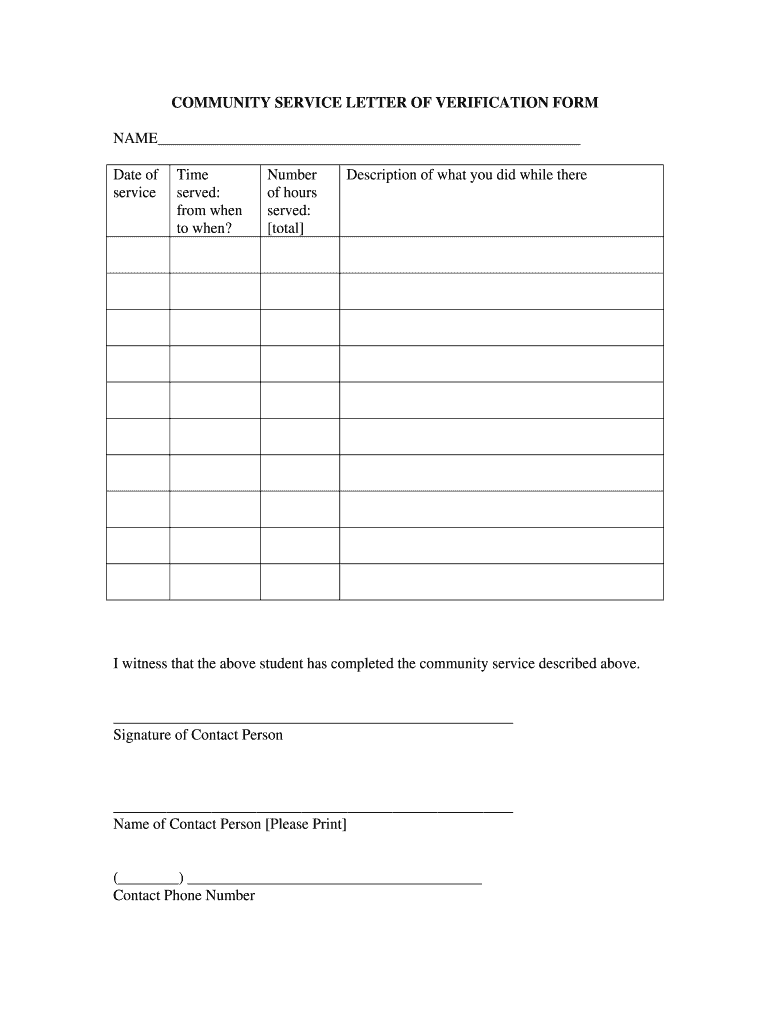







Definition and Meaning of the Community Service Letter
A community service letter is a formal document that verifies an individual's completion of community service hours. This letter is often required for various purposes, such as fulfilling court obligations, school requirements, or personal development achievements. In the context of legal stipulations, it serves as proof of compliance with mandated community service hours, which can be a part of sentencing for certain offenses or as a condition for probation.
The community service letter typically includes essential information, such as:
- Recipient’s Name: The name of the individual who completed the service.
- Service Provider’s Information: Details from the organization or individual that administered the community service.
- Description of Services: A brief account of the activities performed during the service hours.
- Total Hours Served: The number of hours the individual devoted to community service.
- Dates of Service: Specific dates when the service was rendered.
- Signatory Confirmation: Signature and contact information of the person verifying the completion.
This document can be crucial in legal contexts to demonstrate accountability and a commitment to community involvement.
Key Elements of the Community Service Letter
A well-structured community service letter should adhere to certain key elements to ensure its validity and acceptance in various contexts, especially in court or educational settings. Important components include:
- Header: The letter should include the organization's logo or letterhead, providing authenticity.
- Date: The date when the letter is issued should be clearly noted.
- Purpose Statement: An introductory sentence explaining the nature and purpose of the letter.
- Detailed Body:
- Description of the individual's role and activities performed.
- Total hours served and dates of service.
- Affirmation: A clear statement verifying that the service was completed satisfactorily.
- Contact Information: The contact details of the organization or signatory for follow-up or verification.
Incorporating these elements can help streamline the acceptance process by legal or educational institutions and ensure clarity in communication.
Steps to Complete the Community Service Letter
Creating a community service letter involves several steps to ensure the document is comprehensive and presents all necessary information. Below are the sequential steps to construct an effective community service letter:
-
Gather Necessary Information: Collect details from the individual regarding their service, including hours, dates, and activities performed. Obtain the correct date, name, and position of the individual who will sign the letter.
-
Draft the Letter: Begin with the organization's letterhead, followed by the date, recipient’s information, and an appropriate salutation. Clearly outline the completion of service and specify the total hours served, along with detailed descriptions of the tasks performed.
-
Include Supervisor’s Verification: Ensure that the letter includes a statement from the supervisor or authorized representative affirming the authenticity of the service and expressing the impact of the individual's contributions.
-
Proofread the Document: Review the letter for any grammatical or factual errors. Ensure all information is accurate and clearly presented.
-
Obtain Signature: The letter must be signed by the designated authority within the organization to validate the authenticity of the claims made in the letter.
-
Distribute Copies: Provide copies to the individual as required and maintain a copy for the organization's records.
Following these steps can help create a clear, official document that serves its intended purpose effectively.
Legal Use of the Community Service Letter
The legal use of a community service letter primarily revolves around its role as proof of completed community service hours. Various situations may necessitate such a document:
-
Court Mandates: Many courts require individuals, especially those with minor offenses, to complete community service. A community service letter can confirm that the individual has fulfilled their obligations, potentially influencing sentences or probation status.
-
Educational Requirements: Some academic institutions require students to undertake community service as part of their curriculum. A community service letter can serve as proof of completion, helping students meet graduation requirements.
-
Employment Applications: Individuals may present their community service letters as part of job applications to demonstrate social responsibility and commitment to community involvement.
It is crucial that the community service letter adheres to local laws and requirements, which can vary by state or institution, to maintain its legal validity.
Examples of Using the Community Service Letter
Providing specific examples can help illustrate the practical application and importance of a community service letter in different scenarios. Consider the following contexts:
-
Court Appearance: An individual may need to present a community service letter before a judge to prove that they have met their community service obligations following a minor criminal offense. This letter can positively influence the legal proceedings and may lead to reduced sentencing.
-
College Admissions: A high school student applying to college might include a community service letter as part of their application portfolio. This demonstrates their involvement in community efforts and can enhance their admission prospects by showcasing their commitment to social causes.
-
Job Applications: When applying for a job, a candidate might include a community service letter to distinguish themselves from other applicants. Highlighting community service experience can illustrate teamwork, leadership, and strong work ethic to potential employers.
Each of these examples highlights the versatility of the community service letter and its importance in validating an individual’s engagement in meaningful community contributions.




