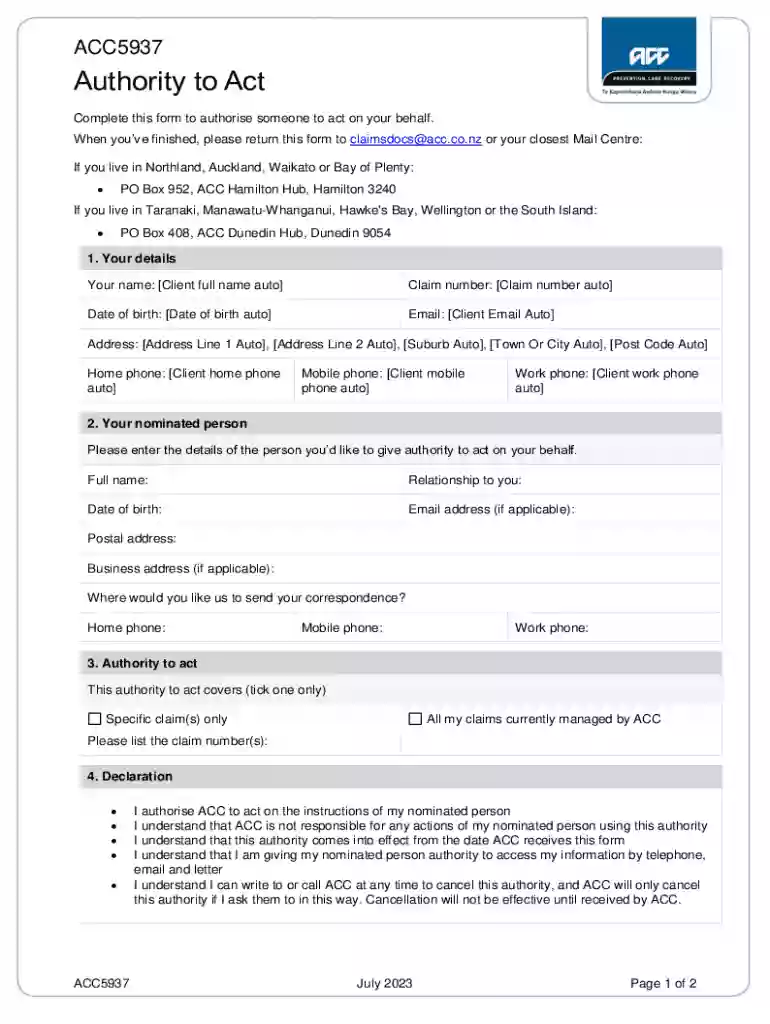
Definition and Purpose of ACC5937 Authority to Act
The ACC5937 Authority to Act form is a crucial legal document that allows you to authorize someone else to act on your behalf regarding your ACC (Accident Compensation Corporation) claims. This form ensures that a designated representative can manage and make decisions related to your claims efficiently and legally. The form typically applies within the context of personal injury claims managed by the Accident Compensation Corporation, providing a framework for authorized decision-making by appointed representatives.
Practical Use Cases
- Personal Injury Claims: Individuals who have sustained injuries and are unable to manage their own ACC claims can appoint a family member or legal representative using the ACC5937 form.
- Corporate Representation: Businesses dealing with employee injury claims can delegate a legal team or representative to handle ACC matters using this form.
- Medical Professionals: Doctors or other healthcare providers may act as representatives for patients under specific circumstances involving medical decision-making.
How to Obtain the ACC5937 Authority to Act
To obtain the ACC5937 Authority to Act form, interested parties typically need to access the form through official channels provided by the Accident Compensation Corporation. Here are the steps involved:
- Visit the ACC Official Website: The form can often be downloaded directly from ACC’s online portal, ensuring you have the most current version.
- Contact ACC Offices: Alternatively, contacting the nearest ACC office can provide guidance on obtaining the physical form if required.
- Legal Consultation: Consulting with a legal advisor familiar with ACC policies can offer personalized assistance in procuring and completing the form, particularly for complex scenarios.
Essential Considerations
- Ensure you download the latest form version to avoid any administrative delays.
- Prefer official channels for obtaining forms to maintain data integrity and compliance.
- Consult with ACC representatives or legal counsel for additional guidance on filling out and submitting the form.
Steps to Complete the ACC5937 Authority to Act
Completing the ACC5937 Authority to Act form involves several key steps to ensure accuracy and compliance:
- Fill Out Personal Information: Enter the full legal names, contact details, and relevant identification numbers for both the person granting authority and the representative.
- Specify the Scope of Authority: Clearly define the actions the representative is authorized to perform, such as filing claims, receiving updates, or making decisions about compensation.
- Set Duration and Limitations: Establish any time frames for which the authority is valid, and note any specific limitations to the granted authority.
- Signatures and Witnessing: Both parties need to sign the form, and in some cases, a witness or legal advisor’s signature is necessary to validate the document.
- Submission Process: Submit the completed form through ACC’s prescribed channels, either online or via post, ensuring it reaches the organization in a timely manner.
Key Elements of the ACC5937 Authority to Act
Understanding the key elements of the ACC5937 form is vital for effective use:
- Identification Details: Comprehensive details about the principal and the agent, including official identity verification.
- Authority Parameters: Clearly defined instructions on what functions and decisions the agent is allowed to undertake.
- Duration Clause: Specification of how long the authority will remain in effect, with possible renewal or termination conditions.
- Signatory Requirements: Obligatory signatures from the involved parties and, if necessary, witnesses or legal validation.
- Amendment Provisions: Instructions for how to alter, extend, or revoke the authority if circumstances change.
Legal Use of the ACC5937 Authority to Act
The legal implications of using the ACC5937 Authority to Act cannot be underestimated:
- Compliance with ACC Regulations: Ensuring the form fully complies with the latest ACC guidelines to avoid legal complications.
- Binding Agreements: Once duly signed, the form creates a binding relationship authorizing the agent to act on behalf of the principal within defined limits.
- Dispute Resolution: Mechanisms should be in place for conflict resolution if disagreements arise over actions taken by the representative.
State-Specific Rules for the ACC5937 Authority to Act
While the form is generally governed by national ACC guidelines, some state-specific rules can impact its execution:
- Jurisdictional Differences: Certain states may have additional legal requirements or offer specific guidance on using this form.
- Legal Advice: Seek local legal expertise to navigate state regulations, ensuring full compliance with regional laws and practices.
- State-Specific Amendments: Modifications to the general form might be necessary to adhere to regional legal standards, which can influence the form’s use and authority.
Required Documents for the ACC5937 Authority to Act
Several documents are typically required alongside the ACC5937 form to establish a valid and comprehensive Authority to Act arrangement:
- Identity Proofs: Valid identity documents for both the principal and the agent, such as passports or government-issued ID cards.
- Legal Papers: Any court orders or legal documents affirming the appointment of the representative, particularly if mandated by existing legal proceedings.
- Supporting Evidence: Medical or accident reports that substantiate the need for representation, helping to validate the necessity of delegating authority to a representative.