







Definition & Meaning
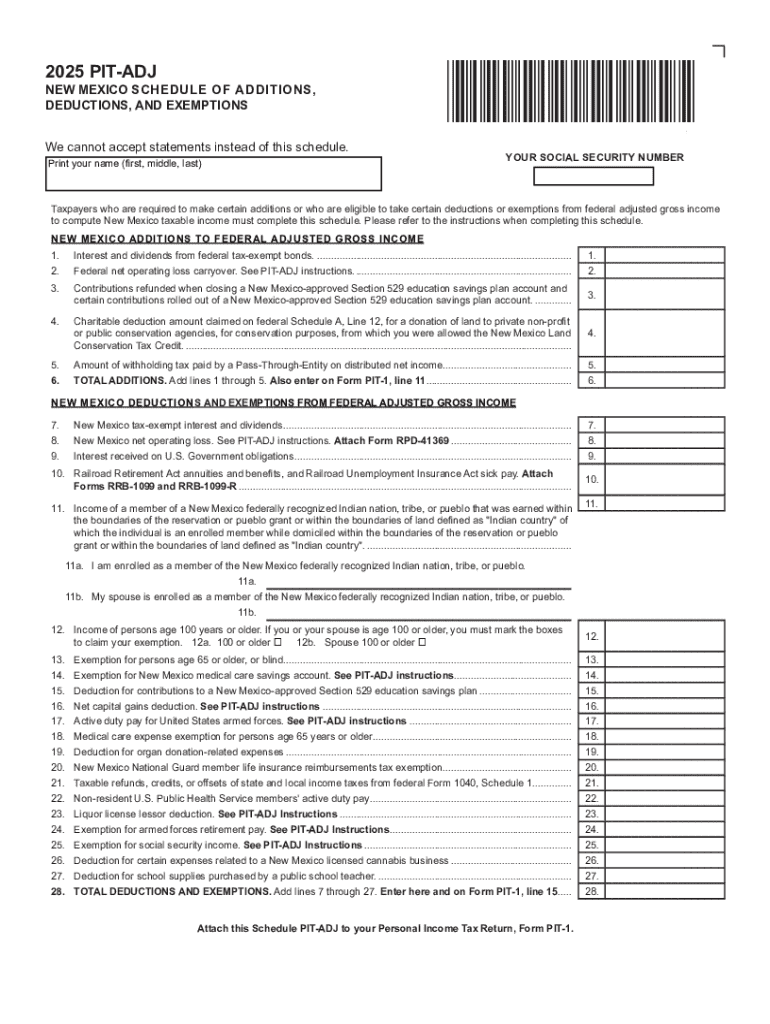
The Schedule of Additions, Deductions, and Exemptions is a crucial component of tax preparation that aids in determining the taxable income for individuals and business entities. This schedule outlines all permissible additions to income, any allowable deductions reducing taxable income, and relevant exemptions applicable within a fiscal year. Understanding this schedule is essential for accurate tax filing and ensuring compliance with federal and state tax laws.
For example, in New Mexico, this form assists taxpayers in identifying changes to their taxable income via specific deductions and exemptions itemized on the schedule. It ensures all relevant financial activities are accounted for properly and streamlines tax reporting procedures.
How to Use the Schedule of Additions, Deductions, and
To effectively utilize this schedule, follow these general steps:
-
Identify Relevant Additions: Evaluate all income that should be added to the gross income besides that already reported on your federal tax return. This could include certain tax-exempt interest or other state-specific income.
-
Calculate Permissible Deductions: List all deductions allowable under state laws that might not be included federally. This may encompass specific business expenses, health insurance premiums, and other state-authorized deductions.
-
Apply Available Exemptions: Incorporate any exemptions or credits your state allows based on dependency status, age, or personal situation.
-
Ensure Accuracy: Cross-check entries with applicable tax guides to maintain conformity with the state's tax laws.
Providing correct entries on this schedule is vital for preventing discrepancies that could lead to audits or penalties.
Steps to Complete the Schedule of Additions, Deductions, and
Filing this schedule requires careful attention to detail. Here's a practical walkthrough:
-
Gather Documentation: Collect all necessary financial documents. This includes income statements, receipts for deductible expenses, and any proof of exemptions.
-
Fill Out Each Section in Sequence:
- Additions to Income: Record any income type that isn't initially reported on the federal tax return but is subject to state tax.
- Deductions: Note qualified deductions, ensuring they align with both federal and state laws.
- Exemptions: Input valid exemptions that adjust taxable income, confirming eligibility under state guidelines.
-
Verify Entries: Double-check all data for errors. Misreporting figures can result in penalties or delays.
-
Submit Officially: Depending on your state, submit the form through the approved method—online, by mail, or in-person submission to ensure timely delivery.
Who Typically Uses the Schedule of Additions, Deductions, and
The primary users generally include:
- Individuals: Particularly those with unique deduction and exemption opportunities.
- Small Business Owners: Especially when operating under varied income streams warranting distinct adjustments.
- Tax Professionals: Utilizing the schedule ensures clients adhere to state requirements.
Users must understand their respective state's filing requirements for accurate submissions.


Legal Use of the Schedule of Additions, Deductions, and
Legally, this schedule is:
- A Mandatory Requirement: For compliance with state tax laws, fully disclosing relevant financial activities.
- Auditable: Subject to review by state authorities to verify reported figures align with records.
Proper legal compliance requires familiarity with changes to tax laws affecting the form year-on-year.
Important Terms Related to Schedule of Additions, Deductions, and
Understanding key terminology enhances clarity when completing the form:
- Additions: Refers to income types included under state law but exempt federally.
- Deductions: Allowable expenses that reduce taxable income.
- Exemptions: Authorized reductions in taxable income based on specific conditions stated by the state.
Using these terms accurately ensures the correct accounting of all financial aspects.
IRS Guidelines
While primarily a state document, alignment with IRS guidelines is vital:
- Conformity with Federal Tax Codes: Many state adjustments start from the federal adjusted gross income.
- Amending Forms: When federal forms are amended, the state schedule must often reflect these changes, ensuring consistency with IRS adjustments.
Being knowledgeable about IRS guidelines helps prevent discrepancies between federal and state tax returns.
Filing Deadlines / Important Dates
Timely submission is crucial:
- State-Specific Deadlines: Align with the standard tax return filing dates, generally April 15, unless an extension or specific state provision sets a different deadline.
- Amendment Dates: Ensure any necessary amendments follow state protocols, which often mimic federal amendment rules.
Failing to meet these deadlines can result in penalties or interest on unpaid taxes.




