
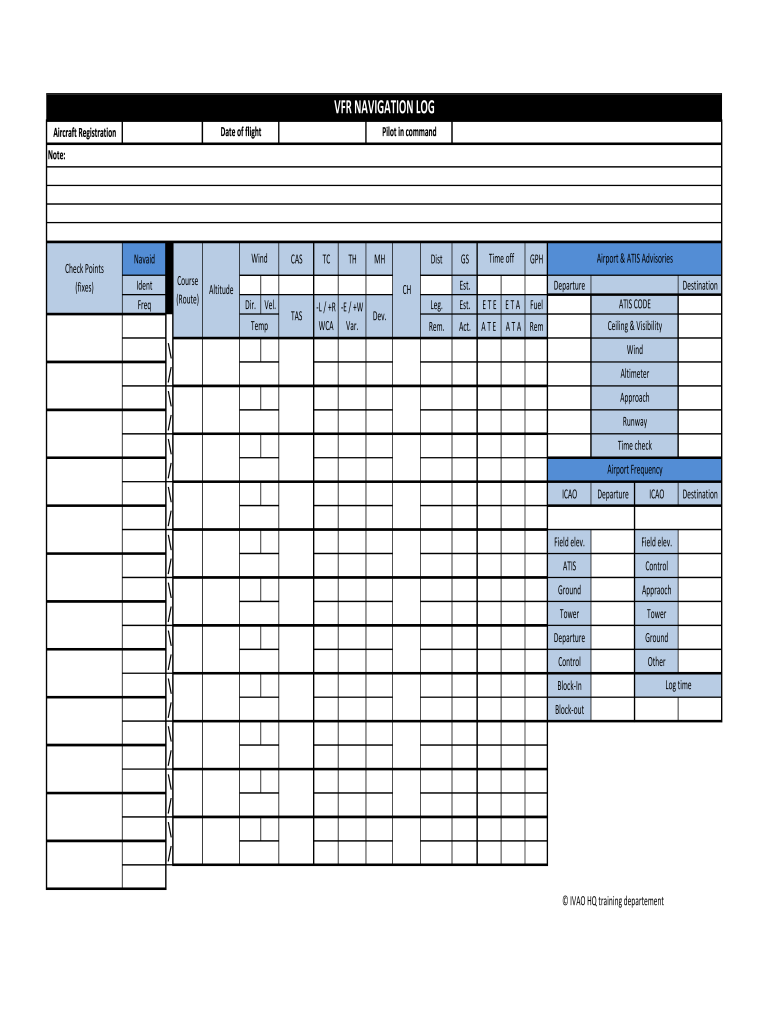







Definition & Purpose of a Printable Navigation Log
The printable navigation log is a crucial tool used by pilots to document and manage their flight details during a journey. Typically, it records essential data such as flight paths, altitudes, checkpoint details, times, and fuel usage. It acts as a comprehensive record that helps pilots stay organized, ensuring they adhere to flight plans and manage their time effectively.
Pilots, ranging from trainees to seasoned aviators, rely on these logs to enhance safety, track fuel efficiency, and fulfill aviation regulations. By maintaining an accurate log, pilots can better navigate complex airspace and adapt to changing weather conditions.
Key Components of a Printable Navigation Log
A printable navigation log contains multiple sections that encompass all vital flight information:
- Aircraft Details: This includes the aircraft's type and identification number, ensuring clarity when cross-referencing the log with other flight documents.
- Flight Route: The log specifies the planned route, including specific flight paths and checkpoints, to ensure the pilot remains on course.
- Weather Information: Pilots can record weather forecasts and real-time updates, which aid in planning and in-flight adjustments.
- Fuel Calculations: Sections for documenting fuel consumption and calculations help in planning refueling stops and managing reserves.
- Timing and ETA: Blocks for estimated and actual travel times help maintain schedule accuracy and accommodate necessary adjustments.
- Comments and Notes: Additional space is often provided for any critical observations or notes pilots may wish to jot down for future reference.
Steps to Complete a Printable Navigation Log
Completing a navigation log involves several methodical steps which assist in maintaining accuracy and ensuring compliance with aviation practices:
- Fill in Aircraft Information: Start by entering the aircraft's type and registration number.
- Set the Proposed Route: Clearly outline the flight path, including waypoints and airspace transitions.
- Document Weather Data: Include current forecasts and relevant atmospheric conditions.
- Calculate Fuel Requirements: Estimate consumption based on distance, speed, and weather conditions.
- Log Time & ETA: Record departure times, waypoints' ETAs, and arrival times as per the latest calculations.
- Capture Observations: Make notes about unusual events, deviations, or regulatory communications experienced during the flight.
Benefits of Using a Printable Navigation Log
The use of a navigation log provides multiple advantages that enhance flight operation and safety:
- Enhanced Flight Planning: By pre-planning routes and checkpoints, pilots minimize risks arising from unexpected navigational challenges.
- Efficiency in Fuel Management: Detailed logs aid in precise fuel calculations, ensuring adequacy while promoting conservation practices.
- Improved Safety Protocols: Systematic logging supports contingency planning and quick-response strategies.
- Regulatory Compliance: Documentation fulfills aviation authority requirements, avoiding penalties for incomplete or inaccurate records.
Common Users of Printable Navigation Logs
Printable navigation logs are predominantly used by:
- Student Pilots: Trainees employ logs for practice, developing disciplined habits that prepare them for commercial aviation careers.
- Private Pilots: For non-commercial flights, logs are vital for maintaining a systematic approach to route planning and safety adherence.
- Commercial Aviators: Professional pilots in both cargo and passenger sectors utilize these logs as standard practice within their operational requirements.


Important Terms Related to Navigation Logs
Wind Correction Angle (WCA)
The Wind Correction Angle is calculated to adjust a pilot's heading to counteract wind effects, ensuring the intended flight track is maintained.
Estimated Time Enroute (ETE)
ETE refers to the forecasted duration for a flight from departure to destination, based on planned speed and distance.
VFR and IFR
Visual Flight Rules (VFR) and Instrument Flight Rules (IFR) dictate the type of navigational guidance used, which impacts log completion specifics.
Legal Use and Compliance for Navigation Logs
Using navigation logs is mandatory under aviation safety regulations, ensuring pilots maintain precise records for accountability and review. Documentation assists in forensic investigations and compliance with FAA standards, crucial for maintaining pilot licenses and aircraft certifications. Failing to maintain or inaccurately completing logs can result in sanctions or penalties by regulatory bodies.
Real-World Examples and Scenarios
Practical Applications
- Cross-Country Flights: For planning and executing multi-leg journeys, keeping an updated navigation log is vital for success.
- Flight Training: Instructors emphasize the use of logs in assessing students' ability to plan and execute precise flight paths.
- Weather Deviations: Logs provide essential documentation when rerouting due to adverse weather, showing decision-making processes followed.
By maintaining comprehensive navigation logs, pilots can demonstrate due diligence in flight preparation, execution, and post-flight review, ensuring a high standard of safety and operational efficacy.




