






Definition and Meaning
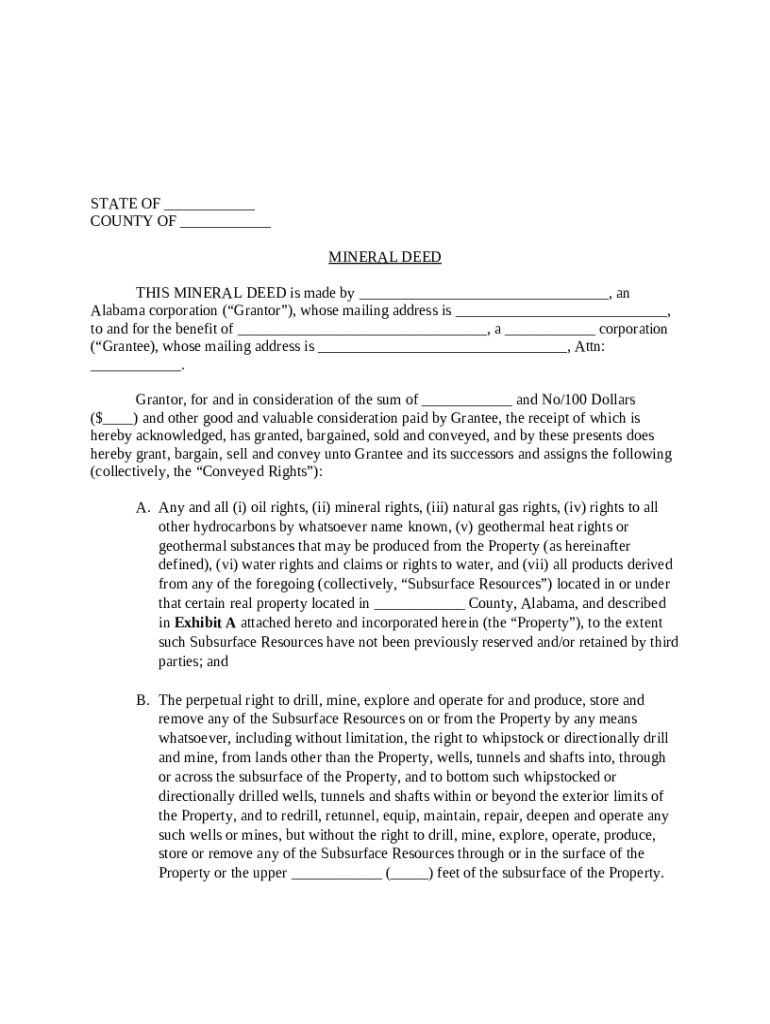
The "Alabama Mineral Deed" is a legal document that facilitates the transfer of rights to minerals located beneath a piece of land within the state of Alabama. These minerals can include natural resources such as oil, natural gas, coal, and other valuable substances found underground. The grantor, the party transferring the rights, conveys ownership and interests to the grantee, the receiving party, without transferring the surface rights of the property. This deed plays a crucial role in transactions involving mineral exploitation and land use, ensuring that mineral rights are clearly delineated between parties.
Key Elements of the Alabama Mineral Deed
To understand the functionality of an Alabama Mineral Deed fully, it is essential to recognize its key components:
- Grantor and Grantee Information: Complete details of the individuals or corporations involved in the transaction are required.
- Property Description: A thorough description of the property, including boundaries and exact location, to avoid any legal ambiguities.
- Mineral Rights and Interests: Specific detailing of the minerals and interests that are being conveyed.
- Consideration: The financial details or other forms of compensation involved in the transaction.
- Legal Clauses and Conditions: Any stipulations concerning the use of the mineral rights, such as restrictions or covenants.
- Signatures: Both parties must sign the document to ensure its legality.
How to Use the Alabama Mineral Deed
Using an Alabama Mineral Deed involves several critical steps. Here’s a streamlined process for utilizing this document effectively:
- Drafting: Engage legal counsel to draft the deed to ensure compliance with Alabama state laws.
- Review: Thoroughly review all terms and conditions outlined within the deed.
- Negotiation: Discuss any unclear terms or conditions with the other party for mutual agreement.
- Execution: Both parties must sign the document in the presence of a notary public.
- Recording: Submit the executed deed to the local county recorder's office to make the transfer legally binding and public.
Steps to Complete the Alabama Mineral Deed
Completing the Alabama Mineral Deed requires a meticulous approach:
- Gather Necessary Information: Collect the legal names of the grantor and grantee, property description, and mineral details.
- Draft the Deed: Utilize a template or legal service to prepare the document.
- Notarization: Get the document signed and notarized to ensure its legality.
- Record the Deed: File the deed with the county office where the property is located for public record.
- Keep Copies: Ensure both parties retain a copy for their records.
Important Terms Related to Alabama Mineral Deed
Understanding specific terms related to the Alabama Mineral Deed can guide users through the process:
- Severance: The act of separating the mineral rights from the surface rights.
- Royalties: Payments made to the owner based on a percentage of the minerals extracted.
- Lease: A contractual agreement that allows a lessee to extract minerals in exchange for compensation to the owner.
- Surface Rights: Rights pertaining to the surface of the land, distinct from the mineral rights.
Legal Use of the Alabama Mineral Deed
The Alabama Mineral Deed is employed in various legal contexts:
- Sale and Transfer: Facilitates the official transfer of mineral rights between parties.
- Estate Planning: Used to distribute mineral rights to heirs or beneficiaries.
- Corporate Transactions: Enables businesses to acquire mineral rights for operational purposes.
- Dispute Resolution: Acts as a reference in legal disputes over mineral rights ownership.
State-Specific Rules for the Alabama Mineral Deed
Alabama law governs the use and enforcement of mineral deeds within its jurisdiction. Key state-specific considerations include:
- Local Filing Requirements: Deeds must be filed within the county where the property is located.
- Tax Implications: Alabama imposes specific taxes on mineral transactions, which should be accounted for during the transfer.
- Conservation Laws: Compliance with state regulations concerning mineral extraction and environmental protection is mandatory.
Examples of Using the Alabama Mineral Deed
The Alabama Mineral Deed is utilized in real-world scenarios such as:
- Property Sales: When selling land with valuable mineral deposits, the deed facilitates the transfer of rights separate from the surface property.
- Investment Opportunities: Investors might purchase mineral rights without buying land, relying on this deed for legal backing.
- Legal Documentation: Used to formalize partnerships where mineral extraction is the primary business purpose.
These examples demonstrate the versatility of the Alabama Mineral Deed in various transaction contexts, ensuring that all parties understand their rights and obligations concerning mineral resources.