







Definition & Meaning
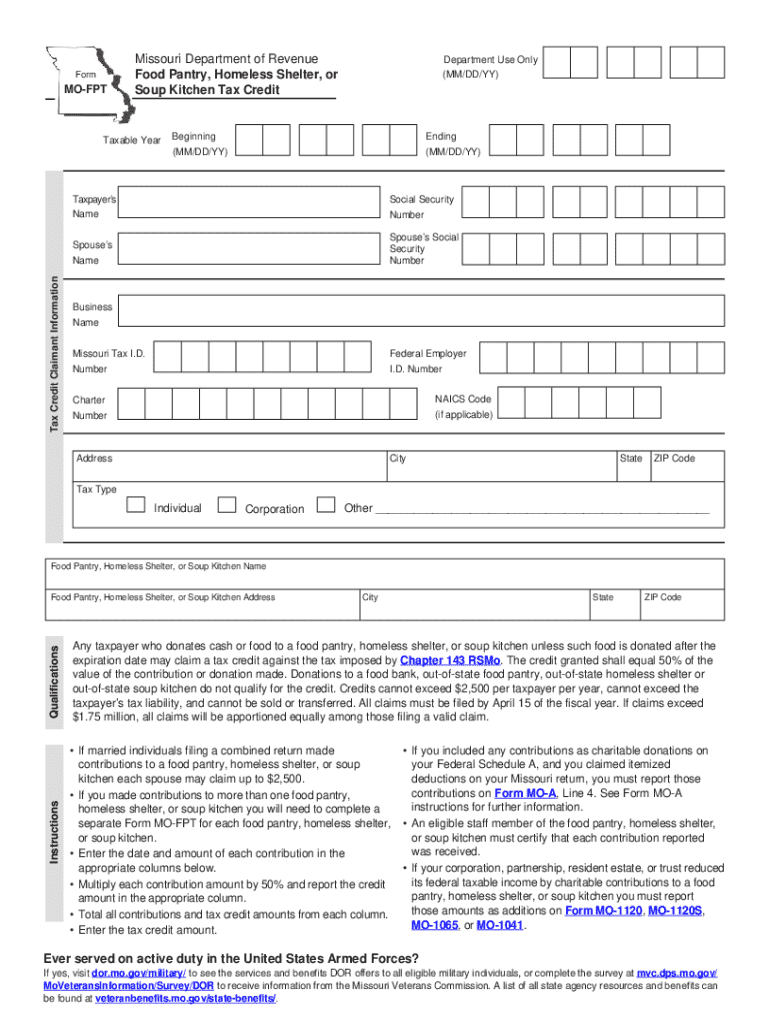
The Missouri Food Pantry Tax Credit (MO-FPT) enables taxpayers to support food pantries, homeless shelters, or soup kitchens through charitable contributions and receive a tax offset. This credit serves as an incentive to encourage donations by allowing contributors to reduce their tax bill in alignment with their philanthropic efforts. This initiative aims to bolster community support for essential services that aid in food security.
Eligibility Criteria
To qualify for the Missouri Food Pantry Tax Credit, various conditions must be met. Donors must contribute to qualifying food pantries, homeless shelters, or soup kitchens within Missouri. Eligible contributions can be monetary or include items like food or other forms of direct assistance to these organizations. It is essential to ensure that the beneficiary organization has received recognition from the Missouri Department of Revenue as a qualified entity eligible to partake in the tax credit program.


Important Terms Related to the Tax Credit
Understanding key terms associated with the Missouri Food Pantry Tax Credit is crucial:
- Qualified Contribution: A donation made to recognized organizations including food pantries and shelters.
- Tax Credit: A reduction applied directly against the tax owed, lowering the overall tax liability.
- Recipient Organization: Approved entities eligible for receiving donations under the tax credit program.
Grasping these terms helps in comprehending the operational framework of the tax credit and ensures accurate compliance.
How to Obtain the Tax Credit
To secure the Missouri Food Pantry Tax Credit, individuals and businesses must follow a series of steps. Begin by making a qualified contribution to an approved organization. The recipient will provide a receipt or certificate validating the donation, which must be retained for record-keeping. Taxpayers must then complete the necessary forms, specifically designed for this credit, reflecting the donation details and submit them to the Missouri Department of Revenue alongside their general tax returns.
Steps to Complete the Form Online
- Access the Form: Locate the Missouri Food Pantry Tax Credit form on an authorized platform like DocHub.
- Fill Required Fields: Input personal and donation details including taxpayer identification number and the amount donated.
- Attach Documentation: Upload supporting documents such as the receipt from the qualified organization.
- Review and Sign: Thoroughly check all entries for accuracy and affix your signature.
- Submit and Confirm: Submit the form online and await confirmation from the Department of Revenue.
Legal Use of the Tax Credit
Legal compliance is paramount when claiming the Missouri Food Pantry Tax Credit. Taxpayers must ensure accuracy in documenting their donations and adhere strictly to regulations governing the tax credit. Fraudulent claims or inaccuracies can result in penalties or rejection of the credit. Utilizing trusted tools and platforms like DocHub to manage and submit the form helps maintain legal integrity.
Filing Deadlines & Important Dates
Adhering to crucial dates is essential for securing the tax credit. Typically, submissions align with the standard tax filing deadlines, generally due in April for individual filers. It's advisable to verify specific dates annually as they can shift due to weekends or public holidays. Early preparation and submission ensure there are no delays in processing.
State-Specific Rules for Missouri
Missouri-specific rules apply to this tax credit, including predefined limitations on the total available credit annually and caps per taxpayer. Understanding regulations associated with Missouri's tax policy is critical for applicants, ensuring compliance and optimizing benefits within the state's legislative framework.
Examples of Using the Tax Credit
Various scenarios illustrate the utility of the Missouri Food Pantry Tax Credit:
- Individual Donor: A Missouri resident donates $500 to a local homeless shelter and receives a tax credit equivalent to a percentage of their contribution, directly reducing their state tax bill.
- Corporate Contribution: A Missouri-based corporation allocates funds to food banks and employs the tax credit to lessen its corporate tax obligations while supporting community welfare.
These examples demonstrate the practical application of the credit, highlighting its benefit to a range of taxpayers.




