






Definition & Purpose of Schedule C (Form 1040)
The Schedule C (Form 1040) is specifically designed for sole proprietors and self-employed individuals to report their business income and expenses. It forms part of the individual tax return, Form 1040, allowing taxpayers to calculate their net profit or loss. Understanding its definition and role is crucial, especially for those involved in freelance work or operating a small business without separate legal entity status.
- Sole proprietors utilize Schedule C to accurately declare earnings and expenses tied to their business operations.
- Self-employed individuals need this form to distinguish business income from personal income, ensuring proper tax reporting.
- This form is essential for calculating the total income upon which taxes are levied, making it a critical component of annual tax filings for small business owners.
Essential Steps to Complete Schedule C
Completing Schedule C requires careful attention to detail and an understanding of various sections on the form. This section breaks down the necessary steps, offering clarity to those unfamiliar with the process.
- Gather Business Information: Start with basic business details, including your business name and principal activity. If you don't operate under a business name, use your own name.
- Calculate Gross Receipts: This includes all income received from business activities. Be sure to keep comprehensive records to support the figures.
- Itemize Business Expenses: Include all costs related to running your business, such as office supplies, travel expenses, and utilities. Separate costs into categories like advertising and legal services.
- Determine Depreciation: If you have business assets, you need to account for depreciation. Utilize IRS guidelines to compute this accurately.
- Subtract Total Expenses from Income: The difference results in a net profit or loss. This figure is transferred to line 12 of Form 1040.
- Complete Other Sections: Ensure to provide information on inventory (if applicable) and any expenses that require additional documentation or explanation.
Who Uses Schedule C
Schedule C is primarily used by specific groups of taxpayers. Understanding who should file it helps in determining its applicability to your tax situation.
- Self-Employed Individuals: This group includes freelancers, contractors, and consultants who run their own businesses.
- Independent Contractors: Individuals who receive 1099 forms for their work usually need to file Schedule C to report income.
- Small Business Owners: Sole proprietors who do not have a separate business entity file this form.
- Part-Time Entrepreneurs: Those who earn money from side businesses while being employed elsewhere will also need to use Schedule C to report additional income.
Important Terms Associated with Schedule C
Familiarity with key terms associated with Schedule C enhances understanding and ensures accurate completion.
- Gross Receipts: Total income earned before deducting expenses.
- Net Profit/Loss: Calculated as total income minus total expenses. This figure is crucial for personal tax calculations and adjustments.
- Depreciation: The deduction for the wear and tear on business assets like equipment and vehicles. Properly calculated depreciation can significantly affect taxable income.
Filing Deadlines and Important Dates
Understanding key timelines for filing Schedule C is essential for compliance and avoiding penalties.
- Annual Deadline: Schedule C is generally due on April 15th, along with your federal tax return.
- Extensions: Taxpayers can apply for a filing extension, typically up to six months, which moves the deadline to October 15th.
- Quarterly Estimates: Self-employed individuals must make estimated tax payments quarterly. Familiarity with these dates ensures accurate tax planning throughout the year.
Required Documents for Schedule C
Organizing the right documents is pivotal for accurate and complete filing.
- Income Records: Includes invoices, 1099 forms, and bank statements to substantiate income claims.
- Expense Receipts: Collect all receipts related to business expenses for each category, such as travel, meals, and office supplies.
- Financial Statements: Maintain organized records of profit and loss statements which can greatly aid in the correct completion of the form.
IRS Guidelines and Compliance
Adhering to IRS instructions is critical for ensuring that Schedule C is correctly filed.
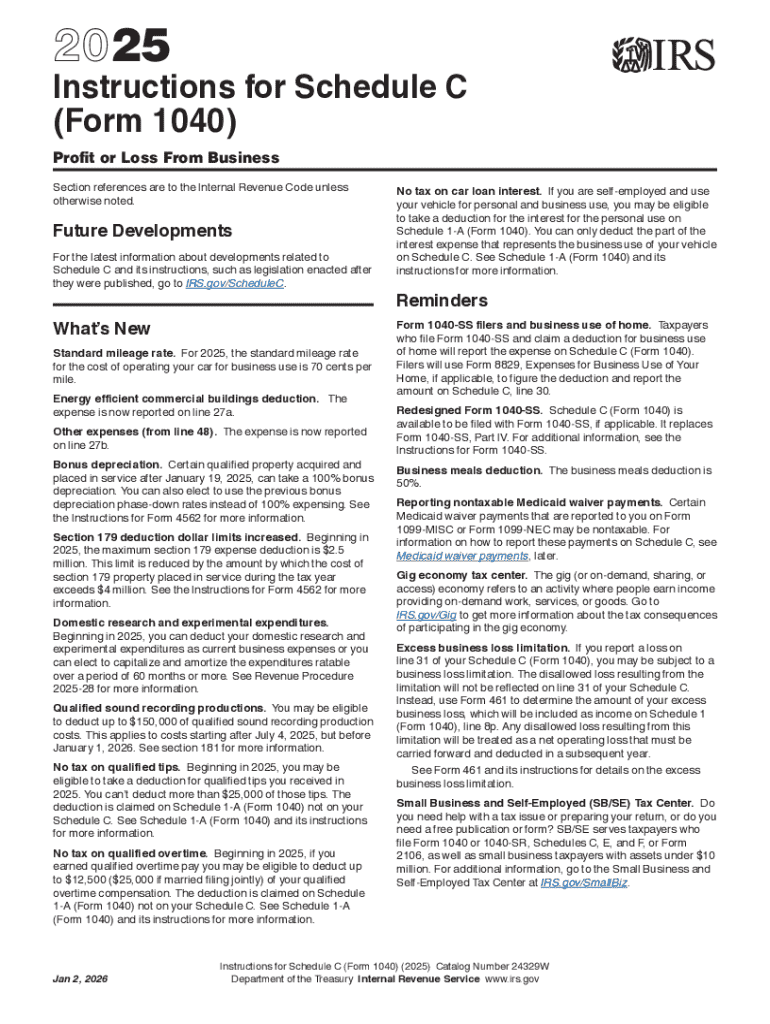
- Instructions for Schedule C: Each year, the IRS provides updated guidance on filling out the form which adapts to changes in tax laws.
- Compliance Importance: Proper completion complies with federal regulations, preventing inaccuracies that could lead to audits or penalties.
- Educational Resources: The IRS website offers workshops and online resources to assist taxpayers in completing Schedule C.
Digital & Paper Filing Methods for Schedule C
Taxpayers have multiple options for filing Schedule C, reflecting hybrid adaptability for both traditional and modern preferences.
- Online Filing: Use IRS-approved e-file systems, such as tax software offerings from TurboTax or QuickBooks, which guide users step-by-step.
- Paper Filing: Still an option for those who prefer a traditional approach or have simpler returns.
- In-Person Assistance: Options like the IRS’s Volunteer Income Tax Assistance program help lower-income filers in person.
These comprehensive blocks explain the myriad aspects of Schedule C (Form 1040), providing a clear roadmap for filers, from gathering requisite documents to understanding crucial terms.