
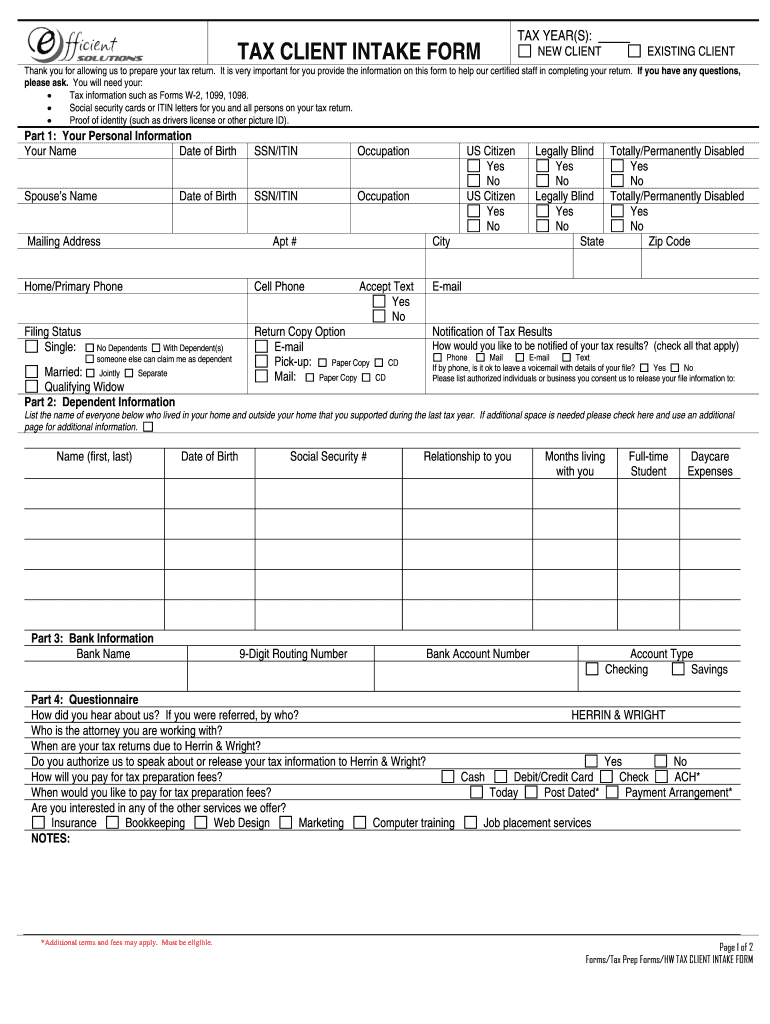







Definition and Importance of the Tax Client Intake Form
The Tax Client Intake Form is a critical document used for gathering essential personal and financial information from clients. It serves both new and existing clients seeking assistance with their tax returns. The form is structured to ensure that tax preparers receive comprehensive data necessary for accurate and compliant tax preparation.
Key elements of the Tax Client Intake Form include:
- Personal Information: Name, address, Social Security number, and contact details.
- Dependent Details: Information about dependents, including Social Security numbers and relationship.
- Financial Information: Income sources, deductions, and any relevant financial documents.
The form embodies the responsibilities of clients in terms of accuracy and completeness, emphasizing the importance of providing truthful information. It also outlines payment obligations for the preparer’s services.
How to Use the Tax Client Intake Form
Using the Tax Client Intake Form effectively involves several steps to ensure all necessary information is collected. Here’s how clients can utilize the form:
- Complete the Personal Information Section: Clients should fill out their basic details accurately as it will be used for filing purposes.
- Provide Dependent Information: This helps in determining eligibility for various deductions and credits.
- Detail Financial Information: Clients must disclose sources of income, including W-2s and 1099s, to guarantee comprehensive reporting.
- Answer Additional Questionnaire: This section may inquire about tax situations that could affect tax preparation, like ownership of businesses or foreign income.
- Review for Accuracy: Clients should double-check all provided information for correctness to avoid any compliance issues.
The form may also include sections for clients to provide consent for electronic communication and the use of specific tax software.
Key Elements of the Tax Client Intake Form
Several key components comprise the structure of a well-organized Tax Client Intake Form. Understanding these elements helps both clients and tax preparers ensure thorough documentation:
- Personal Details: Crucial for identifying the client and their tax obligations.
- Financial Documentation: A comprehensive overview of the client’s financial situation aids in thorough tax preparation.
- Questionnaire about Services: Helps the tax preparer understand the client’s specific needs and tailor the services accordingly.
- Terms and Conditions: Clearly stated payment obligations and disclosures regarding service fees protect both parties involved.
- Automatic Payment Authorization: This section provides a streamlined process for payment arrangement once the services are completed.
Incorporating these elements ensures the form is detailed and functional, providing clarity for all parties.
Steps to Complete the Tax Client Intake Form
Completing the Tax Client Intake Form requires systematic attention to detail. Here’s a step-by-step guide for clients:
- Download the Form: Obtain the Tax Client Intake Form from the chosen tax preparer's website or directly request it from them.
- Read Instructions Carefully: Understanding any accompanying guidance notes helps ensure correct completion.
- Fill Out Each Section: Start from personal information and move methodically to financial data, ensuring no sections are overlooked.
- Attach Relevant Documentation: Include copies of necessary financial documents like past tax returns and income statements to facilitate accurate processing.
- Sign and Date: Ensure that you provide a signature confirming the accuracy of the information.
- Submit the Form: Use the specified method for submission—whether electronically or via traditional mail. Confirm submission for assurance.
Following these detailed steps promotes a smooth and efficient tax preparation process.
Legal Use of the Tax Client Intake Form
The Tax Client Intake Form aids in ensuring compliance with various legal requirements during tax preparation. Its significance includes:
- Establishing Client Identity: Collecting accurate personal data complies with IRS regulations.
- Permission to File: The form, when signed, provides tax preparers with the authority to file on behalf of clients.
- Taxpayer Responsibilities: It elucidates the accountability of clients regarding the provided information, critical for avoiding future tax liabilities.
- Security of Personal Data: The form includes provisions that comply with data protection laws, ensuring client information is used and stored securely.
Understanding the legal context surrounding the Tax Client Intake Form is essential for both clients and tax preparers to navigate the regulatory landscape successfully.
Important Terms Related to the Tax Client Intake Form
Familiarity with specific terminology enhances the comprehension of the Tax Client Intake Form and its use. Some key terms include:
- Dependent: An individual who relies on the taxpayer for financial support and is often eligible for tax credits.
- Deductions: Eligible expenditures that can be subtracted from a taxpayer's total income to lower their taxable income.
- IRS: The Internal Revenue Service is the U.S. government agency responsible for tax collection and tax law enforcement.
- Tax Credits: Benefits that reduce tax liabilities and can be a direct reduction of taxes owed based on specific qualifications.
- Compliance: Adhering to legal tax obligations and responsibilities as outlined by IRS regulations.
Incorporating these terms facilitates clearer communication about tax preparation processes and requirements.
Examples of Using the Tax Client Intake Form
The application of the Tax Client Intake Form can vary widely depending on client circumstances. Here are some common scenarios where this form is utilized:
- Self-Employed Individuals: They provide comprehensive income documentation and expense details to accurately report earnings and determine deductions.
- Families with Dependents: These clients must ensure accurate information about dependents is included to access available credits and deductions.
- Retired Individuals: They might focus on income sources such as pensions or Social Security and any applicable deductions related to medical expenses.
- Students: Clients who are in school may have unique financial situations, needing to disclose tuition payments and education-related expenses.
These examples illustrate the various contexts in which the Tax Client Intake Form is essential for accurate and effective tax preparation.




