






Definition and Meaning of Forms, Schedules, and Instructions for U.S. Tax-Exempt
Forms, Schedules, and Instructions for U.S. Tax-Exempt collectively refer to the documentation and guidance associated with entities that are exempt from federal income tax under section 501(c)(3) of the Internal Revenue Code. These documents are crucial for tax-exempt organizations such as charities, religious institutions, and educational entities to properly report their financial activities to the Internal Revenue Service (IRS) and maintain their tax-exempt status.
Key Characteristics
- Purpose: These forms help document financial transparency and compliance with IRS requirements.
- Types: Includes Form 990, Form 990-EZ, and Form 990-N, among others.
- Use: Filed annually to ensure tax-exempt compliance and avoid penalties.
How to Use the Forms, Schedules, and Instructions for U.S. Tax-Exempt
Utilizing these forms involves detailed record-keeping and understanding of each form’s specific requirements.
Steps to Comprehensive Usage
- Identify Applicable Forms: Determine which form is required based on your organization's size and type.
- Gather Necessary Information: Collect financial records, governance information, and details regarding organizational activities.
- Follow Instructions: Carefully read the IRS guidelines and instructions for each specific form to ensure accurate completion.
- Review and File: Double-check for accuracy before submission via the preferred method (e-File or paper submission).
Steps to Complete the Forms, Schedules, and Instructions for U.S. Tax-Exempt
Completing these forms requires careful attention to detail and understanding tax accounting.
Detailed Process
- Data Entry: Input all required financial and operational details on the form.
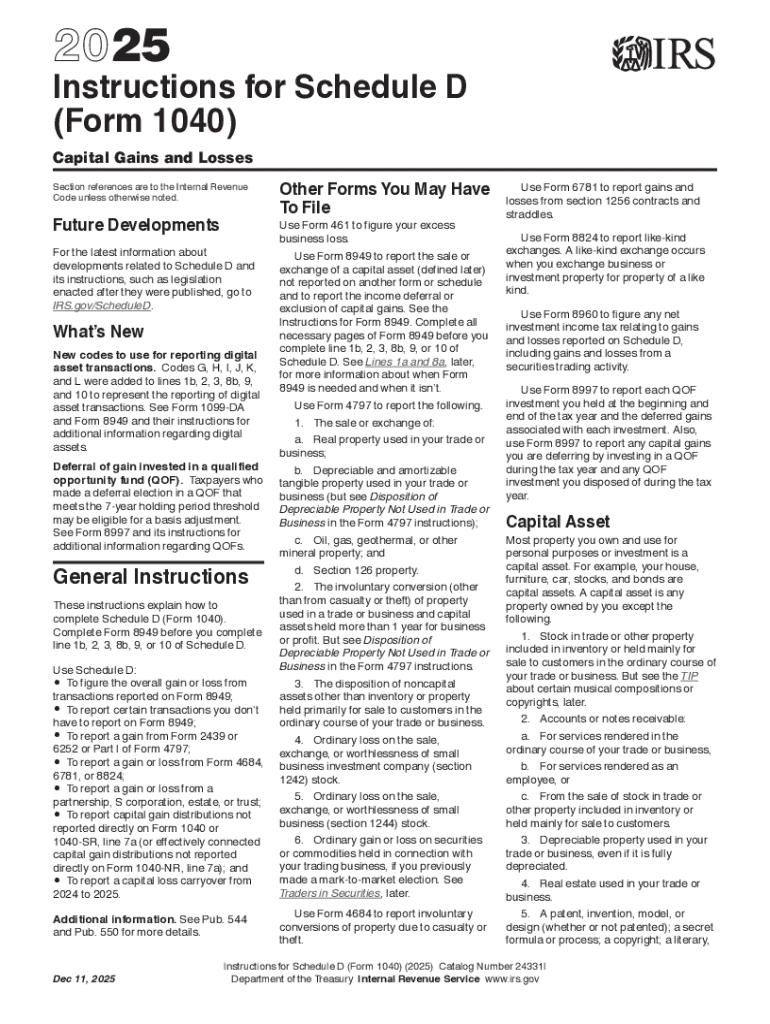
- Schedule Attachments: Attach relevant schedules such as Schedule A (Public Charity Status) or Schedule D (Supplemental Financial Statements).
- Certification: Obtain certification from a responsible officer within the organization.
- Submission: Submit through the IRS e-File system or via mail, keeping track of deadlines to avoid penalties.
Practical Tips
- Verification: Use prior year submissions for consistency.
- Consultation: Consider engaging a tax professional if complexities arise.
Important Terms Related to Forms, Schedules, and Instructions for U.S. Tax-Exempt
Understanding the terminology is critical for accurate completion and compliance.
Glossary
- 990 Series: Refers to various forms under the 990 designation used by tax-exempt organizations.
- Section 501(c)(3): Provision under the Internal Revenue Code granting tax-exempt status to qualifying entities.
- Fiscal Year: The period used for accounting purposes, which may differ from a calendar year.
IRS Guidelines for Tax-Exempt Forms
The IRS provides comprehensive guidelines for tax-exempt organizations to ensure proper filing and compliance.
Key Points
- Qualification Criteria: Entities must meet specific qualifications outlined by the IRS to retain tax-exempt status.
- Annual Filing Requirements: Forms must be filed on an annual basis, with required documentation reflecting financial operations.
Avoiding Common Mistakes
- Accuracy: Ensure all figures and statements accurately reflect organizational activity to avoid misreporting.
- Compliance: Stay updated on IRS rule changes or revisions in tax-exempt requirements.
Filing Deadlines and Important Dates for U.S. Tax-Exempt Forms
Staying aware of deadlines is essential to maintain compliance and avoid penalties.
General Deadlines
- Calendar Year Filers: Typically due by the 15th day of the 5th month after the end of an organization’s fiscal year.
- Extensions: Six-month extensions are available via Form 8868.
Strategic Planning
- Preparation Period: Begin preparation early in the fiscal year to ensure timely compilation of needed information.
- Reminder Systems: Implement automated reminders and checklist systems to track approaching filing deadlines.
Required Documents for Completing Tax-Exempt Forms
Organizational and financial documents are necessary to complete forms accurately.
Common Requirements
- Financial Statements: Balance sheets and income statements.
- Personal Identifiers: EIN, organizational name, and address details.
- Program Service Information: Descriptions of major activities and operational narratives.
Documentation Practices
- Audits: Consider periodic internal audits to prepare for IRS audits.
- Record-Keeping: Maintain thorough records to support entries on the tax forms.
Digital vs. Paper Versions of Tax-Exempt Forms
Choosing between digital and paper versions may depend on specific organizational needs.
Comparison
- E-File Advantages: Speedier processing, immediate confirmation of receipt, and reduced errors.
- Paper Submission: Offers a tangible record but with a potential delay in processing.
Considerations
- Integration: Digital filing may be more compatible with electronic record-keeping systems within an organization.
- Accessibility: Consider the technological capability and resources of the organization in choosing the preferred method.