






Definition and Purpose of the SEPA Direct Debit Mandate for Vehicle Tax
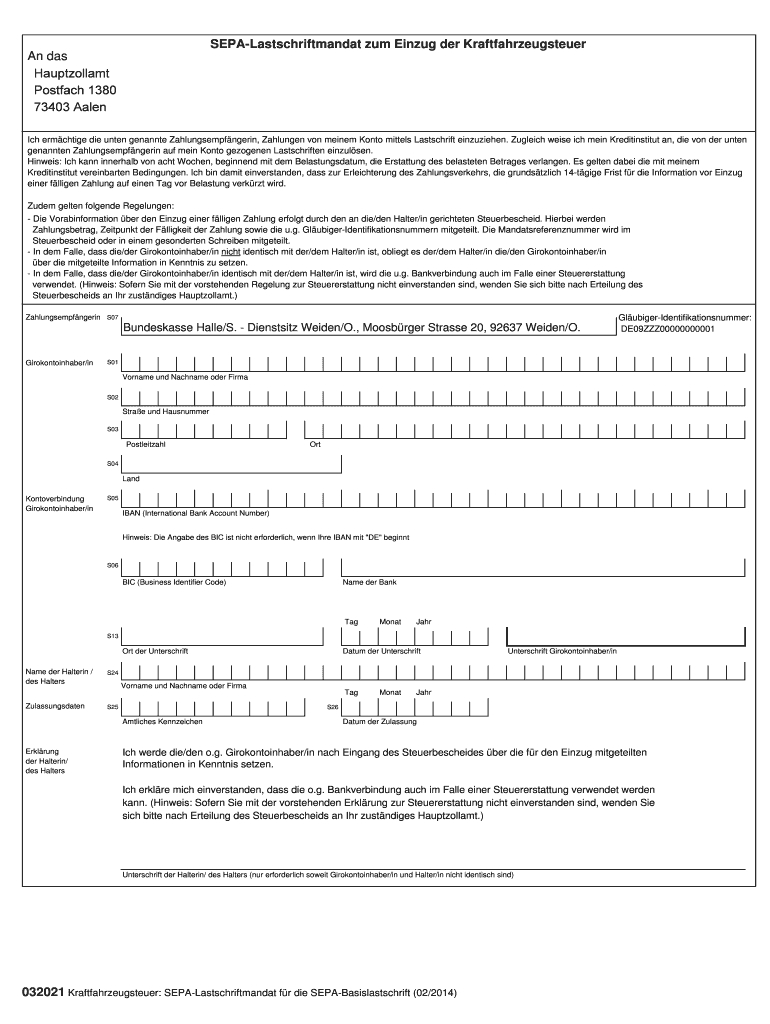
The SEPA Direct Debit Mandate for vehicle tax serves as a vital document authorizing the Hauptzollamt, the main customs office in Germany, to debit vehicle tax payments directly from the vehicle owner’s bank account. This document standardizes payment collection, ensuring timely and efficient processing of dues. It spells out rights and privileges for account holders, such as the ability to request refunds within set timelines. The form necessitates the dissemination of payment notifications, allowing vehicle owners to stay informed about their financial obligations. Furthermore, the document includes sections dedicated to personal information, banking details, and a declaration of consent, reinforcing its role in streamlining the payment procedure while strengthening security and transparency.
Steps to Complete the SEPA Mandate Form
-
Personal Information Entry: Start by filling in all required personal details, including your full name, address, and contact information. This ensures the form is correctly attributed to your vehicle tax account.
-
Banking Details Provision: Enter your bank account details, including the International Bank Account Number (IBAN) and Bank Identifier Code (BIC). These details authorize the Hauptzollamt to withdraw payments directly.
-
Review Account Holder Rights: Understand your rights concerning direct debit transactions, including refund terms and conditions.
-
Consent Confirmation: Provide consent for using your bank details, applicable to any potential tax refunds or adjustments, by signing the form.
-
Form Submission: Depending on the options available, submit the form via mail, online, or in-person at the respective office.
Obtaining the SEPA Direct Debit Mandate Form
The SEPA Direct Debit Mandate for vehicle tax is accessible through several channels to ensure convenience:
- Online Forms: Visit official government websites where the form can be downloaded in a PDF format.
- Customs Office: Obtain a hard copy directly from your local Hauptzollamt.
- Postal Request: Request delivery of the form through postal mail by contacting the Hauptzollamt.
Importance of Completing the SEPA Mandate Form
Completing the SEPA Direct Debit Mandate form for vehicle tax is crucial for several reasons:
- Efficiency: Automates tax payments, preventing missed deadlines and related penalties.
- Security: Ensures secure transactions with encrypted data and authentic processing.
- Transparency: Provides detailed notifications of transactions, allowing for easy monitoring of payments.
Common Users of the SEPA Mandate Form
The SEPA Direct Debit Mandate Form is particularly useful for:
- Vehicle Owners: Ensures their tax payments are handled on time without manual intervention.
- Fleet Operators: Simplifies the process of managing multiple vehicle tax accounts.
- Tax Consultants: Assists in managing client tax liabilities efficiently.


Legal and Compliance Considerations
Legal prudence is essential when dealing with the SEPA Direct Debit Mandate:
- Legally Binding: The form represents a binding agreement between the account holder and the Hauptzollamt.
- Data Protection: Complies with GDPR, ensuring personal and banking information is securely handled.
- Refund Protocols: Clearly defined rules on how refunds can be processed, ensuring taxpayer rights are protected.
Key Elements of the SEPA Mandate Form
- Personal Information: Full name, address, and contact details.
- Bank Information: IBAN, BIC, and bank name.
- Mandate Reference: A unique identifier for the mandate, crucial for processing payments.
- Signature: Legal acknowledgment of the terms detailed within the mandate.
Examples of SEPA Mandate Utilization
Consider scenarios where the SEPA Mandate enhances tax management:
- Regular Commuters: Individuals who frequently drive across states may find periodic tax payments beneficial through SEPA mandates.
- Business Fleets: Companies operating large fleets can unify their tax payment processes.
- Cross-Border Drivers: Those residing near national borders with different jurisdictional rules can stabilize tax payments effectively.
By understanding the SEPA Mandate's comprehensive structure and potential use cases, individuals and businesses alike can better manage their vehicle tax challenges with ease and efficiency.