







Definition and Meaning
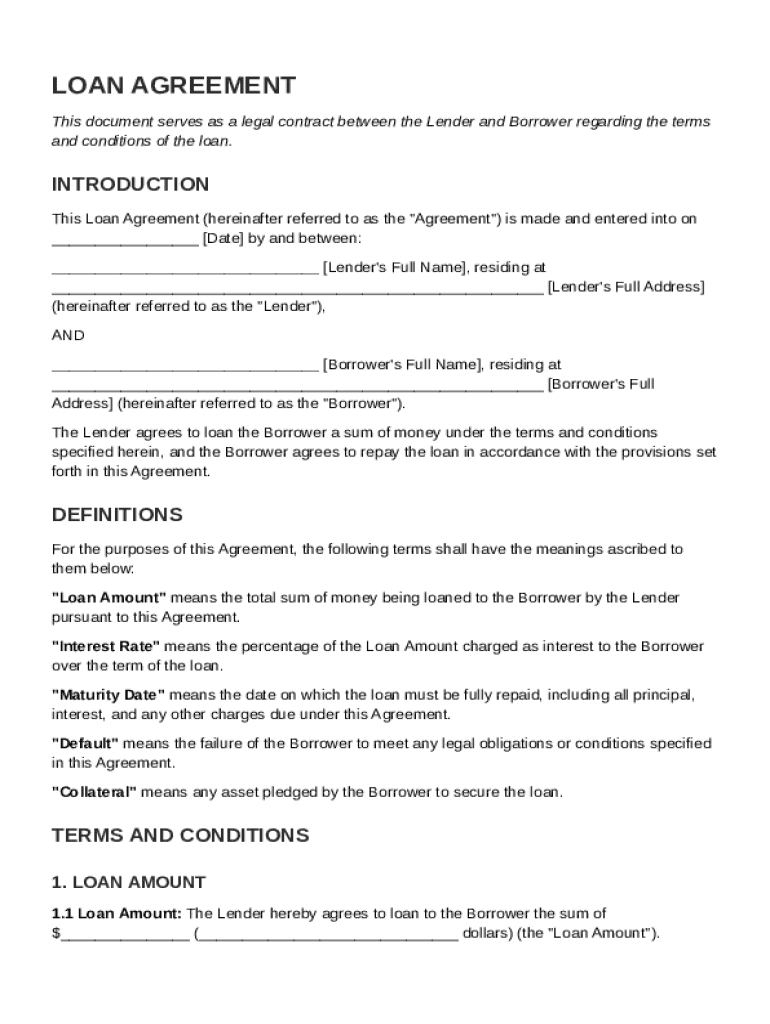
A "Legal Loan Contract Template" is a preformatted document designed to formalize the terms and conditions of a loan agreement between a lender and a borrower. It serves as a structured guide ensuring that all critical aspects of the loan are clearly documented. This type of template typically includes provisions for the loan amount, interest rate, collateral, repayment schedule, default conditions, and governing law. These templates aim to safeguard the interests of both parties by establishing clear obligations and expectations. They also often incorporate sections that address amendments, severability, and the binding effect of the contract.
How to Use the Legal Loan Contract Template
To efficiently use a legal loan contract template, one must first tailor it to the specific details of the loan agreement. Begin by filling in the names and contact information of both the lender and borrower. Next, specify the loan amount and the agreed interest rate. It's also essential to clarify the repayment schedule, detailing the start date, frequency, and amounts for each installment. Including collateral provisions, if any, adds a layer of security for the lender. Review default conditions that might occur if the borrower fails to adhere to the repayment terms, ensuring they are explicit and reasonable. Finally, both parties should review the governing laws or statutes that will regulate the contract, aligning with their jurisdictional requirements.
Steps to Complete the Legal Loan Contract Template
- Gather necessary information from both parties, including identification and contact details.
- Determine and document the loan amount and applicable interest rate.
- Define the repayment schedule, highlighting dates and amounts due.
- Outline any collateral being used to secure the loan.
- Establish clear terms for what constitutes a default and the subsequent actions.
- Specify the governing laws that will apply to the contract.
- Have both parties thoroughly review the document before signing.
- Ensure the document is signed in the presence of a notary if required by local law.
Key Elements of the Legal Loan Contract Template
A comprehensive legal loan contract template encompasses numerous key elements. At its core, it delineates the principal amount loaned and the interest rate, whether fixed or variable. An effective template also specifies the collateral pledged, providing the lender recourse should the borrower default. Detailed repayment schedules indicate the periodic payment amounts, frequency, and duration. Further, the template contains default conditions, elaborating the consequences of delinquency. Additional clauses often address issues of jurisdiction, amendment procedures, and severability, ensuring the contract remains enforceable even if some elements are invalidated.
Important Terms Related to the Legal Loan Contract Template
- Principal: The original sum of money borrowed, excluding interest.
- Interest Rate: The percentage charged on the principal, representing the cost of borrowing.
- Collateral: An asset pledged as security for the loan repayment.
- Default: Failure to pay back the loan according to the agreed terms.
- Governing Law: The legal framework that governs and interprets the contract.
Legal Use of the Legal Loan Contract Template
To ensure its enforceability, the legal loan contract template should conform to local, state, and federal laws. It is crucial that the contract is clear, mutual, and does not contain ambiguous terms that might be challenged. Each party must willingly agree to the terms, without evidence of coercion or duress. The agreement should also respect the usury laws of the applicable state, which dictate the maximum allowable interest rates. Should a breach occur, the governing laws stated in the contract will determine the adjudication process.
Who Typically Uses the Legal Loan Contract Template
This template is mostly used by individuals and businesses engaged in lending or borrowing activities. Financial institutions, private lenders, and peer-to-peer lending platforms often rely on these templates to facilitate straightforward, transparent transactions. Borrowers, ranging from individuals seeking personal loans to businesses requiring short-term capital, use these contracts to formalize their loan agreements. Legal professionals may also utilize these templates to draft customized contracts that meet the unique needs of their clients.


State-Specific Rules for the Legal Loan Contract Template
Each state in the U.S. may impose unique regulations governing loan agreements, affecting interest rates, default conditions, and collateral requirements. Usury laws, which restrict the maximum interest rate that can be charged, are particularly state-specific. Additionally, some states may require contracts to be notarized or filed with a local authority. Therefore, users of the template should adjust clauses according to the applicable state laws, ensuring compliance and validity. Consulting a local attorney for legal advice can be beneficial to navigate these complexities.
Examples of Using the Legal Loan Contract Template
Consider a small business owner in California seeking a loan to expand operations. By using the legal loan contract template, the owner can formalize an agreement with the lender detailing a $50,000 loan at a 5% annual interest rate. The repayment plan might span five years, with collateral in retail inventory. Should repayment be delayed, the clauses detailing default actions provide a clear framework for recourse. Alternatively, an individual in Texas borrowing funds to finance a car purchase could use the template to negotiate terms, ensuring both parties are aware of obligations and rights, supported by Texas's governing laws.




