



01. Edit your form online
Type text, add images, blackout confidential details, add comments, highlights and more.

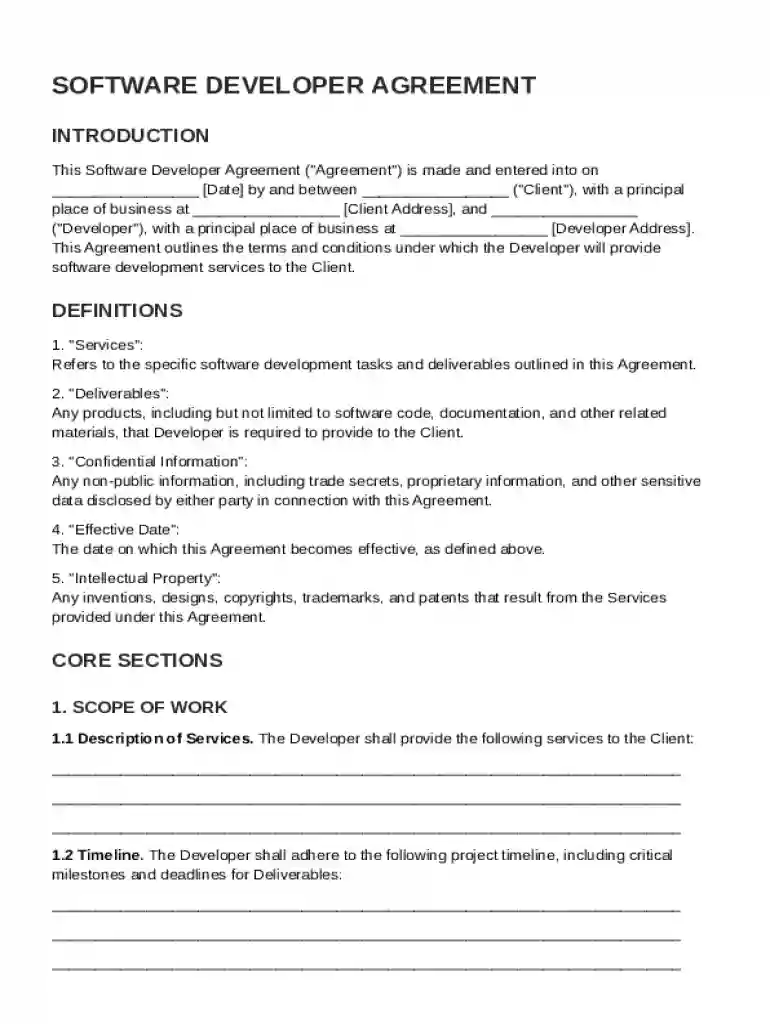
Type text, add images, blackout confidential details, add comments, highlights and more.

Draw your signature, type it, upload its image, or use your mobile device as a signature pad.

Send it via email, link, or fax. You can also download it, export it or print it out.
The Software Developer Agreement Template is a legal document that sets the framework for the relationship between a developer and a client. It delineates the responsibilities, expectations, and rights of both parties during the software development process. This agreement typically covers several core areas, including the scope of work, intellectual property rights, payment terms, confidentiality obligations, and more. It is designed to protect both parties by ensuring that all elements of the project are well-defined and legally binding. The document often includes clauses that address potential disputes, warranty terms, and the legality of electronic signatures, making the agreement comprehensive and robust.
The scope of work is a crucial section within the agreement, detailing the specific tasks the developer is expected to complete. It outlines the project's objectives, deliverables, and timelines. This section ensures that both parties have a clear understanding of what the project entails, which helps prevent scope creep and clarifies when additional services may require renegotiation of terms.
Another critical aspect is the ownership of intellectual property (IP). The agreement typically specifies who owns the IP created during the project, including software code, documentation, and any associated materials. Generally, the client retains ownership once payment is completed, but specific arrangements can vary based on negotiations. It is vital to clearly define IP rights to prevent conflict over creative and proprietary outputs.
Confidentiality Obligations: Details the requirement for both parties to keep sensitive information private. This is crucial when developing proprietary software solutions.
Payment Terms: Defines how much and when the developer will be paid for the work completed. It may include milestones and conditions for payment release, which helps ensure satisfactory progress before funds are transferred.
Warranties and Liabilities: This section covers guarantees made by the developer about the software's performance and outlines what happens in the event of defects or failures.
Termination Clauses: Provides guidelines on how either party can exit the agreement if necessary. This includes notice periods and conditions, protecting both parties from sudden termination without cause.
Review and Edit: Begin by carefully reading the entire template. Customize sections such as the scope of work, payment terms, and timelines to match the specific project requirements.
Define Terms: Clearly define all technical and legal terms, ensuring mutual understanding. This includes specifics like software delivery format and support expectations.
Include Signatories: Enter the names and titles of signatories for both parties. Ensure they are authorized to make such agreements to avoid disputes.
Add Signatures: Use a secure method to sign digitally, making use of platforms like DocHub to ensure the signature's legality under the ESIGN Act.
Document Review: Conduct a thorough review by all parties or representatives, like legal advisors, to ensure nothing is missed.
The use of the Software Developer Agreement Template ensures that both developer and client are legally protected under U.S. law. Once signed, the document is enforceable in court, offering legal recourse should any disputes arise. The agreement often adheres to general contract laws and may include state-specific provisions to align with local regulations. Furthermore, electronic signatures are considered legally binding under ESIGN, providing a modern, efficient way to finalize agreements.
This template is commonly used by software development firms, freelance developers, and businesses seeking custom software solutions. Legal teams and project managers within these organizations often complete the template to ensure that all project requirements are legally protected. It is also used by startups engaging with freelance developers to document terms and protect intellectual property effectively. This arrangement is beneficial for parties involved in contract-based work, providing a solid foundation for project collaboration.

Different states may have particular regulations that impact the terms of a software development agreement. For instance, variations in intellectual property laws or contract enforceability can affect how clauses are written. When finalizing the agreement, it is important to consult legal advice to ensure compliance with state-specific requirements. This consideration helps safeguard the interests of both parties under applicable state laws, and addresses any peculiarities in technology-related legislation.
At DocHub, your data security is our priority. We follow HIPAA, SOC2, GDPR, and other standards, so you can work on your documents with confidence.

The Software development will be under the direction of. or his/her successors as mutually agreed to by the parties (Principal Investigator) and will be
When reviewing the PaaS service agreement, customers should consider tradeoffs in flexibility, control, and ease of use to determine which approach best meets.


