






Definition & Meaning
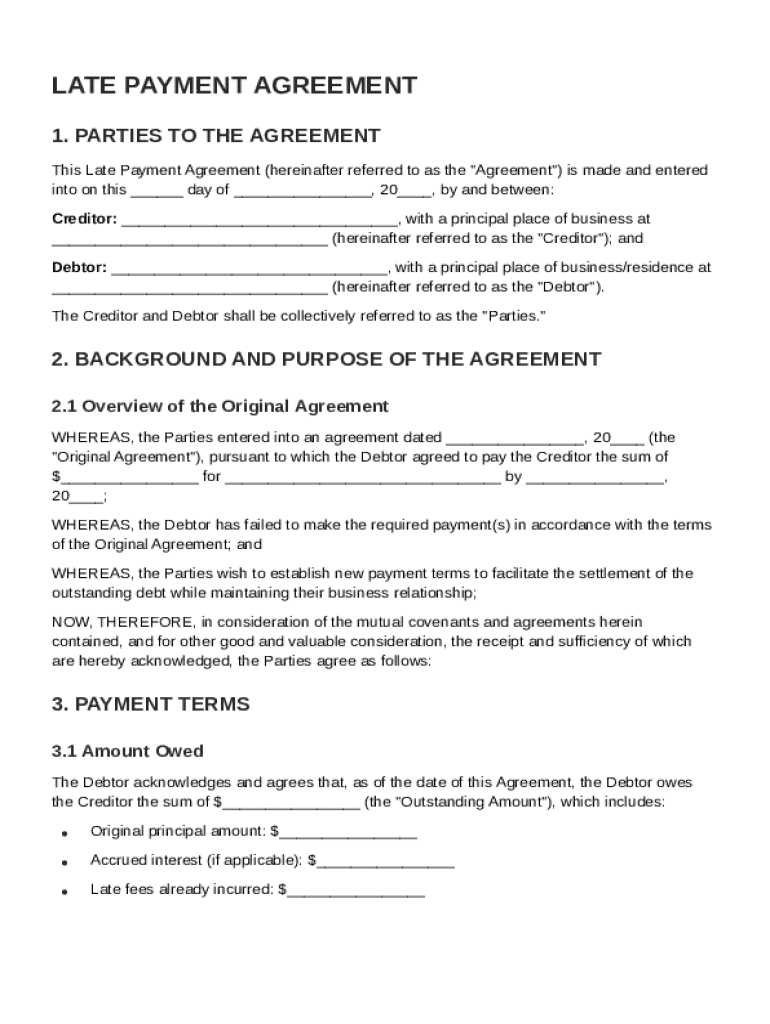
The Late Payment Agreement Template is a legal document that defines the revised terms for the settlement of an outstanding debt between a creditor and a debtor due to missed payments under a prior agreement. This form aids in clearly stating the rights and responsibilities of both parties, ensuring transparency and mutual understanding. It typically outlines the amount owed, a new payment schedule, late fees applicable for any further missed payments, and potential consequences for defaulting on this new agreement. The overarching aim of this template is to facilitate the resolution of the debt while preserving the business relationship between the involved parties.
Key Elements of the Late Payment Agreement Template
A thorough Late Payment Agreement Template includes several crucial sections:
- Parties Involved: The document must clearly identify the creditor and debtor, including official names and contact information.
- Outstanding Amount: The total debt owed must be specified, including any interest or additional charges.
- Payment Plan: Details of the renegotiated payment schedule, outlining installment amounts and due dates.
- Late Fees: The agreement should state any additional fees for future missed payments, often expressed as a percentage of the outstanding balance.
- Default Consequences: Conditions under which the debtor is considered in default and the legal ramifications thereof.
- Modification Provisions: Terms for how the agreement can be amended, often requiring written consent from both parties.
- Governing Law: Specification of the state's laws that apply, which may affect interpretation and enforcement of the agreement.
These elements ensure both parties are well-informed and legally protected throughout the debt repayment process.
How to Use the Late Payment Agreement Template
Utilizing this template involves designing a structured document that details the new terms agreed upon by both parties for debt repayment. It typically begins with the debtor acknowledging the missed payments and agreeing to the terms set forth for settling the outstanding debt. The template provides fields for both parties to sign, indicating their agreement to the terms. Both parties should carefully review the agreement to ensure clarity and prevent future disputes.
- Read and Understand: The debtor and creditor should fully comprehend each section of the template, as it legally binds them.
- Complete Essential Details: Fill in specific sections such as names, amounts, and payment terms.
- Review and Modify if Necessary: Before signing, both parties should ensure the agreement reflects their discussion accurately.
- Sign and Date the Document: Upon agreement, both parties must sign and date the document.
- Store Safely: Retain copies for future reference and legal evidence.
Steps to Complete the Late Payment Agreement Template
Completing the Late Payment Agreement Template is a straightforward process but requires attention to detail to ensure accuracy and compliance:
- Identify Parties: Clearly list the full legal names and contact details of the creditor and debtor.
- Detail the Debt: Clarify the total amount due, including principal, interest, and any applicable late fees.
- Set Payment Terms: Define the new installment amounts and payment schedule, illustrating due dates and methods of payment.
- Specify Late Fees and Consequences: Include precise information on fees applicable for late payments and what constitutes default.
- Include Modifications and Legal Terms: State conditions for modifying the agreement and specify the governing law.
- Authorization: Ensure both parties sign and date the document, formally acknowledging their acceptance.
This completion process ensures the agreement is legally binding and clear to all parties involved.
Who Typically Uses the Late Payment Agreement Template
The Late Payment Agreement Template is particularly useful for various entities and individuals:
- Businesses: Companies use this template to manage accounts receivable, ensuring outstanding debts are settled without legal hassles.
- Individuals: Personal creditors, such as landlords or friends, may use this agreement to solidify informal arrangements.
- Financial Institutions: Banks may offer this template to restructure loan repayment schedules for clients.
- Service Providers: Entities offering credit to clients might employ this agreement when customers fall behind on payments.
These users rely on the template to formalize arrangements, prevent disputes, and maintain positive relationships.


State-Specific Rules for Late Payment Agreement Template
While the Late Payment Agreement Template generally follows a standard structure, state law variations can influence its terms:
- Governing Law Clause: The agreement must specify which state's laws apply, affecting interpretation and enforceability.
- Interest Rate Regulations: Some states cap interest rates or late fees, affecting how these charges are structured in the agreement.
- Debt Collection Laws: State-specific rules may dictate notice periods or the legal process for enforcing the agreement.
Understanding these differences is crucial for ensuring the agreement's compliance and effectiveness.
Legal Use of the Late Payment Agreement Template
The primary legal purpose of the Late Payment Agreement Template is to formalize an arrangement, providing a clear record of newly agreed terms for outstanding debt settlement. It aims to preempt potential disputes by documenting both parties' expectations and commitments. The legally binding nature of the document makes it enforceable in court, provided all terms are complied with and no laws are violated.
Important Terms Related to Late Payment Agreement Template
Understanding key terms associated with the Late Payment Agreement Template is essential for all parties:
- Creditor: The entity or individual to whom the debt is owed.
- Debtor: The party responsible for settling the debt.
- Default: Failure of the debtor to adhere to the payment schedule.
- Installments: Payments divided into smaller amounts over a specified period.
- Governing Law: Indication of which state's laws govern the agreement.
These terms help clarify roles and responsibilities, facilitating the proper execution and enforcement of the agreement.