







Definition and Meaning
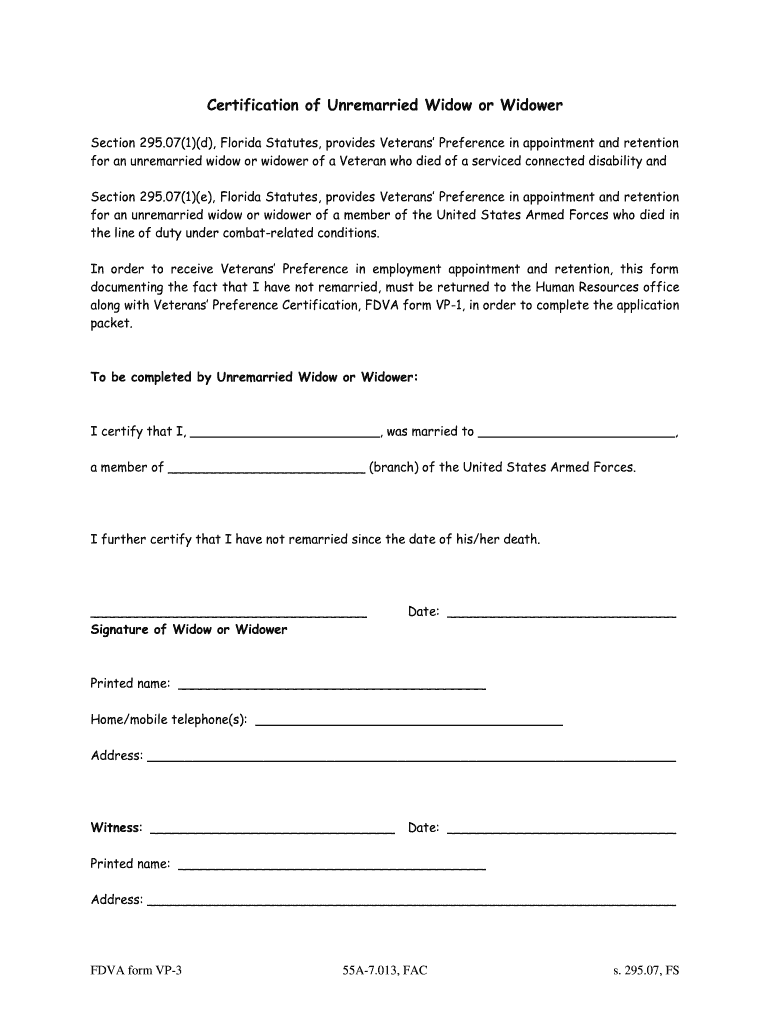
The "Certification of Unremarried Widow or Widower" is a formal document used to verify the marital status of individuals who were previously married to veterans and have not remarried. This certification is often required for various administrative purposes, such as obtaining Veterans' Preference in employment or accessing certain benefits reserved for the widowed spouses of veterans. The document serves as an official acknowledgment of the individual's status, confirming that they remain unmarried following the death of their veteran spouse.
Understanding the Certification
This certification holds significance in a legal context, allowing widows and widowers to claim particular rights or benefits afforded to them under state and federal laws. It ensures that beneficiaries are still eligible for these benefits by confirming that their marital status has not changed, which could affect their entitlement.
How to Use the Certification of Unremarried Widow or Widower
To utilize the Certification of Unremarried Widow or Widower effectively, it is essential first to understand its specific application based on the individual's situation. Generally, individuals present this certification to human resources departments or governmental agencies when applying for benefits that necessitate proof of an unchanged marital status. Importantly, the document should accompany any additional required forms or evidence that supports the application for benefits.
Practical Contexts
- Employment Benefits: When applying for Veterans' Preference in employment, especially under Florida Statutes, this certification may be submitted with the necessary documentation to the Human Resources office, confirming the individual's eligibility.
- Access to Benefits: Presenting this certification might be required when accessing veteran-related financial or health benefits that are contingent on maintaining an unmarried status.
How to Obtain the Certification of Unremarried Widow or Widower
The process for obtaining this certification involves several steps, which can vary depending on the issuing authority or jurisdiction. Typically, one would need to fill out an application form provided by the relevant agency or office tasked with issuing such certifications.
Step-by-Step Guide
- Identify the Issuing Authority: Determine which office or governmental body provides the certification, often a state or local government agency.
- Collect Required Information: Gather pertinent personal details, including proof of the deceased spouse's veteran status and your marital history.
- Complete the Application Form: Fill out the provided form, ensuring all information is accurate and complete.
- Submit the Form: Depending on the agency, submit the form either online, via mail, or in person.
- Verification Process: The issuing authority will verify the information provided, a step that may necessitate additional documentation or interviews.
- Receive Certification: Upon approval, receive the certification, which can then be used as needed.
Tips for Successful Application
- Accuracy: Ensure all personal and marital details are accurate to avoid delays.
- Documentation: Be prepared to present marriage licenses, death certificates, or other documents as required by the issuing body.
Steps to Complete the Certification of Unremarried Widow or Widower
Completing the Certification of Unremarried Widow or Widower necessitates careful attention to detail and adherence to specific instructions laid out by the issuing authority.
Key Considerations
- Personal Information: Accurately provide personal details, including full name, contact information, and any documentation numbers requested.
- Marital History: Detail your marital history clearly, indicating that you have not remarried after the passing of your veteran spouse.
- Veteran Information: Provide details about the deceased veteran spouse, including military service details.
Who Typically Uses the Certification of Unremarried Widow or Widower
This certification is primarily used by unremarried widows and widowers who were married to individuals that served in the U.S. Armed Forces. These individuals require the document to validate their eligibility for certain benefits tied to their non-remarried status.


Common Users
- Veterans' Spouses: Widows or widowers applying for employment benefits like Veterans' Preference.
- Benefit Recipients: Individuals seeking to continue receiving veteran-related benefits contingent on their marital status.

Legal Use of the Certification of Unremarried Widow or Widower
In a legal context, this certification serves as an official attestation of the individual’s marital status, which holds significance in the disbursement of benefits or the application of laws specific to veterans’ families. The document may be utilized in legal proceedings or as part of the documentation required for benefit applications.
Role in Legal Processes
- Evidence of Status: Used as proof in legal disputes over veteran-related benefits.
- Verification for Agencies: Ensures government and private agencies comply with statutes requiring confirmation of marital status before disbursing benefits.
Key Elements of the Certification of Unremarried Widow or Widower
This certification typically includes several essential pieces of information that collectively verify the individual's status.
Common Elements
- Personal Identification: Name, date of birth, and social security number.
- Veteran Details: Information about the deceased spouse including service number, branch, and service dates.
- Certifying Authority: The details of the agency or office that issues and validates the certification.
- Certification Declaration: Statement that the applicant remains unmarried since the passing of their spouse, complete with necessary signatures and official seals.
State-Specific Rules for the Certification of Unremarried Widow or Widower
While the basis for certification remains consistent, state-specific regulations may affect its issuance and use. These variations can include differing processes, documentation requirements, and eligible benefits.
Examples of State Variations
- Documentation Requirements: Some states may require additional forms of identification or proof of relationship.
- Benefit Eligibility: Differences in state laws can affect eligibility for specific veteran benefits related to the certification.




