






Definition & Meaning
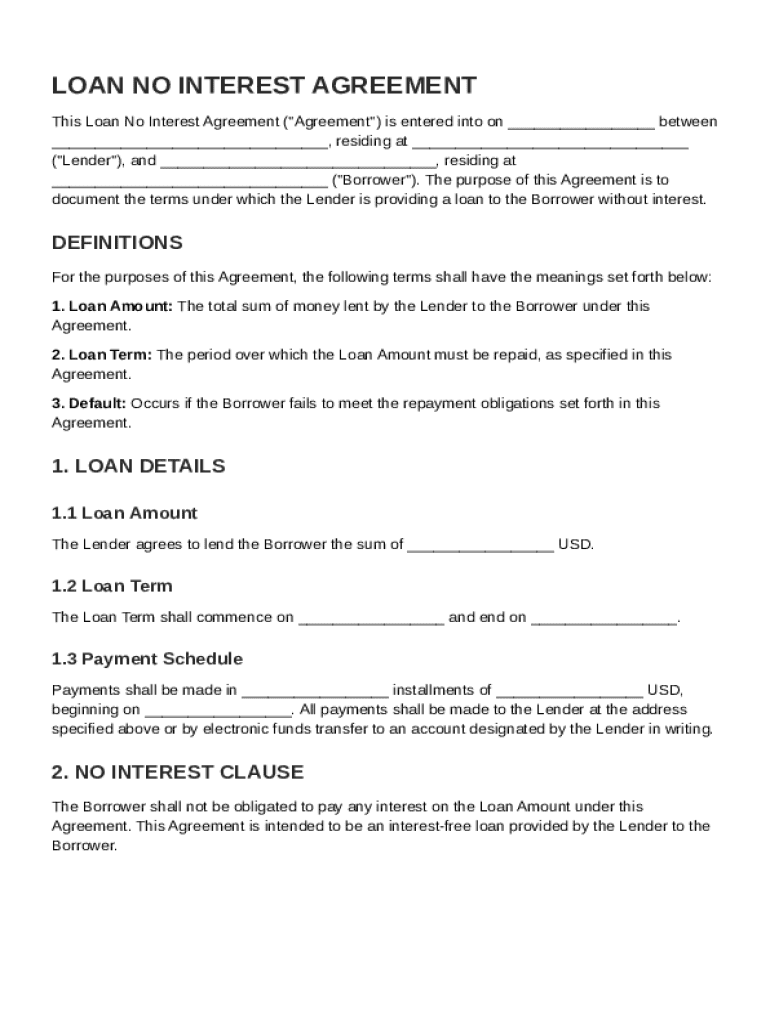
A Loan No Interest Agreement Template is a legal document detailing an arrangement between a lender and borrower where the loan is offered without accruing interest. This agreement helps outline the terms and conditions surrounding the lending and repayment process, including the total loan amount, the repayment schedule, and what happens in the event of default. The key distinction of this template is the absence of interest, which is explicitly stated to ensure both parties understand and agree to the terms. This type of loan is often used in close personal relationships or within businesses that wish to offer financial assistance without additional financial burdens on the borrower.
Key Elements of the Loan No Interest Agreement Template
The template generally includes several crucial components to ensure legal and operational clarity:
- Loan Amount: Specifies the total amount borrowed, ensuring both parties are clear on the financial commitment.
- Repayment Schedule: Details the timeline and manner in which the borrower is expected to repay the loan, such as monthly payments or a lump-sum.
- Conditions for Default: Outlines the consequences should the borrower fail to meet the repayment schedule, protecting the lender’s interests.
- Governing Law: Identifies which jurisdiction’s laws will oversee the agreement, typically aligned with the borrower or lender’s location.
- Miscellaneous Provisions: Covers any additional terms that do not fall under the main categories, such as arbitration clauses or potential modifications to the agreement.
This structure ensures that both lender and borrower have a transparent framework guiding their interaction and obligations.
How to Use the Loan No Interest Agreement Template
Using the template effectively requires several steps to tailor it to the specific needs of the parties involved:
- Review the Template: Start by examining all sections to ensure you understand the requirements and purpose of each part.
- Customize the Terms: Fill in specific details, such as the loan amount, repayment schedule, and any particular conditions, to reflect the unique agreement between the lender and borrower.
- Include Additional Clauses: If necessary, add any additional clauses that address specific concerns or scenarios unique to the loan at hand.
- Legal Review: Consider having both parties review the agreement with their legal counsel to mitigate any risks of misunderstanding or non-compliance with applicable laws.
- Finalize & Sign: Once reviewed and agreed upon, both parties should sign the document, making the terms legally binding.
Following these steps ensures the agreement is properly tailored and legally sound.
Steps to Complete the Loan No Interest Agreement Template
Completing the template involves a clear, step-by-step process to ensure all necessary information is included and understood:
- Identify Parties: Clearly list the names and contact details of both the lender and borrower.
- Define the Loan Terms: Include the specific financial terms, including the amount and repayment details.
- Debt Obligation Clauses: Outline any conditions under which the borrower owes the debt, even in unforeseen circumstances.
- Finalize Governing Law: Clearly specify which state laws govern the agreement.
- Signatures & Dates: Ensure both parties have signed the agreement, which marks the formal acceptance of the terms.
These steps ensure the agreement is complete, enforceable, and tailored to the parties’ needs.
Legal Use of the Loan No Interest Agreement Template
The legal framework surrounding a Loan No Interest Agreement is significant, as it ensures both parties are protected and the terms are enforceable:
- Enforceability: For the agreement to be legally binding, it must include clear terms, signatures from both parties, and an intention to create legal relations.
- State-Specific Regulations: Some states have specific requirements for documentation and enforceability of such agreements, which must be adhered to prevent disputes.
- Potential Modifications: The agreement should outline any processes for modifying terms, which may require additional signatures or notarization.
- Dispute Resolution: Many agreements include clauses for arbitration or mediation, outlining the preferred method for resolving disputes.
Understanding these legal principles safeguards both parties and ensures compliance with state laws.
Why Should You Use the Loan No Interest Agreement Template
There are several noteworthy reasons to use this template when facilitating an interest-free loan:
- Clarity: Provides clear documentation of the loan terms, which mitigates potential disputes.
- Protection: Legally protects both the lender and the borrower through detailed terms and conditions.
- Flexibility: Offers customizable sections to tailor the agreement to specific financial and personal needs.
- Formalizes Arrangements: Transforms a verbal agreement into a documented one, which adds reliability and seriousness to the transaction.
Thus, the template not only clarifies personal arrangements but also ensures both parties are professionally protected.
Who Typically Uses the Loan No Interest Agreement Template
This template is commonly used by a variety of individuals and entities:
- Family Members: Parents or relatives offering financial help without the burden of interest.
- Friends: Colleagues or friends seeking to assist each other financially with a clear repayment path.
- Businesses: Companies offering financial support to startups or employees as part of incentive programs.
- Nonprofits: Charitable organizations giving financial aid to individuals or other nonprofits without charging interest.
These users often rely on the template to maintain clear, documented loan terms that avoid misunderstandings.


State-Specific Rules for the Loan No Interest Agreement Template
Understanding the nuances of state-specific laws is critical:
- Usury Laws: While the template specifies no interest, it’s essential to ensure no state laws consider fees or penalties as interest.
- Legal Enforceability: Some states require additional documentation or witness signatures for such agreements to be legally binding.
- Tax Implications: Depending on state and federal tax laws, interest-free loans may have specific reporting requirements.
These variations highlight the importance of researching local laws to ensure the agreement’s compliance.