
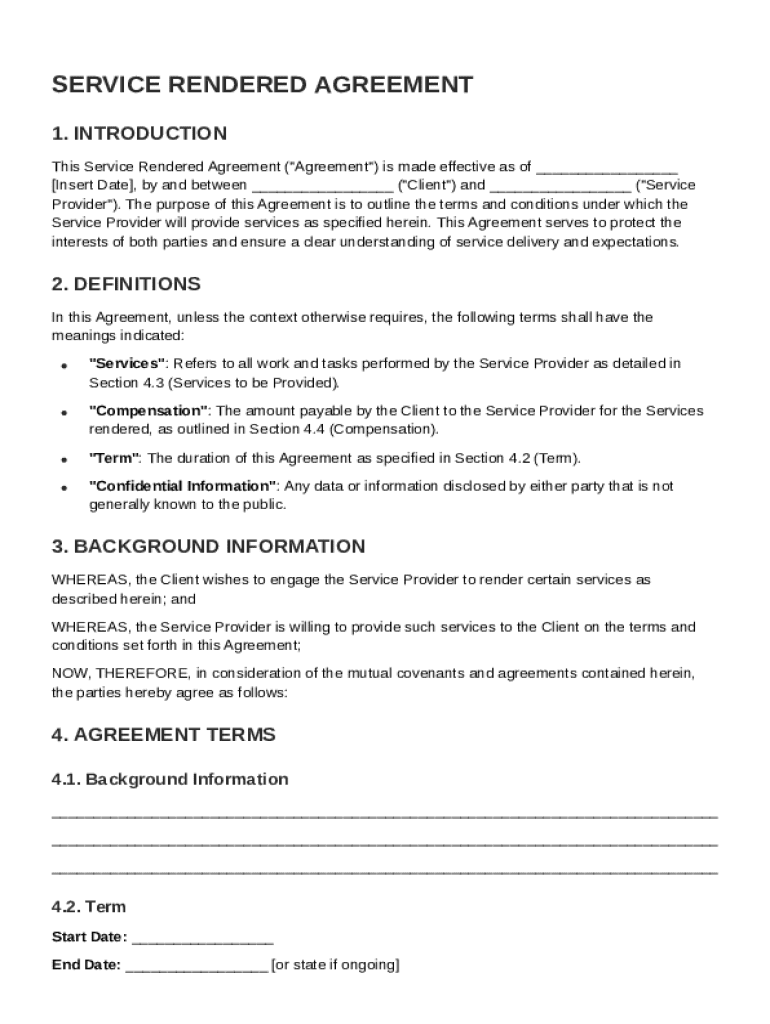







Definition and Purpose
A Service Rendered Agreement Template serves as a comprehensive document outlining the terms and conditions between a client and a service provider for delivering specific services. The template ensures transparency and mutual understanding by defining responsibilities, deliverables, and expectations. It typically includes sections such as compensation details, confidentiality obligations, termination clauses, indemnification provisions, and governing law. This agreement is crucial for protecting the interests of both parties and ensuring clarity in service delivery.
Key Elements of the Service Rendered Agreement Template
The Service Rendered Agreement Template is structured to cover all key aspects necessary for a successful business relationship. The principal components typically include:
- Parties Involved: Identification details of both the client and the service provider.
- Scope of Services: A detailed description of the services to be provided, including scope and limitations.
- Terms of Payment: Information on compensation, including payment schedules, methods, and any conditions leading to changes.
- Confidentiality Clauses: Obligations concerning the non-disclosure of sensitive information shared between parties.
- Termination Conditions: Guidelines for how either party may dissolve the agreement, including notice periods and penalties.
- Indemnification Clauses: Provisions for protection against losses incurred due to the other party's actions.
- Governing Law: The legal framework that applies to interpret the agreement, generally dictated by the location of the client or service provider.
Steps to Complete the Service Rendered Agreement Template
Filling out a Service Rendered Agreement Template involves several clear and precise steps to ensure an enforceable contract:
- Identify Both Parties: Enter the names or legal entities involved, along with contact information.
- Detail the Services: Describe the services clearly and include any specific requirements or quality standards.
- Set Payment Terms: Define the payment amount, schedule, and preferred methods of payment, along with late payment penalties.
- Include Confidentiality Provisions: Specify what constitutes confidential information and how it is to be protected.
- Clarify Termination Procedures: Outline processes for ending the agreement, including notice requirements and any associated costs.
- Detail Indemnification: List responsibilities for damages or losses, providing a clear route for resolution.
- Specify the Governing Law: Include which state’s laws will oversee disputes or interpretations of the agreement.
Legal Use and Compliance
The Service Rendered Agreement Template must adhere to legal standards to be enforceable:
- Legal Language: Use clear, precise legal language to prevent misunderstandings.
- Signatures: Both parties should sign and date the document, indicating agreement to the terms.
- Compliance with Laws: Ensure that the contract fulfills all pertinent local, state, and federal laws, particularly concerning labor and contract laws.
Software Compatibility and Digital Integration
For modern business practices, the Service Rendered Agreement Template can be leveraged digitally using various software solutions:
- DocHub: This platform allows for direct editing, sending, and signing of documents online, compatible with multiple file types like PDF, DOC, and more.
- Cloud Storage Integration: Easily import and export documents using platforms like Google Drive, Dropbox, and OneDrive.
- Electronic Signatures: Use platforms like DocHub to implement legally binding signatures compliant with the ESIGN Act.
Variations and Alternatives
Various versions of service agreements exist to accommodate different types of business arrangements:
- Consultant Agreement: Tailored for professional consulting services, often with additional clauses for intellectual property.
- Freelancer Contract: Designed for specific, often brief, freelance services, with adaptable sections for diverse industries.
- Maintenance Agreement: Used where ongoing, scheduled service provision is expected, such as IT or facility management.
Who Typically Uses the Service Rendered Agreement Template
This template is versatile and utilized across numerous sectors, typically by:
- Service Providers: Individuals or companies offering professional services, consulting, construction, or freelance work.
- Clients and Businesses: Entities hiring service providers to ensure clarity and protection in service delivery agreements.
- Legal Advisors: Assisting in crafting customized, enforceable agreements tailored to client needs.


Examples of Using the Service Rendered Agreement Template
Practical examples help illustrate the use of the Service Rendered Agreement in varied scenarios:
- Freelancers in Graphic Design: Specify design services, project timelines, payment milestones, and rights of usage.
- IT Service Providers: Define software development scope, maintenance schedules, and intellectual property management.
- Construction Contractors: Clearly lay out the deliverables, completion timelines, materials used, and safety compliance requirements.




