01. Edit your form online
Type text, add images, blackout confidential details, add comments, highlights and more.

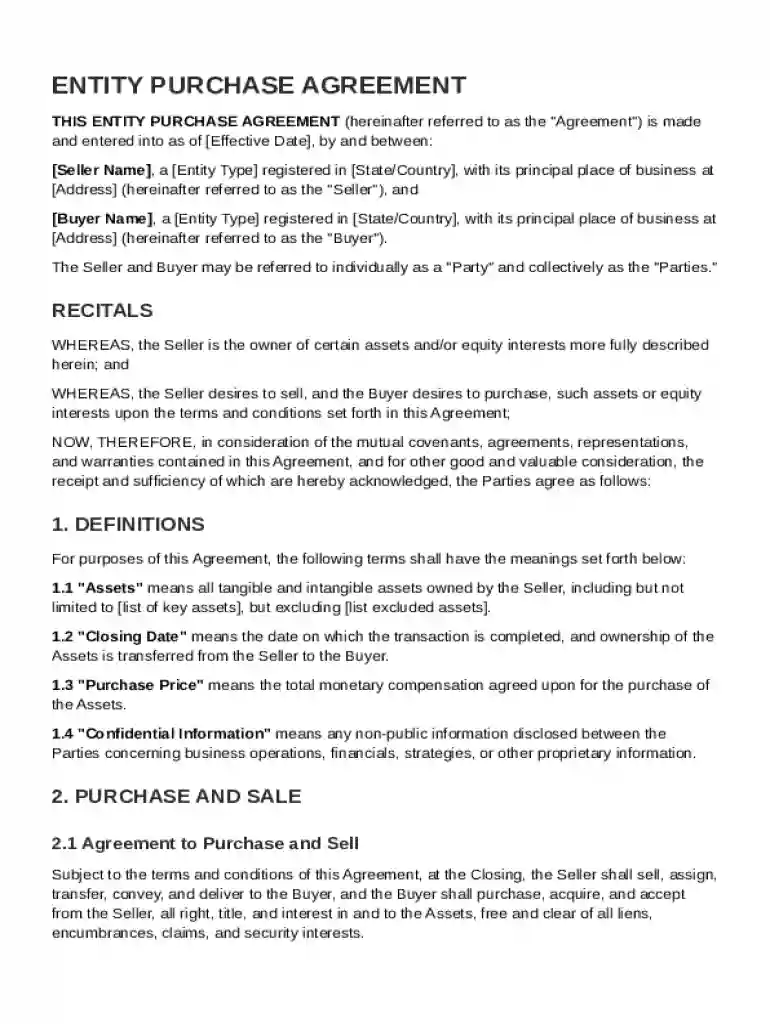
Type text, add images, blackout confidential details, add comments, highlights and more.

Draw your signature, type it, upload its image, or use your mobile device as a signature pad.

Send it via email, link, or fax. You can also download it, export it or print it out.
An "Entity Purchase Agreement Template" serves as a structured document that outlines the critical terms under which a seller agrees to transfer assets or equity interests to a buyer. This comprehensive form typically includes definitions of key terms, references to purchase price, and representations and warranties from both parties. It establishes conditions required for closing the transaction, post-closing obligations, indemnity provisions, and other miscellaneous legal clauses. This template is essential for defining the framework governing the sale and acquisition of assets between two entities.
Identification of Parties: Start by clearly identifying the buyer and seller, including their official names, addresses, and contact details. This sets the stage for establishing the legal parties involved.
Describe Assets or Equity Interests: Detail the specific assets or equity interests being transferred. This might include physical properties, intellectual properties, or stock shares, depending on the transaction's nature.
Establish Purchase Price and Payment Terms: Outline the agreed-upon purchase price and the payment method. Specify whether the payment is to be made in lump sum or installments and include any conditions tied to payment.
Set Conditions for Closing: Identify any pre-requisites that must be completed before the deal can be closed. This might include regulatory approvals, third-party consents, or due diligence results.
Define Representations and Warranties: Both parties should clearly state their representations and warranties. This sections helps assure each party of the legitimacy and soundness of the transaction.
Outline Post-Closing Obligations: Determine responsibilities remaining after the transaction, such as asset transfers, payment of taxes, or any other necessary activities.
Include Indemnity Provisions: Detail any indemnity obligations, explaining how potential future claims or losses will be handled by the parties involved.
Incorporate Miscellaneous Provisions: Conclude with clauses covering aspects like governing law, dispute resolution methods, and whether amendments need to be documented in writing.
Utilizing the Entity Purchase Agreement Template involves adherence to legal standards that are essential for its validity. In the U.S., these agreements are structured to comply with state and federal laws governing business transactions. The template should also be used to protect both parties’ interests, ensuring that all terms are legally enforceable. Consulting with a legal professional when drafting or signing the agreement can maximize compliance and reduce risk.
The Entity Purchase Agreement Template is typically employed by:
This template provides a structured approach for any entity involved in the purchase or sale of business assets, ensuring all legal and financial aspects are adequately addressed.


The type of business entity involved might influence the agreement's specifics. Common types include:
Each entity type will have unique characteristics that affect the agreement's formulation.
Understanding these terms is crucial for effectively using this template and ensuring all aspects of the agreement are clear and enforceable.
Each U.S. state may have particular requirements or regulations that can impact the content and execution of an Entity Purchase Agreement. These might pertain to disclosures, tax considerations, or filing requirements. Entities operating in multiple states should be aware of and comply with state-specific laws to ensure that the agreement is legally valid across all jurisdictions involved.
Modern business transactions often favor digital over paper agreements, largely due to convenience and environmental considerations. Digital agreements offer:
A digital version complements the contemporary business landscape, though some transactions may still require hard copies for regulatory compliance or personal preference.
At DocHub, your data security is our priority. We follow HIPAA, SOC2, GDPR, and other standards, so you can work on your documents with confidence.