






Definition and Meaning of REV-1510
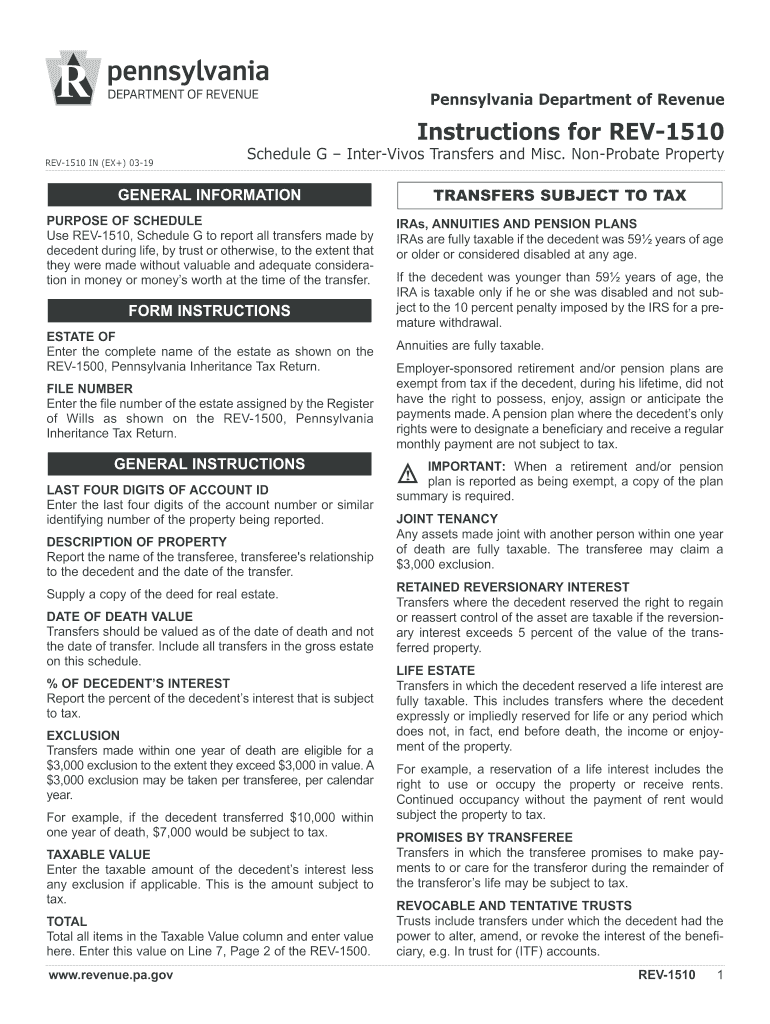
The REV-1510 form is used primarily for reporting specific financial transfers that are subject to inheritance tax under the Pennsylvania Department of Revenue guidelines. Specifically, it deals with inter-vivos transfers and non-probate property conveyed by a decedent. Inter-vivos transfers refer to gifts made by an individual during their lifetime, which might be scrutinized during inheritance tax assessments.
- Inter-vivos Transfers: These are transfers made while the grantor is still alive, and they can include gifts, property transfers, or other forms of asset reallocation.
- Non-probate Property: This includes assets that are transferred outside of a will, often automatically by law, like certain joint tenancy properties or accounts with named beneficiaries.
Understanding the separate categories, such as IRAs, annuities, and joint tenancies, is essential as these dictate how the transfers are reported and taxed. The REV-1510 ensures compliance with state tax laws regarding these transfers.
How to Use the REV-1510
To use the REV-1510 form appropriately, you must first gather all relevant information about the transfers in question. This includes the estate's name, file number, and property descriptions.
- Collect Necessary Details: Start by gathering all information related to the transfers, including any documentation that substantiates the property's value or the nature of the transfer.
- Fill Out Transfer Sections: Enter detailed information about each transfer, including any applicable questions regarding joint tenants or reserved interests by the decedent.
- Verify Taxable Values: Accurately identify and list the taxable value of each item to ensure all applicable taxes are reported and levied correctly.
This step-by-step approach guarantees thoroughness and minimizes the risk of errors, potentially reducing prolonged processing times.
Steps to Complete the REV-1510
Completing the REV-1510 requires attention to detail and a comprehensive understanding of what is considered a taxable transfer. Below is a structured way to get through the form:
- Section Referencing: Ensure each section correlates to a particular type of transfer, utilizing the instructions provided by the Pennsylvania Department of Revenue.
- Detailed Reporting: Key areas require you to describe the property or cash transfer, its relationship to the decedent, and any financial instruments involved.
- Completion and Review: Thoroughly checksum all entries, confirm all figures are accurate, and supporting documentation is attached.
- Verification: Engage in a final review against the original documents to prevent oversight.
- Cross-State Transfers: Be mindful of interstate intricacies that could affect tax obligations.
Legal Use of REV-1510
Use of the REV-1510 form is crucial in maintaining legal compliance within the state of Pennsylvania regarding inheritance taxes. It helps identify:
- Liability Determination: Ensures any owed inheritance taxes on non-estate assets are properly identified and processed.
- Gifts and Lifetime Transfers: Legal responsibility extends to property transferred during the decedent's lifetime that might affect the overall taxable estate.
The form acts as a critical tool in fulfilling legal and tax obligations, ensuring fairness and compliance with state rules.
Key Elements of REV-1510
Certain elements within the REV-1510 demand extra attention due to their complexity. These are fundamental to accurate completion:
- Estate Information: Includes estate name, executor details, and file number.
- Property Description: Thorough documentation of the property, its value, and nature.
- Taxable Asset Reporting: Determines whether the transfer affects the inheritance tax liability directly.
Each component is vital for providing clarity and precision necessary in fulfilling state requirements for inheritance tax assessments.
Who Typically Uses the REV-1510
The REV-1510 form is primarily utilized by executors, estate planners, and tax professionals involved in managing a decedent’s tax affairs:
- Executors: Responsible for settling the decedent’s estate, ensuring all tax obligations are met.
- Tax Consultants: Professionals who assist in preparing and submitting detailed and accurate tax documentation.
- Estate Lawyers: Legal experts who ensure all estate and tax affairs comply with the law and act in the best interest of beneficiaries.
These positions often collaborate to secure the correctness and timeliness of submission for REV-1510 forms.


State-Specific Rules for REV-1510
The REV-1510 is a state-specific form relating to Pennsylvania inheritance tax, and understanding the nuances is vital:
- Pennsylvania Exclusive: The guidelines set by Pennsylvania are unique and require specific adherence that might vary significantly from other state tax regulations.
- Inclusion Criteria: What qualifies as an inter-vivos or non-probate transfer in Pennsylvania might differ in other jurisdictions.
Being aware of these state-specific guidelines ensures correct and lawful filing practices.
Examples of Using REV-1510
Several scenarios provide practical illustrations of when and how the REV-1510 is applicable:
- Annuities and IRAs: An individual leaves an IRA with named beneficiaries outside the will. The form will address how this potentially creates inheritance tax liabilities.
- Joint Tenancy Property: A property transferred to a spouse or child under a joint tenancy agreement is also a typical use case for the REV-1510.
- Retained Interests: Circumstances where a decedent maintained interest in a property transferred could necessitate detailing on the form.
Providing real-world examples creates a deeper understanding of its applications and the obligations involved.
Required Documents for REV-1510 Filing
Ensuring all required documentation accompanies the REV-1510 is a fundamental step in the accurate completion and filing:
- Property Valuation Reports: Documentaries substantiating the claimed asset values.
- Transfer Deeds or Records: Confirming legality and the nature of the non-probate transfer.
- Beneficiary Statements: Support claims pertaining to transferred assets, particularly with named beneficiaries in retirement accounts or insurance.
These documents must be carefully compiled and submitted alongside the form to substantiate the claims and declarations being made.