






Definition and Purpose of a Real Estate Brokerage Agreement Template
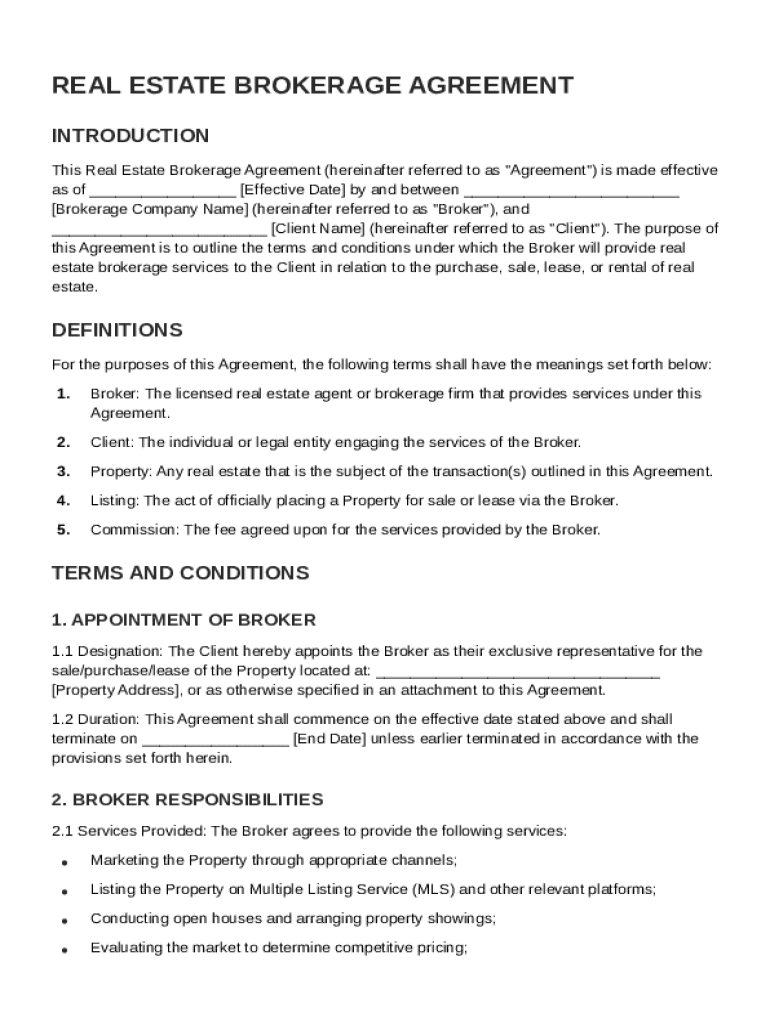
A Real Estate Brokerage Agreement Template is a legally binding document that outlines the terms and conditions under which a licensed real estate broker operates on behalf of a client. This template serves as a foundational document in the real estate industry, clearly detailing the roles and responsibilities of both the broker and the client with respect to buying, selling, leasing, or renting property. Within this agreement, important aspects such as the broker's commission, marketing strategies, and procedures for dispute resolution are specified. It also includes clauses ensuring compliance with relevant legal standards and protecting the confidentiality of client information.
How to Use the Real Estate Brokerage Agreement Template
For a seamless experience with the Real Estate Brokerage Agreement Template, follow these steps:
-
Review the Template: Thoroughly examine the sections of the template to understand the required information and available options.
-
Fill in Party Details: Input the broker's and client's names, contact information, and any relevant licensing details.
-
Specify Property Details: Clearly describe the property involved, including its location and relevant features.
-
Define the Scope of Services: Outline the specific services the broker will provide, such as marketing or conducting open houses.
-
Set Compensation Terms: Detail the commission structure, including percentages or flat rates, and any conditions for payment.
-
Establish Duration and Termination Conditions: Specify the duration of the agreement and conditions under which either party can terminate the contract.
This structured approach allows both brokers and clients to clarify expectations, ensuring a mutually beneficial working relationship.
Steps to Complete the Real Estate Brokerage Agreement Template
To complete the Real Estate Brokerage Agreement Template efficiently and accurately, proceed with the following steps:
-
Gather Information: Collect necessary information from all parties involved, including property details and specific terms required by each party.
-
Complete the Template: Use DocHub to fill in all fields with precise and current data directly within the online editor.
-
Review the Agreement: Verify all entered information for accuracy and completeness, ensuring all parties’ needs and expectations are met.
-
Share with Parties: Utilize DocHub’s sharing features to distribute the document to necessary parties for review and collaboration.
-
Finalize and Sign: Once all parties agree on the terms, use DocHub’s legally binding e-signature tool to sign the agreement.
-
Save and Archive: Store the finalized document within DocHub or export it to integrated cloud storage for future reference.
This systematic process ensures the agreement is completed thoroughly and expediently.
Legal Use and Compliance Considerations
A Real Estate Brokerage Agreement is a legally binding contract, requiring compliance with both federal and state-specific real estate laws. Users of this template should be familiar with the ESIGN Act, which confirms the legality of electronic signatures for high-level compliance. Brokers must ensure that the agreement meets the requirements set by the real estate commission in their state. This may include disclosure requirements specific to the property or parties involved. It’s advisable for brokers to consult with legal professionals to ensure compliance with applicable regulations and amendments to standard terms for specific jurisdictions or circumstances.
Key Elements of the Real Estate Brokerage Agreement Template
Understanding the key elements contained within the Real Estate Brokerage Agreement Template helps solidify a contract that protects both clients and brokers. Essential components include:
- Identification of Parties: Full names and contact details of both the broker and the client.
- Property Description: Detailed information about the property covered under the agreement.
- Brokerage Services: Specific services to be provided by the broker, such as marketing or negotiation responsibilities.
- Commission Structure: Terms detailing how the broker will be compensated for their services.
- Term and Expiry: Duration of the agreement and conditions for its renewal or termination.
- Dispute Resolution: Procedures for resolving conflicts, including mediation or arbitration options.
The comprehensive inclusion of these elements ensures all parties are consistently aligned throughout the contractual engagement.
State-Specific Rules for Real Estate Brokerage Agreements
Different states might impose varied regulations governing real estate brokerage agreements. For instance, states may establish different maximum commission rates or require specific disclosures in the agreement. Brokers should ensure that the template adheres to any localized legal requirements, such as fair housing regulations or licensure validation. It's crucial to periodically review state-specific real estate laws, as these may impact the content or enforceability of the brokerage agreements.
Examples of Using the Real Estate Brokerage Agreement Template
In practice, a real estate brokerage agreement template can be adapted for multiple scenarios. For instance, an agreement could be used by:
- Residential Property Sales: An individual looking to sell a home engages with a broker to manage selling tasks, from listing to closing.
- Commercial Leasing: A business seeking new office space might contract with a brokerage company to locate and negotiate rental space.
- Property Management: A landlord working with a broker to manage lease renewals and tenant acquisition for multiple residential properties.
Each example showcases a unique application of the agreement, reflecting the versatility and adaptability of the template to accommodate diverse client needs.
Required Documents for Using the Real Estate Brokerage Agreement Template
Before completing the Real Estate Brokerage Agreement Template, gather all necessary documentation. Key documents often include:
- Identification: Valid photo identification of both parties for verification purposes.
- Property Ownership Proof: Such as a deed or tax record confirming ownership rights.
- Broker License Information: Current verification of the broker's licensing status.
- Recent Appraisals: For accurate property valuation and market strategy deployment.
Ensuring that these documents are ready and available facilitates a smoother, more efficient process while enhancing accuracy within the agreement.