






Definition & Meaning
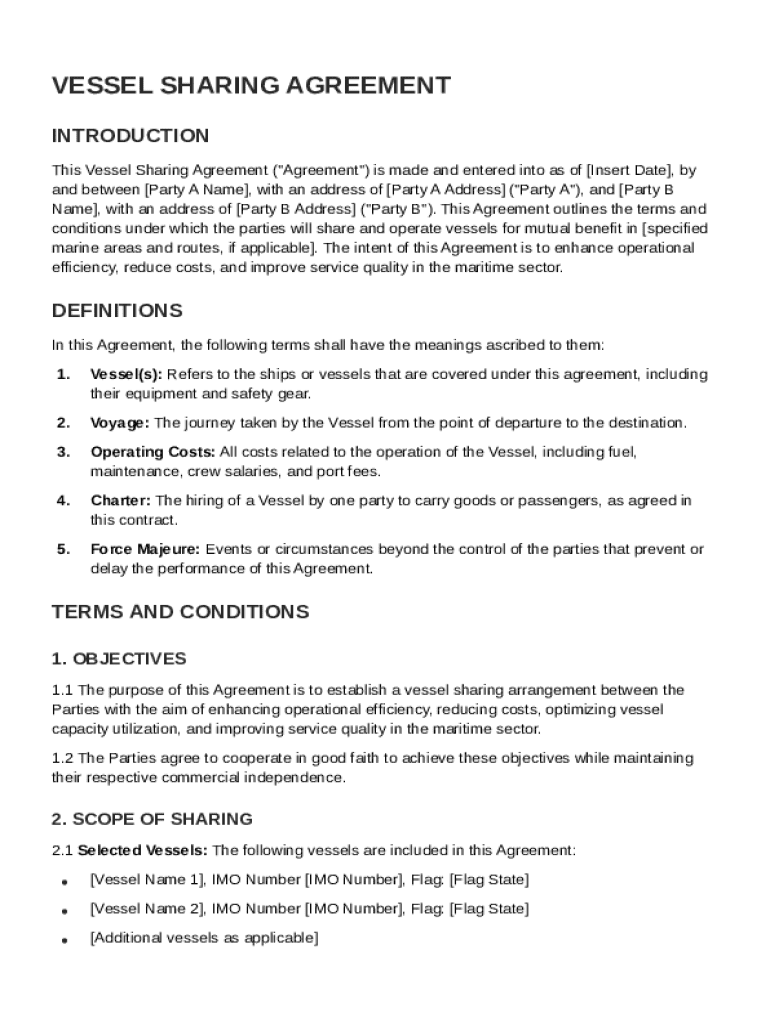
The Vessel Sharing Agreement Template establishes a framework for two or more parties to share and operate maritime vessels efficiently. This type of agreement is commonly entered into by shipping companies to enhance operational effectiveness, reduce costs, and improve service offerings across specified marine territories. The agreement underlines the sharing of responsibilities and benefits, including detailed operational responsibilities, financial arrangements, and risk management strategies.
Key Components
- Operational Collaboration: Outlines the procedures and responsibilities for vessel operation, including scheduling and crew management.
- Financial Arrangements: Defines cost-sharing methods and revenue allocation between the parties involved.
- Risk Management: Includes liability clauses and indemnification processes to handle potential risks associated with shared operations.
Key Elements of the Vessel Sharing Agreement Template
Operational Responsibilities
- Scheduling: Establishes schedules for vessel usage and management of crew operations to ensure efficiency.
- Crew Management: Details the parties' responsibilities for hiring, training, and managing crew members aboard the vessels.
Financial Arrangements
- Cost Allocation: Describes how costs incurred in the shared use of vessels are divided among the parties.
- Revenue Sharing: Specifies the distribution of revenue generated from shared operations.
Steps to Complete the Vessel Sharing Agreement Template
- Identify the Parties Involved: Clearly state the names and details of all participants in the agreement.
- Define the Scope: Detail the objectives and operational areas covered under the agreement.
- Outline Financial Terms: Include comprehensive financial arrangements, such as cost-sharing and revenue allocation.
- Specify Operational Details: Clearly describe the responsibilities related to vessel scheduling and crew management.
- Include Risk Management Provisions: Add clauses for liability, indemnification, and dispute resolution processes.
- Finalize and Sign: Review for accuracy, consult legal experts if necessary, and obtain signatures from all parties.
Legal Use of the Vessel Sharing Agreement Template
The Vessel Sharing Agreement Template is a legally binding document governed by maritime law, tailored to the operational, financial, and legal needs of the parties involved. It adheres to domestic maritime regulations and international maritime guidelines, ensuring compliance. Legal clauses within the agreement include provisions for confidentiality, indemnification, and dispute resolution mechanisms to handle potential disagreements or litigation. These elements help secure the rights and responsibilities of each party.
Important Terms Related to Vessel Sharing Agreement Template
Operational Efficiency
- Service Quality Improvement: Measures taken to enhance the quality of maritime operations and customer satisfaction.
- Cost Reduction Strategies: Approaches for minimizing operational expenses and optimizing resource use through shared services.
Risk Management
- Liability Clauses: Provisions to address parties' liabilities arising from shared operations.
- Indemnification: Agreements where parties agree to hold each other harmless against specified liabilities.
Who Typically Uses the Vessel Sharing Agreement Template
This template is utilized by maritime industry stakeholders, particularly shipping companies looking to optimize their fleet operations. It benefits:
- Commercial Shipping Lines: For sharing charter and operational duties across international routes.
- Logistics and Supply Chain Companies: To integrate their supply chain activities and minimize logistical costs.
- Maritime Consortiums: Groups formed by several smaller entities to compete with larger transportation providers.


Examples of Using the Vessel Sharing Agreement Template
Case Study: Shipping Alliance
A group of regional shipping companies utilized a Vessel Sharing Agreement to expand their service areas without acquiring new vessels, leveraging each other's strengths and resources.
Practical Scenario
A logistics company partnered with a shipping line to streamline its distribution network using the Vessel Sharing Agreement. This collaboration led to improved service reliability and reduced transit times.
Business Types that Benefit Most from the Vessel Sharing Agreement Template
Shipping Industry Firms
- Freight Forwarders: Optimize loading, unloading, and shipping schedules.
- Container Lines: Efficient management of container transport across multiple routes.
Maritime Consortia
- Resource Sharing Models: Enhance competitive ability through shared maritime resources and better market coverage.
State-Specific Rules for the Vessel Sharing Agreement Template
While the template complies with general maritime law applicable across the United States, certain state-specific regulations may affect its application. A thorough understanding of local maritime commercial codes ensures compliance. Jurisdictions such as California, New York, and Florida may have distinct nuances regarding maritime agreements that companies should consider. Consulting with maritime legal experts familiar with state regulations can prevent legal conflicts and ensure comprehensive compliance.