






Definition & Purpose of the Employee Agreement Template
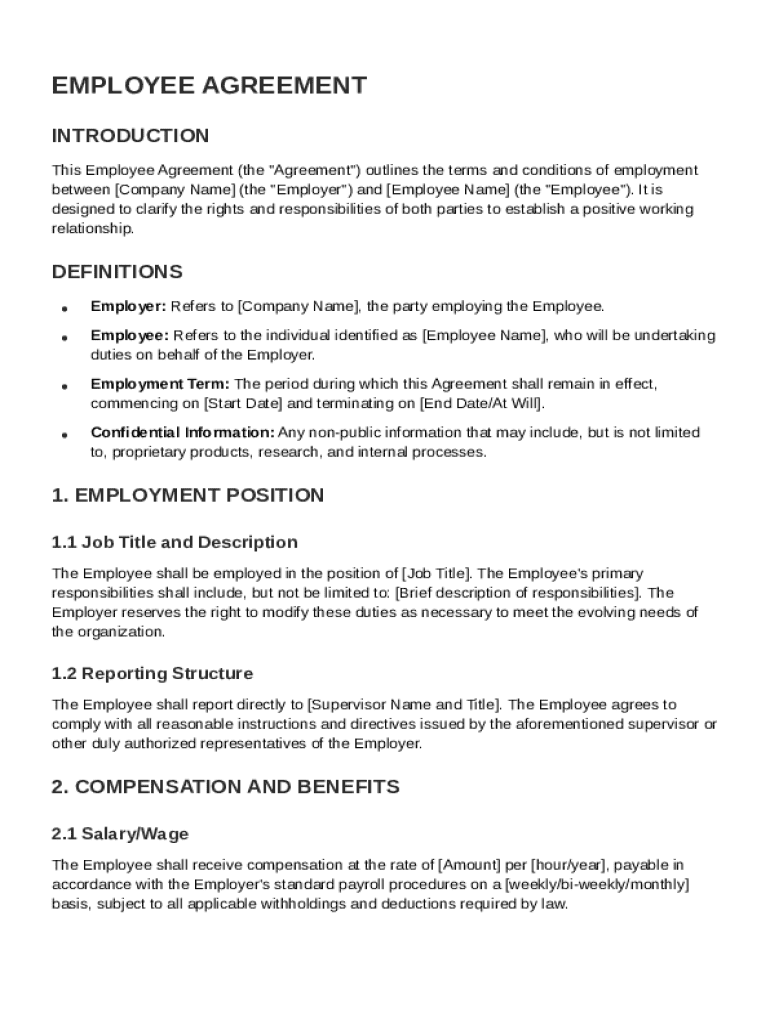
The Employee Agreement Template serves as a foundational document establishing the terms and conditions of employment between an employer and an employee. It meticulously outlines the responsibilities, compensation, and benefits associated with the employee's role. Key sections cover work schedules, obligations, and termination conditions, ensuring both parties have a comprehensive understanding of their rights and duties. By detailing non-compete and non-solicitation clauses, it protects company interests while fostering a positive working relationship. This template is critical for clarifying dispute resolution procedures and the governing law applicable to the contract, making it essential for any new hire process.
Key Elements of the Employee Agreement Template
The Employee Agreement Template is comprised of several essential components that ensure clarity and mutual understanding:
- Job Responsibilities: Clearly defines the scope of duties and expectations for the employee's role.
- Compensation and Benefits: Details the salary, bonuses, and benefits package, including healthcare and retirement options.
- Work Schedules: Specifies regular working hours, holidays, and any provisions for overtime.
- Termination Conditions: Outlines acceptable grounds for dismissal and processes for resignation.
- Non-Compete and Non-Solicitation Clauses: Protects company interests by prohibiting certain post-employment activities.
- Dispute Resolution: Establishes methods for resolving conflicts, possibly including mediation or arbitration.
- Governing Law: Identifies the legal jurisdiction applicable to the agreement.
These elements provide a framework that ensures both parties are aware of their obligations and the expectations of the employment relationship.
How to Use the Employee Agreement Template
Using the Employee Agreement Template involves several specific steps to ensure a legally sound and mutually beneficial agreement:
- Initial Review: Carefully examine each section of the template to ensure it aligns with company policies and legal standards relevant to the jurisdiction.
- Customization: Tailor the template to fit the specific role and individual, modifying sections like job title, responsibilities, and salary.
- Legal Consultation: Consult with legal counsel to verify that the customized agreement complies with current labor laws and regulations.
- Employee Input: Engage with the prospective employee to discuss terms and answer any questions about the template.
- Finalization: Incorporate any agreed-upon modifications and prepare the document for signatures.
By following these steps, employers can create a customized and comprehensive employee agreement that meets organizational needs while ensuring transparency.
Steps to Complete the Employee Agreement Template
Completing the Employee Agreement Template involves detailed attention to each section to ensure accuracy and compliance:
- Fill Out Employer Information: Enter the company's name, address, and contact details.
- Enter Employee Details: Include the employee's full name and position title.
- Specify Compensation: Clearly list salary, pay period, and any applicable bonuses or commissions.
- Document Benefits: Outline health insurance, PTO, and any other benefits offered.
- Detail Job Responsibilities: Provide a comprehensive list of daily tasks and long-term projects.
- Set Work Schedule: State expected working days and hours, noting any flexibility.
- Include Termination Policies: Specify conditions for contract termination and related procedures.
- Add Legal Clauses: Insert non-compete and confidentiality clauses, if necessary.
These steps ensure that all critical aspects of the employment relationship are formally agreed upon.
Important Terms Related to the Employee Agreement Template
Understanding the terminology in an Employee Agreement Template is crucial for both parties:
- At-Will Employment: Refers to the employer's right to terminate the employment relationship at any time, with or without cause.
- Non-Disclosure Agreement (NDA): A clause that limits the sharing of confidential company information.
- Probationary Period: An initial period during which the employee's performance is evaluated.
- Severance Pay: Compensation provided to an employee upon termination, depending on the contract terms.
- Force Majeure: A clause that absolves parties from liability due to extraordinary events beyond control.
These terms play a pivotal role in outlining expectations and responsibilities within the agreement, offering protection and clarity to both parties.
State-Specific Rules for the Employee Agreement Template
Employee agreements may vary significantly across different states due to distinct legal frameworks. Employers must be aware of state-specific regulations that influence these agreements:
- Employment-at-Will: While widely recognized, some states have exceptions or limitations regarding termination reasons.
- Non-Compete Restrictions: States like California have stringent laws limiting the enforceability of non-compete clauses.
- Minimum Wage and Overtime Laws: Each state might have unique requirements surpassing federal standards.
- Paid Leave: State laws may dictate provisions for sick pay, family leave, or vacation time.
Employers should conduct thorough research or consult legal professionals to ensure compliance with applicable state laws, preventing potential legal disputes.
Legal Use of the Employee Agreement Template
The Employee Agreement Template is a legally binding document that must be used in accordance with relevant laws. Key considerations for legal compliance include:
- Adherence to Labor Laws: The template should comply with federal, state, and local employment regulations.
- Incorporation of Mandatory Clauses: Include all legally required clauses, such as those related to anti-discrimination and workplace safety.
- Validity of Digital Signatures: Ensure that electronic signatures are recognized under laws such as the ESIGN Act.
- Review and Updates: Regularly review the template to reflect any changes in employment law or company policy.
By adhering to these guidelines, the employee agreement can serve as an effective legal instrument that protects both employer and employee rights.
Examples of Using the Employee Agreement Template
In practice, the Employee Agreement Template can be customized for various scenarios:
- Startups and Small Businesses: Tailor agreements to provide flexibility and innovation incentives while ensuring protection of intellectual property.
- Corporate Settings: Standardize contracts to maintain consistency across departments while allowing specific roles to have bespoke responsibilities.
- Remote Work Arrangements: Modify templates to account for work-from-home policies, ensuring clear expectations and accountability terms are set.
These examples highlight the versatility of the Employee Agreement Template in accommodating diverse employment settings and organizational goals.