






Definition & Meaning
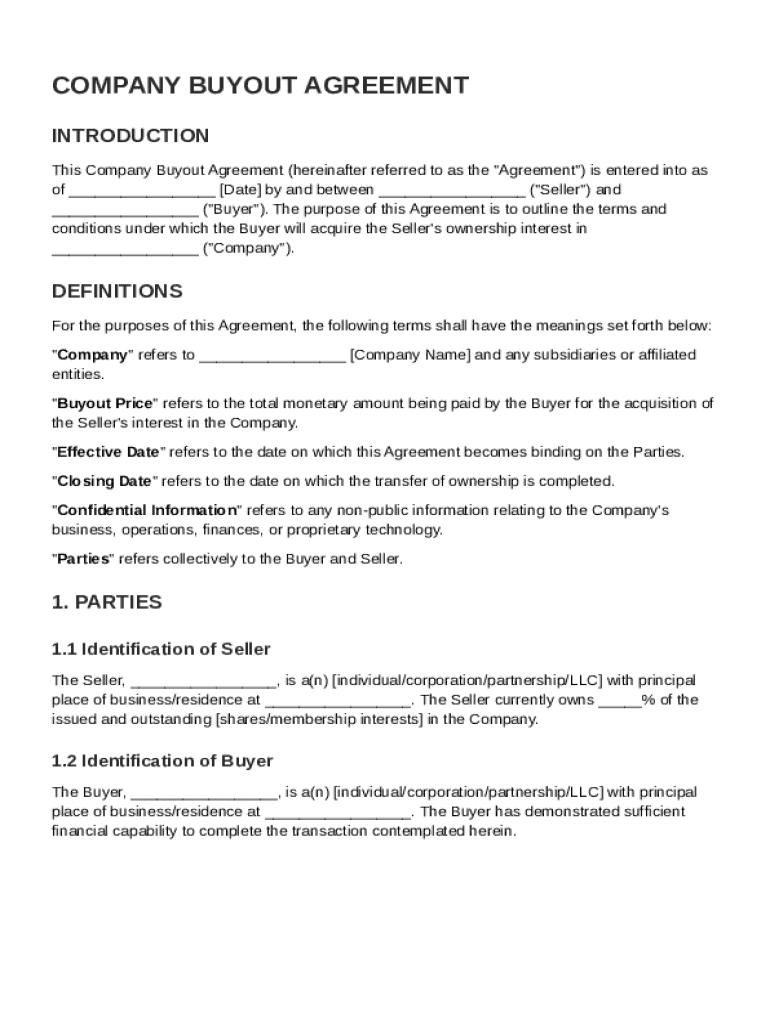
A Company Buyout Agreement Template is a legally binding document used to formalize the sale of ownership interests, such as shares in a corporation or stakes in a partnership. This document outlines the terms and conditions, ensuring that both the buyer and the seller have a clear understanding of their roles, obligations, and the overall structure of the transaction. The agreement acts as a protective measure, safeguarding the interests of both parties through clear documentation of the purchase price, terms of payment, and any contingencies that must be met before finalization. For example, it may require that both parties agree on representations and warranties about the state of the business before the transfer of ownership.
Key Elements of the Company Buyout Agreement Template
The cornerstone of any Company Buyout Agreement is its detailed structure, highlighting critical components necessary for a successful transfer. Some of these key elements include:
- Purchase Price and Payment Terms: Clearly stated amount for the buyout and how it will be paid.
- Representations and Warranties: Declarations each party makes about their respective rights to enter into the agreement.
- Closing Conditions: Specific requirements that must be satisfied before the completion of the transaction.
- Indemnification Clauses: Provisions to protect against certain losses or damages incurred post-transaction.
- Confidentiality Obligations: Duties related to the handling and protection of sensitive business information.
- Governing Law: Specification of which jurisdiction's laws will govern and interpret the agreement.
How to Use the Company Buyout Agreement Template
Using a Company Buyout Agreement Template involves several important steps to ensure that all legal and procedural aspects are handled correctly:
- Identify the Parties: Clearly define the buyer and seller’s identities, including their legal names and roles in the transaction.
- Review Key Sections: Examine each section of the template for definitions, clauses, and obligations pertinent to your transaction.
- Customize Provisions: Tailor clauses like payment terms or representations to reflect the specific deal you are negotiating.
- Seek Legal Advice: It’s often prudent to consult with an attorney to ensure that the agreement meets all legal standards and fully protects your interests.
- Finalize and Execute: Once both parties agree to the terms, sign the document to make it legally binding. Always consider having witnesses or a notary, if required.
Steps to Complete the Company Buyout Agreement Template
Completing a Company Buyout Agreement Template can be straightforward when approached systematically:
- Gather Necessary Information: Collect all relevant data, including company details, financial records, and legal documents.
- Fill in Template Fields: Enter all required information into the template, focusing on precision and accuracy.
- Review for Accuracy: Double-check entries for typographical errors or omissions that might affect the agreement's validity.
- Consult Stakeholders: Ensure that all parties involved, such as corporate officers or board members, review the agreement.
- Amend as Necessary: Make any required changes following stakeholder feedback, including adjustments to terms based on new negotiations.
- Finalize Documentation: Prepare the document for signature by incorporating any last-minute adjustments.
Important Terms Related to the Company Buyout Agreement Template
Understanding key terminology is vital for navigating the intricacies of a Company Buyout Agreement:
- Asset Purchase: Refers to acquiring a company's specific assets rather than its stock or equity.
- Earnout: A financial structure where payment is based on the future performance of the business post-acquisition.
- Due Diligence: The investigative process undertaken by a buyer to assess the business's value and potential liabilities.
- Non-Compete Clause: A clause preventing the seller from starting or working in a similar business within a certain timeframe or location.
Who Typically Uses the Company Buyout Agreement Template
The Company Buyout Agreement Template is a versatile document utilized by various entities involved in business transactions:
- Entrepreneurs and Start-Up Owners: Looking to transition ownership or exit a business venture.
- Corporate Buyers: Seeking to expand their holdings through the acquisition of smaller or related entities.
- Legal Advisors and Consultants: Advising clients on structuring and negotiating terms for buyouts.
- Private Equity Firms: Engaging in the purchase of businesses for investment purposes.


State-Specific Rules for the Company Buyout Agreement Template
While the core elements of a Company Buyout Agreement remain consistent, certain aspects may vary depending on the state:
- Governing Law: The agreement should specify which state’s laws will govern the contract.
- Regulatory Compliance: Certain states may have specific requirements for notification and approval before a buyout.
- Tax Implications: State tax laws can affect the financial structuring of buyouts, impacting how they should be drafted and executed.
Legal Use of the Company Buyout Agreement Template
To ensure the Company Buyout Agreement Template is enforceable and ethically sound, consider these legal points:
- Proper Execution: Parties should execute the agreement within the legal framework provided by state law.
- Full Disclosure: Ensure all parties fully disclose any material information affecting the buyout.
- Compliance with Securities Laws: Especially in stock transactions, compliance with both federal and state securities laws may be necessary.
- Adherence to Employment Laws: If the buyout affects existing contracts, be sure it aligns with labor and employment laws affecting workers’ rights.
Examples of Using the Company Buyout Agreement Template
The Company Buyout Agreement Template can be used in various scenarios, each illustrating its flexibility and adaptability:
- Small Business Succession: When a small business owner intends to retire and transfer ownership to a family member or key employee.
- Mergers and Acquisitions: In larger corporate transactions, where one company acquires another to increase market share.
- Partnership Resolution: When one partner wishes to exit the business, and a buyout is structured to dissolve their interest efficiently.
In these examples, the template provides a standardized method for documenting and executing the buyout process, ensuring clarity and mutual understanding between the parties involved.