
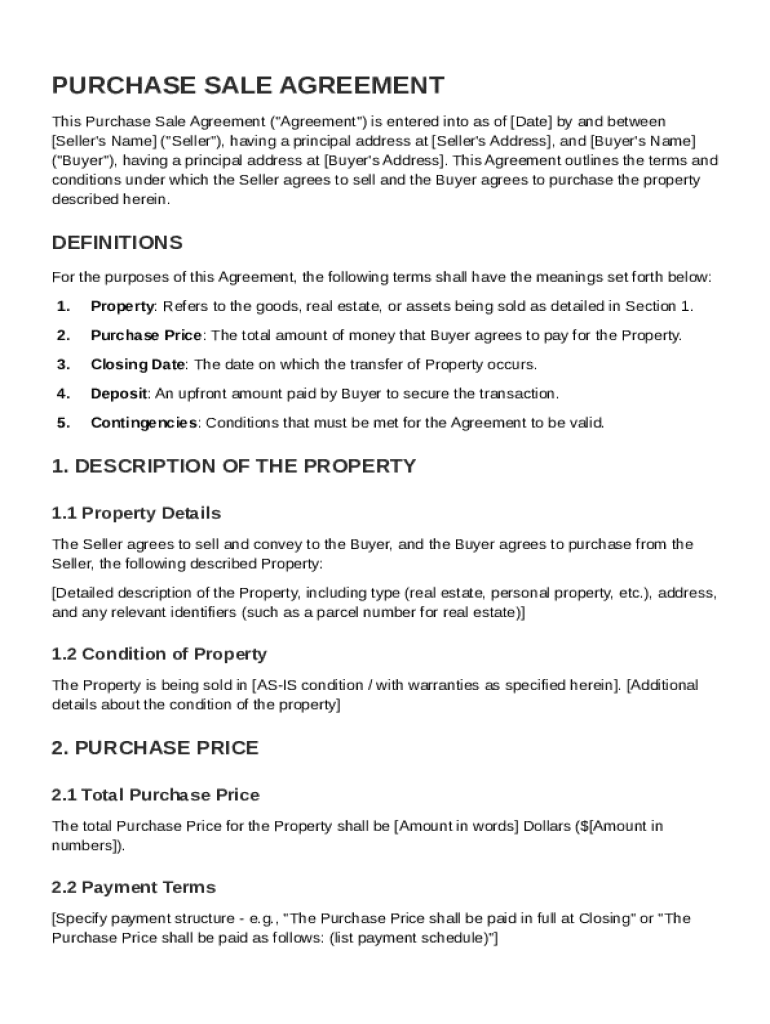







Definition & Meaning
A Purchase Sale Agreement is a legal document that outlines the terms and conditions of a transaction between a buyer and a seller. It serves as a binding contract that details specific agreements related to the purchase of property, whether commercial or residential. The document covers essential elements such as the purchase price, property description, and responsibilities of each party involved.
A comprehensive Purchase Sale Agreement is crucial because it provides clear guidelines that can prevent misunderstandings or disputes. By setting out all agreed-upon terms, both parties have a documented reference to ensure the transaction proceeds smoothly.
Elements Defined
- Purchase Price: This is the agreed amount that the buyer will pay the seller for the property.
- Property Description: It includes a detailed description of the property being transferred, ensuring clarity on what exactly is being bought or sold.
- Conditions: Clauses that describe any conditions the transaction must meet, such as inspections or financing approvals.
Key Elements of the Purchase Sale Agreement Template
Creating a comprehensive Purchase Sale Agreement involves understanding its core components. Recognizing these elements ensures the document's efficacy and its adherence to legal standards.
Major Components
-
Parties Involved: Identification of the buyer and seller with explicit details such as names, addresses, and contact information.
-
Property Details: A thorough description, including legal identifiers such as lot numbers, to avoid ambiguity.
-
Payment Terms: Specifics concerning how and when payments will be made, including deposit details, installments, or full payment schedules.
-
Closing Date and Possession: Determination of when the transaction will finalize and when the buyer can take possession.
-
Contingencies: Conditions that may affect the sale's validity, such as securing financing or completing a satisfactory home inspection.
-
Representations and Warranties: Statements assuring each party of the other's capacity and intention to complete the transaction.
Steps to Complete the Purchase Sale Agreement Template
Filling out a Purchase Sale Agreement requires careful attention to ensure all relevant information is included. The following steps offer a structured approach to completing the template.
-
Gather Information: Collect all necessary data regarding the buyer, seller, and property details before beginning.
-
Populate Basic Details: Start by filling in names, addresses, and contact details of both parties.
-
Define Property: Provide a detailed description, ensuring it matches official records to prevent future disputes.
-
Set Terms: Clearly outline the purchase price, payment schedules, and any financial obligations.
-
Include Contingencies: List any conditions and the steps needed to satisfy them before finalizing the sale.
-
Review Clauses: Ensure the representations, warranties, and any disclaimers are properly understood and agreed upon.
-
Sign and Date: Both parties must verify the document with signatures and the date of signing, solidifying its legality.
Legal Use of the Purchase Sale Agreement Template
Legal precision is paramount when utilizing a Purchase Sale Agreement. It must meet specific legal standards to be enforceable and binding.
Requirements
-
Compliance with State Laws: Each state may have variations in requirements. It's important to tailor the agreement to the respective jurisdiction's laws.
-
Disclosure Regulations: Both parties must disclose essential information pertinent to the sale to avoid legal complications.
-
Binding Nature: Once signed, the agreement has legal weight and obligates both parties to fulfill their commitments outlined in the document.
-
Review by Legal Counsel: It is advisable to consult a lawyer to review the document for legal accuracy and comprehensiveness.
Important Terms Related to Purchase Sale Agreement Template
Understanding specific terminology within the agreement can significantly enhance clarity and comprehension.
Key Terms
-
Earnest Money: A deposit made as a sign of the buyer's good faith to proceed with the purchase.
-
Default: Failure to fulfill any term, condition, or obligation under the agreement can lead to specified penalties or legal recourse.
-
Amendment: Any changes agreed upon during or subsequent to the signing must be documented as amendments, requiring approval from both parties.
State-Specific Rules for the Purchase Sale Agreement Template
Different states in the U.S. have specific provisions that must be included in a Purchase Sale Agreement for it to be valid.
Examples of State Variations
-
New York: Requires additional clauses for lead-based paint disclosures in properties built before 1978.
-
California: Obligations to disclose natural hazard zones if applicable to the property being purchased.
-
Texas: Distinct rules concerning mineral rights and who retains them after the sale.
Understanding these state-specific nuances is crucial for ensuring that the agreement complies with local laws and standards.
Examples of Using the Purchase Sale Agreement Template
Real-world applications of the Purchase Sale Agreement Template showcase its utility.
Scenarios
-
Residential Property Sale: A homeowner uses the agreement to sell their house to a potential buyer, outlining all necessary details, ensuring both parties have a common understanding.
-
Commercial Real Estate Purchase: A business uses the template to acquire office space, including specific clauses for zoning laws and property use stipulations.
These examples highlight the template's adaptability to various contexts, ensuring legally binding deals across different types of property.
Who Typically Uses the Purchase Sale Agreement Template
The Purchase Sale Agreement is pivotal for various stakeholders involved in real estate transactions.


User Groups
-
Individual Homeowners and Buyers: For personal property transactions, ensuring all aspects are well-documented.
-
Real Estate Agents and Realtors: As intermediaries, they frequently draft and negotiate these agreements on behalf of clients.
-
Real Estate Attorneys: Often involved in drafting or reviewing agreements to meet client needs and ensure legal compliance.




