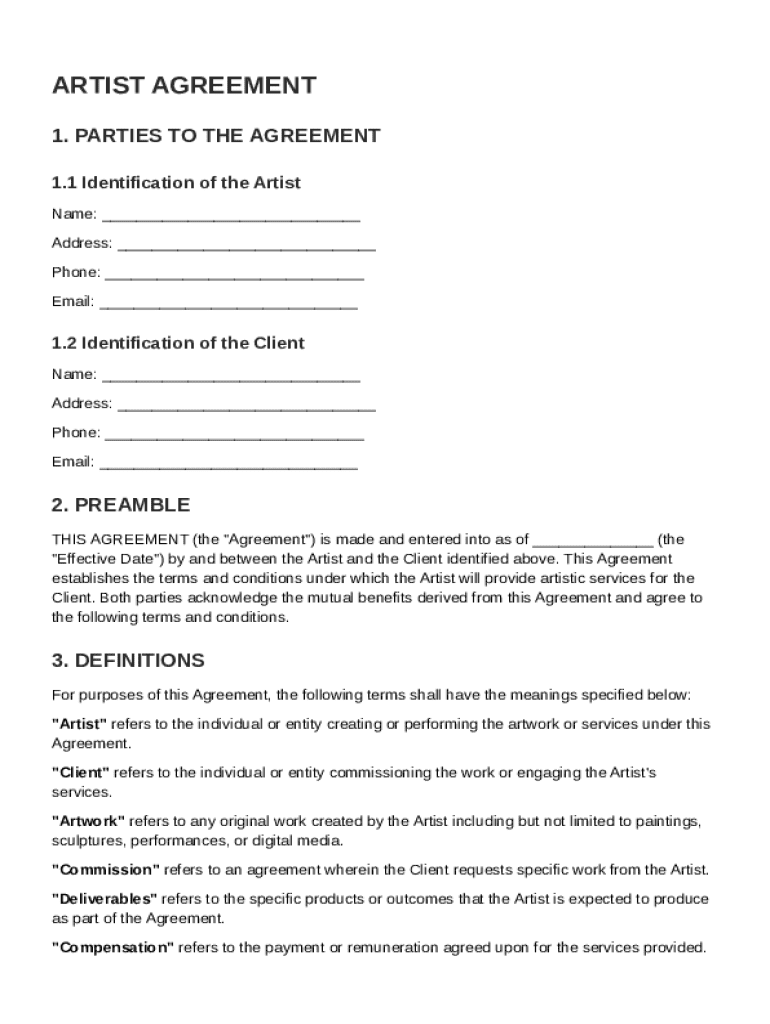







Definition and Meaning
An Artist Agreement Template is a legal document outlining the terms and conditions between an artist and a client for the provision of artistic services. This template ensures clear communication and mutual understanding of the responsibilities, rights, and expectations of both parties involved in the creation and use of artwork. The agreement typically covers essential aspects such as scope of work, compensation, and ownership rights, providing a fundamental framework that protects both the artist's and client's interests.
Purpose and Importance
The primary purpose of using an Artist Agreement Template is to establish a structured and clear agreement that minimizes conflicts and protects both parties legally. Such agreements ensure that artists receive fair compensation and recognition for their work, while clients can secure the delivery and usage rights of commissioned art. This formal acknowledgment of terms helps in setting clear boundaries and responsibilities, reducing the potential for disputes.
Key Elements of the Artist Agreement Template
For an Artist Agreement Template to be comprehensive, it should include several critical elements:
- Identification of Parties: Clearly define who the artist and client are, including contact information and any pertinent identification details.
- Scope of Work: Outline what exactly is expected from the artist, the type of art being commissioned, and any specific requirements or limitations.
- Compensation Terms: Detail how the artist will be compensated, including payment amounts, schedules, and any additional costs such as materials or travel.
- Rights and Ownership: Specify who retains the rights to the artwork, including intellectual property rights and usage rights.
- Confidentiality Agreement: If necessary, include clauses about maintaining confidentiality regarding the artwork or project specifics.
Additional Provisions
- Termination Conditions: Define the circumstances under which the agreement can be terminated by either party.
- Indemnification: Include provisions that protect both parties against potential legal claims arising from the agreement.
- Miscellaneous Clauses: Cover additional terms like dispute resolution, amendment procedures, and governing law.
How to Use the Artist Agreement Template
Using an Artist Agreement Template involves several steps to customize it for specific needs:
- Download the Template: Obtain the template from a reliable source, ensuring it is suitable for the specific artistic project.
- Customize the Terms: Modify sections to reflect the particular details of the agreement – adjust the scope of work, compensation, and deadlines accordingly.
- Review Legal Aspects: Consider consulting with a legal professional to verify that all legal terms are compliant with current laws and best practices.
Customization Tips
- Ensure Clarity: Make sure every term is written in clear, understandable language to avoid misinterpretation.
- Reflect Both Parties' Input: Collaborate with the client to ensure that their needs and concerns are adequately addressed in the agreement.
Legal Use of the Artist Agreement Template
An Artist Agreement Template should adhere to legal requirements to ensure enforceability in a court of law. Several factors contribute to the legal robustness of the agreement:
- Compliance with the ESIGN Act: If the agreement is signed electronically, ensure it meets the requirements set forth by the ESIGN Act, making it legally binding.
- Proper Execution: Both parties must sign the agreement, with signatures dated and properly witnessed if required by local jurisdiction.
Importance of Legal Advice
Engaging with a legal professional can help tailor the template to meet specific legal standards and avoid potential legal pitfalls. They can also advise on any additional clauses necessary to cover local laws or specific project requirements.
State-specific Rules for the Artist Agreement Template
While general templates provide a starting point, state-specific rules may influence certain aspects of the agreement. Factors such as sales tax on artistic services, employment classification, and local intellectual property laws can vary:
- Sales Tax Regulations: Some states may impose sales tax on art sales or commissioned work, impacting how payments are structured and reported.
- Employment Laws: Distinguish whether the artist is considered an independent contractor or an employee, as this affects taxation and labor rights.
Staying Informed
Artists and clients should familiarize themselves with regional legal requirements and adjust their agreement accordingly. Consulting local legal resources or professionals can provide the necessary insight to ensure compliance.
Examples of Using the Artist Agreement Template
The application of an Artist Agreement Template spans various scenarios:
- Commissioned Art Projects: When a business hires an artist to create a mural for their office space, the template clarifies the project's scope, deadlines, and payment.
- Art Collaborations: Multiple artists working on a joint project can use the template to define their respective roles and contributions.
- Custom Artwork Sales: Artists selling custom pieces to collectors can outline ownership transfer and reproduction rights.
Real-world Scenario
An independent artist commissioned to create a personal portrait would use the template to secure arrangements for the art delivery and payment process, ensuring both parties agree on the artwork's final usage and rights.
Versions or Alternatives to the Artist Agreement Template
Depending on the complexity and specifics of the artistic work, different versions or alternatives may be more suitable:
- Simple Art Commission Agreement: For straightforward projects, with minimal customization needed.
- Comprehensive Collaboration Agreement: Suitable for projects involving multiple parties, each contributing various elements to the final work.
Choosing the Right Version
The decision between simplifying or expanding the template should consider the complexity of the project and the level of detail required to protect the interests of all parties involved.