Type text, add images, blackout confidential details, add comments, highlights and more.
02. Sign it in a few clicks
Draw your signature, type it, upload its image, or use your mobile device as a signature pad.
03. Share your form with others
Send it via email, link, or fax. You can also download it, export it or print it out.
How to use or fill out judgments with our platform
Ease of Setup
DocHub User Ratings on G2
Ease of Use
DocHub User Ratings on G2
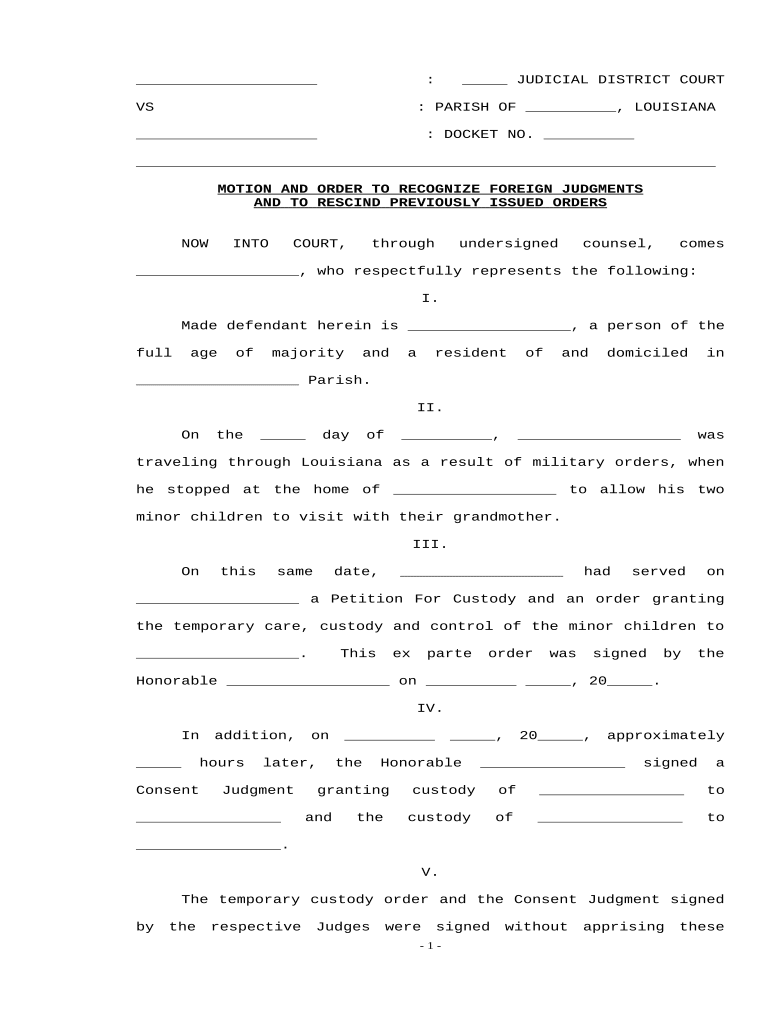
Click ‘Get Form’ to open the judgments document in the editor.
Begin by filling in the judicial district and parish at the top of the form. Ensure that you enter accurate information as this sets the context for your case.
In Section I, provide the name of the defendant along with their age and residency details. This is crucial for establishing jurisdiction.
Continue through Sections II to X, carefully entering all relevant dates, names, and details regarding custody orders and previous judgments. Each section builds upon the last, so accuracy is key.
Review your entries for completeness and correctness before proceeding to sign. Use our platform’s tools to add your signature electronically.
Once completed, save your document and utilize our sharing options to distribute it as needed.
Start using our platform today for free to streamline your judgment forms!
what happens if a defendant does not pay a judgment?What happens after a judgement is entered against youJudgement or judgment Oxford DictionaryOutstanding judgments against you meansCan you go to jail for not paying a judgementLegal judgement exampleDefault judgmentWhat is a judgment lien
Security and compliance
At DocHub, your data security is our priority. We follow HIPAA, SOC2, GDPR, and other standards, so you can work on your documents with confidence.
judgment | Wex | US Law | LII / Legal Information Institute
Judgment means the final decision made by a court or tribunal. After the judges consider all the relevant evidence of the legal trial and consider all rightsRead more
Cookie consent notice
This site uses cookies to enhance site navigation and personalize your experience.
By using this site you agree to our use of cookies as described in our Privacy Notice.
You can modify your selections by visiting our Cookie and Advertising Notice.