






Definition and Meaning of a Temporary Restraining Order for Juveniles
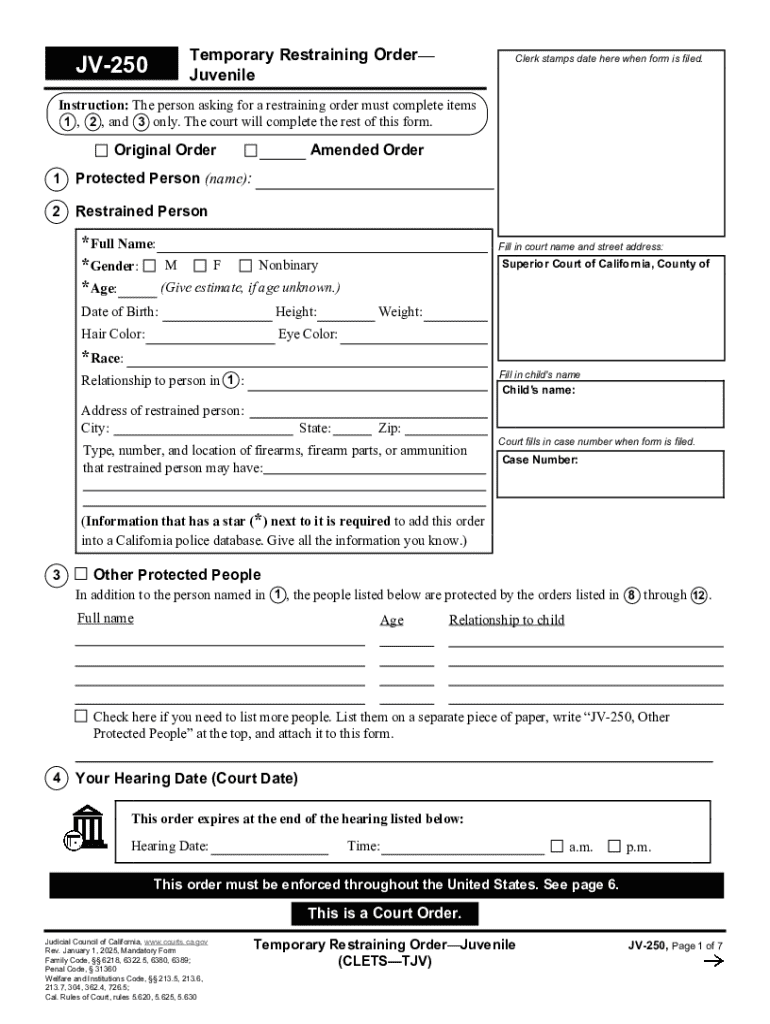
A Temporary Restraining Order (TRO) for juveniles is a legal document issued by a court to protect a minor from potential harm. This order is specifically designed to prevent harassment, stalking, or any form of abuse directed towards juveniles. The purpose of this order is to provide immediate protection to the minor until a more permanent solution can be established. TROs are crucial for safeguarding the well-being of juveniles, as they enable swift legal action to shield them from threatening situations.
Types of Conduct Restricted by the Order
The TRO typically prohibits various forms of contact and behavior that could endanger or distress the juvenile. Prohibited actions often include:
- Physical harm or threats
- Verbal abuse, including threats and harassment
- Unwanted or unsolicited contact via phone, text, or social media
- Approaching or making contact with the juvenile at school or other frequented locations
Importance of a TRO in Juvenile Cases
Juvenile cases require extra sensitivity due to the age and vulnerability of those involved. A TRO serves as an immediate protective measure that prioritizes the safety of the minor. By setting clear legal boundaries, it helps deter the restrained individual from engaging in harmful conduct.
How to Obtain a Temporary Restraining Order for Juveniles
Obtaining a TRO for juveniles involves a specific legal process that starts with filing a petition in the appropriate court. This process can significantly vary depending on state laws and local regulations. Here are the fundamental steps commonly involved:
- Identify the need for a TRO: Recognize situations that warrant legal protection, such as instances of abuse or harassment against a juvenile.
- Consult legal assistance: It's advisable to seek guidance from a family law attorney, especially when determining the necessary documentation and legal strategy.
- File a petition: Submit the required forms to the family court or juvenile court, detailing the reasons and evidence for requesting a TRO.
- Attend a court hearing: A judge will review the case, and both parties may be required to present their sides. The court then decides whether to grant the TRO.
Supporting Documentation
Essential documents often include:
- Police reports or documented evidence of threats or previous incidents
- Witness statements that corroborate the need for protection
- Medical records, if applicable, showing evidence of injury or mistreatment
Legal Use and Enforcement of a Temporary Restraining Order for Juveniles
Once issued, a TRO is legally enforceable and mandates compliance from the restrained individual. The enforcement is typically carried out by law enforcement agencies, ensuring that the juvenile's protection is maintained.
Cross-Jurisdictional Validity
- A TRO issued in one state usually holds validity in others, thanks to interjurisdictional agreements. This ensures that the order is respected even if the parties involved travel across state lines.
Consequences of Violating a TRO
- Violations of a TRO can result in severe penalties, including fines, imprisonment, or additional court orders. The legal system takes violations seriously, especially in cases involving minors, to ensure their continued safety.
Key Elements of a Temporary Restraining Order for Juveniles
Understanding the essential components of a TRO helps in ensuring it is both comprehensive and enforceable. Key elements generally include:
- Identification of Parties: Clearly identifies the juvenile requiring protection and the restrained individual.
- Duration and Scope: Specifies the timeframe for which the order is valid and outlines the specific restrictions placed on the restrained individual.
- Prohibited Items: Lists any prohibited items, such as firearms or weapons, that the restrained person must surrender.
- Behavioral Restrictions: Details specific actions and distances the restrained person must adhere to, preventing any form of contact or communication with the juvenile.
State-Specific Rules for Temporary Restraining Orders Involving Juveniles
The procedures and regulations for obtaining and enforcing TROs can vary significantly from one state to another in the United States. This necessitates an understanding of state-specific rules to ensure compliance and effectiveness of the order.
Variables in State Regulations
- Filing Procedures: States may have distinct filing forms and additional requirements specific to juvenile cases.
- Hearing Timelines: The time frame can vary for scheduling hearings, ranging from immediate emergency hearings to being set within a few days.
- Extension Capabilities: Different states provide varied options for extending the TRO based on continued evidence of risk to the juvenile.
Case Study Example
- In California, the process of obtaining a TRO involves submitting detailed forms that highlight the need for protection and filing these with the court specifically handling juvenile matters. The state emphasizes rapid processing to address the urgent nature of these requests.
Examples and Scenarios for Using a Temporary Restraining Order for Juveniles
TROs can be instrumental in a variety of situations involving juveniles, with several illustrative examples demonstrating their critical use cases:
- Cyberbullying: If a juvenile is subjected to persistent online harassment, a TRO can restrict the offender from contacting the minor through digital means.
- Domestic Violence: In family scenarios where a minor is at risk from a household member, a TRO legally enforces separation and non-contact to ensure the juvenile's safety.
- Threats from Peers: Situations in schools where another minor poses a threat; a TRO can prevent the aggressor from approaching the victim within defined perimeters.
Conclusion on Temporary Restraining Orders for Juveniles
The Temporary Restraining Order serves as a vital legal instrument in protecting juveniles from harm, offering immediate and enforceable protection. Understanding the nuances of acquiring and enforcing these orders is crucial, providing a robust framework for safeguarding vulnerable minors against potential risks. Through comprehensive awareness of legal procedures, state-specific variances, and practical applications, individuals and legal guardians can effectively utilize TROs to ensure the safety and well-being of young individuals in precarious situations.